Blockchain data company Bitquery analyzed trading activity on Solana to assess whether faster block times reduced bot sniping and predatory trading on Pump.fun, a memecoin launchpad. The study compared trading patterns across multiple periods as Solana implemented block-time reductions, with findings verified on October 26.
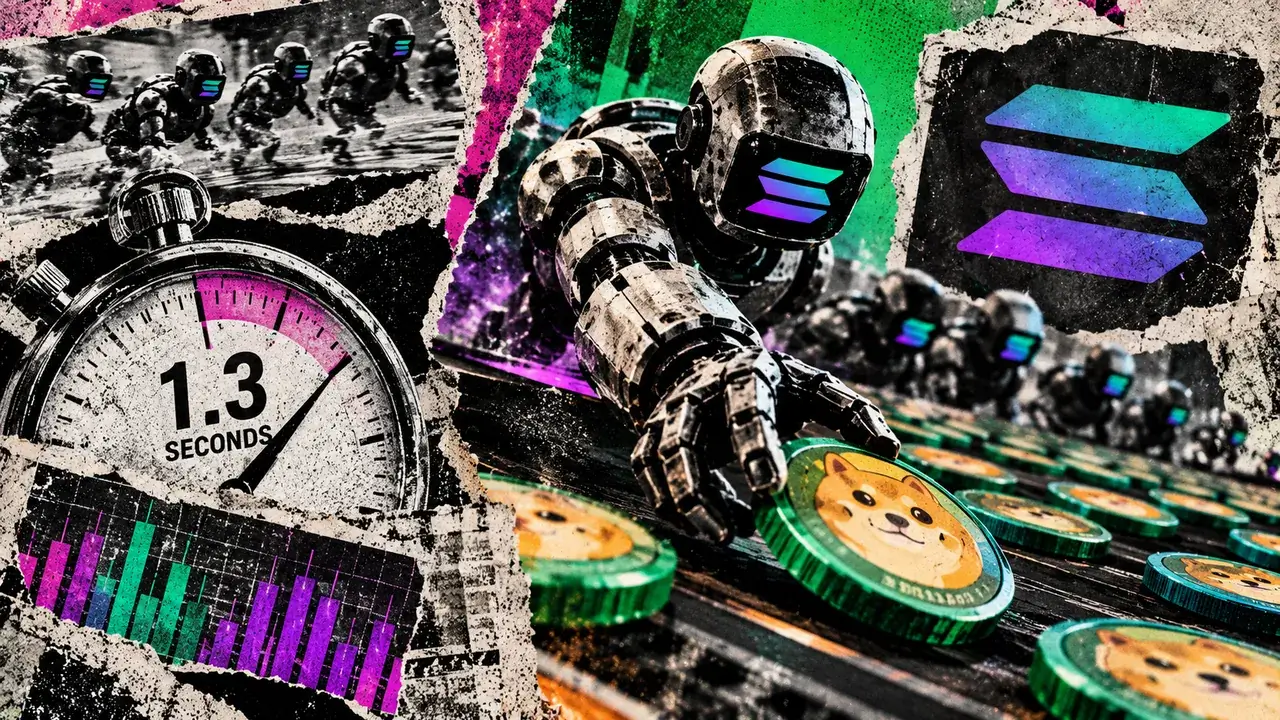
Outside buying—purchases by wallets other than a coin's first buyer within roughly 1.3 seconds of launch—occurred at similar rates before and after the block-time cuts. Bitquery detected outside buying in 53% of new coins in earlier samples versus 52% in later ones. The measurement compared data from August 5, 12, and 19 against samples from September 23 and 30 and October 7.
First-block buying declined, but measurement context matters. When measured by individual blocks, outside buying in the first block fell from 42% to 32%. However, shorter blocks also compressed the timeframe available for such purchases. The first block lasted approximately 0.42 seconds in earlier samples but only 0.27 seconds in later ones. Over roughly equal elapsed time—approximately 1.3 seconds—the share of outside buying remained nearly flat.
Sandwich attacks resurged. Sandwich patterns, in which traders buy before a target swap and sell afterward to profit from the price movement, showed volatility across the study period. Bitquery detected approximately 30 sandwich patterns per 10,000 swaps in early August, declining to 21 by mid-September, before rising to 33 per 10,000 swaps from September 19 to October 7. Both trading comparisons ended October 7, before Solana's final reduction to a 200-millisecond slot target on October 9.
The Solana Foundation has modeled competing effects of faster blocks on sandwich profitability. Shorter reaction time can constrain attackers, but reduced block times may also mean fewer competing trades consume the price movement that users permit before a swap executes, potentially giving fast attackers more room to exploit price slippage.