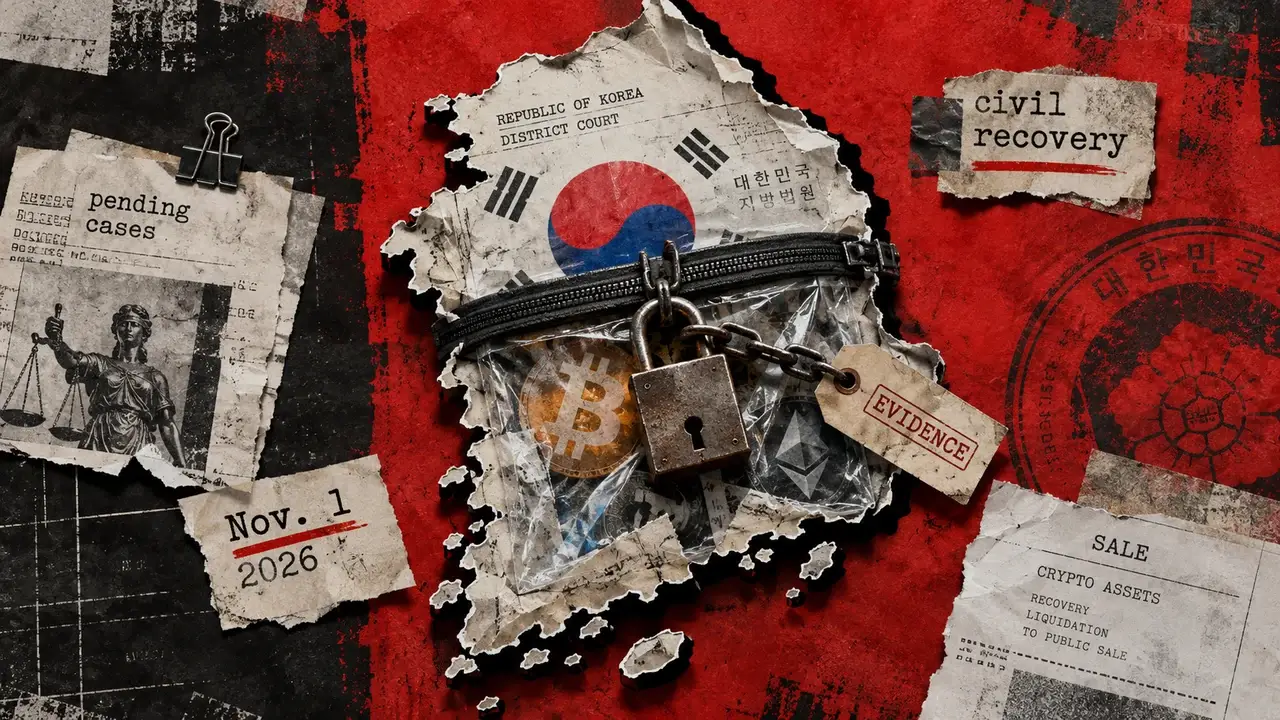
South Korea has established formal procedures allowing courts to seize and sell cryptocurrency from debtors to recover unpaid civil debts. The Supreme Court promulgated Rule 3280 on October 12, introducing standardized processes for freezing, transferring, and liquidating digital assets. The regulations take effect on November 1.
The new framework covers both cryptocurrencies held on exchanges and those stored in private wallets, reflecting the growing role of digital assets in South Korean debt-recovery proceedings.
Early Seizure of Self-Custodied Assets
Under the rules, court officers can take possession of cryptocurrency held directly by debtors before formal notice of an attachment order is served. This provision aims to prevent debtors from moving assets beyond creditors' reach, given the rapid transfer capabilities of digital assets.
Exchange and Custodian Obligations
Cryptocurrency exchanges and custodians face new requirements when creditors obtain court attachment orders for assets held on their platforms. Once an order is served, custodians must prevent the transfer of covered assets and prohibit debtors from disposing of their cryptocurrency holdings.
Creditors can compel custodians to disclose information about targeted holdings within one week of receiving an attachment order. Required disclosures include whether the custodian recognizes the debtor's claim, the type and quantity of cryptocurrencies held, and details of any competing claims from other creditors.
Asset Valuation and Sale Procedures
After creditors attach cryptocurrency, courts may authorize transfers to creditors at court-determined valuations or direct sales through virtual asset service providers. For exchange-held assets, custodians may conduct sales directly, or enforcement officers may arrange transfers to accounts they control.
Sales must use the prevailing market price on the transaction date or another appropriate valuation method, establishing a defined process for assets subject to price volatility during enforcement proceedings.
Debtor Protections and Implementation
Debtors retain the ability to appeal decisions authorizing asset transfers or sales, which become effective only after reaching finality. The regulations also provide procedures for restoring assets when enforcement is withdrawn or canceled.
The Supreme Court stated the amendments aim to improve legal certainty and consistency as courts handle an increasing number of cryptocurrency-related enforcement cases. The November 1 implementation will apply to proceedings already before the courts, with existing attachment and preservation orders remaining valid under the new procedures.