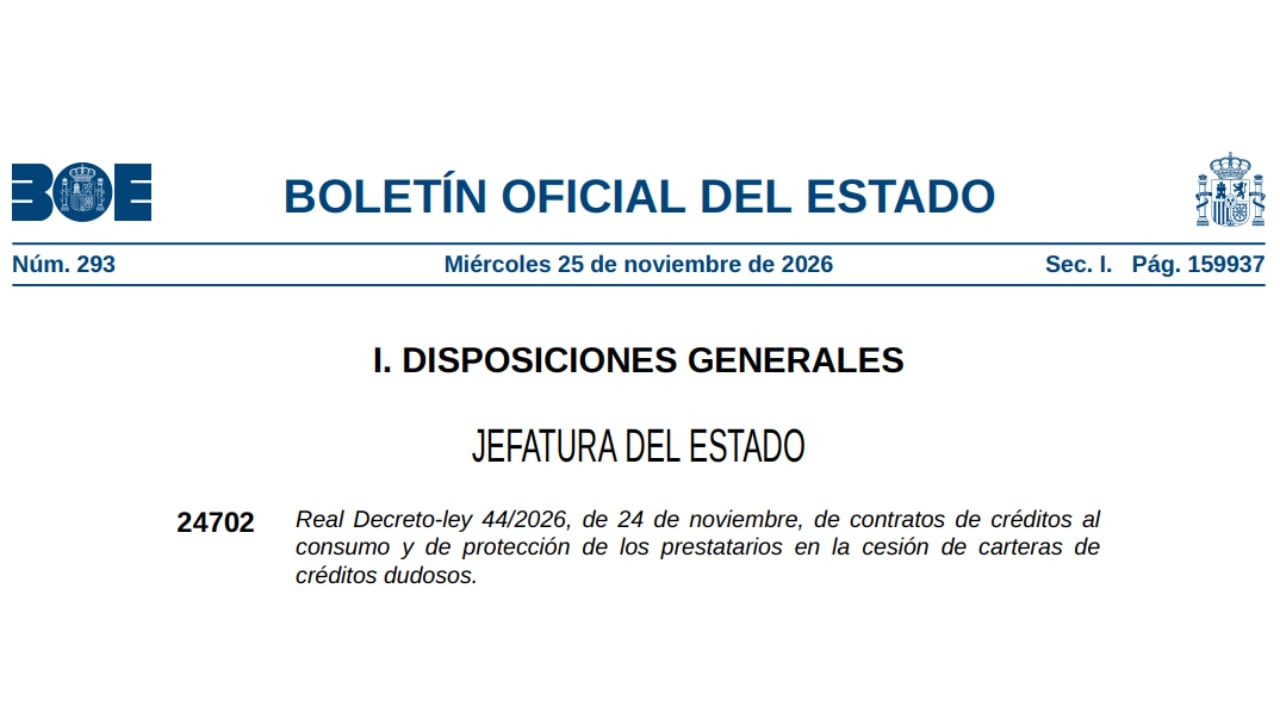
Spain's government has issued a decree that allows the country's financial intelligence agency to impose temporary blocks on cryptocurrency transactions and accounts without judicial involvement, as part of an effort to tighten control over fraud-linked funds.
Royal Decree-Law 44/2026, issued by the executive, primarily targets consumer lending agreements and borrowers' protection in the assignment of portfolios of non-performing loans. It also reforms Spain's current anti-money laundering and terrorism financing prevention law, expanding the powers of the country's financial intelligence unit in line with internationally proposed Financial Action Task Force standards.
Powers for SEPBLAC
Under the new Article 46 bis, the Executive Service of the Commission for the Prevention of Money Laundering and Monetary Offenses (SEPBLAC), Spain's financial watchdog, will be able to suspend or freeze a crypto transaction or an account without a court order when signs link them to money laundering and terrorism financing activities.
The measure is intended to safeguard the funds, allow authorities to conduct analyses, assess whether the suspicion is confirmed and, if so, forward the information to competent authorities so they may take appropriate measures.
Time limits on temporary blocks
- Temporary blocks can extend up to 10 days for transactions and up to five days for accounts.
- Restrictions are lifted if no link to illicit funds is proven within those periods.
- The blocks can be imposed at the request of law enforcement agencies.
- They can also be imposed at the request of the financial intelligence unit of another European Union member state or a third state.
The reform implements the EU's 2024/1640 directive, which calls on member states to give their financial intelligence units the power to act immediately to suspend or withhold consent to a transaction or an account considered linked to illicit activity.
Timing and context
The provisions are set to come into effect in January 2027, subject to Parliament's approval. The move follows the full implementation of the Market in Crypto Assets (MiCA) framework in Spain and marks an acceleration of the government's crypto oversight policies.
It also follows a similar step by Germany's Bundestag, which approved seizing cryptocurrency assets whose lawful origin is unproven for up to 180 days without a criminal investigation. In that case, the owner must prove the lawful acquisition of significant holdings — defined as crypto assets worth over 100,000 euros (about $109,300) — during the holding period.