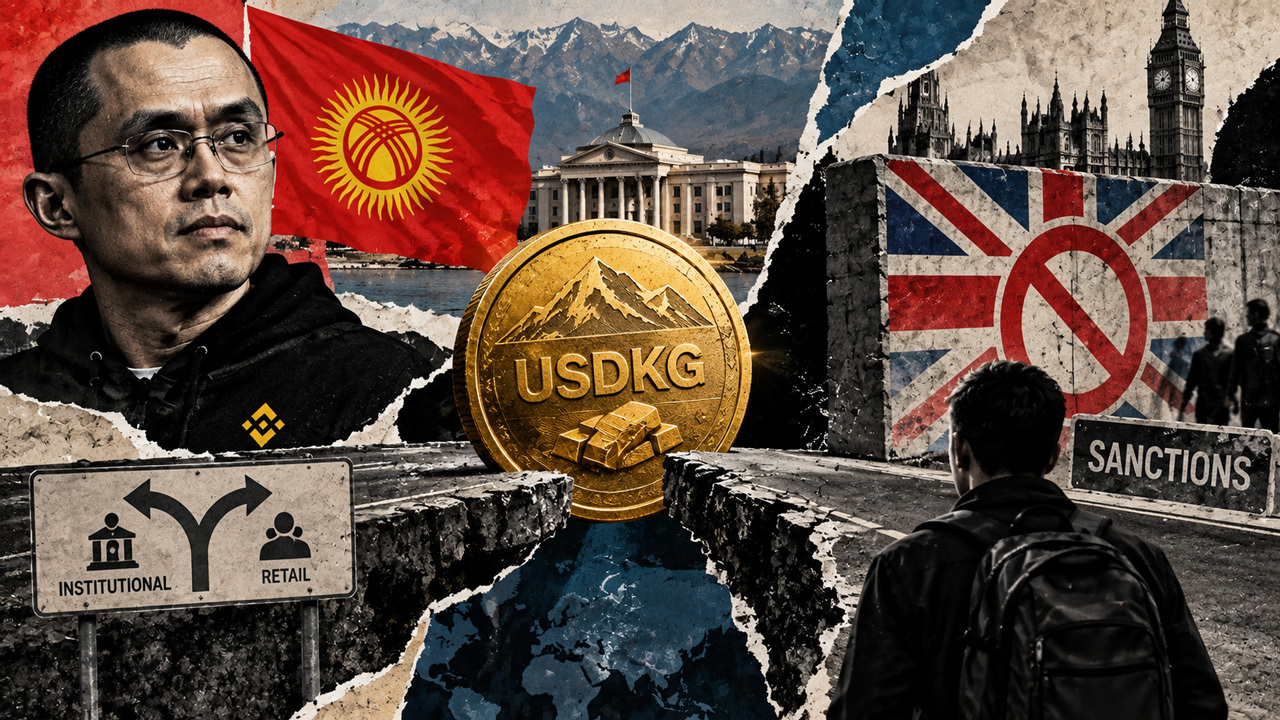
Changpeng Zhao, chief executive of Binance, visited Kyrgyzstan on September 5 to attend a meeting of the country's crypto council, where officials discussed new regulations and the risks posed by international sanctions. The visit underscores a fundamental tension in stablecoin policy: government backing at home does not guarantee access abroad.
Zhao praised progress including the circulating KGST stablecoin but did not address USDKG, a separate gold-backed, dollar-pegged token whose issuer has been designated by UK sanctions. USDKG provides a concrete example of how state ownership and regulatory approval can still face practical barriers to international use.
Regulatory Timeline Set
President Sadyr Japarov chaired the third council meeting of Kyrgyzstan's crypto authority on September 5 in Cholpon-Ata. The National Agency for Virtual Assets received assignments including a three-month deadline to secure adoption of secondary regulations and work through possible amendments to virtual-assets law. The State Tax Service was given two months to review tax regulation, while the central bank must develop and pilot a basic digital-som platform by December 31, 2026.
State Ownership Does Not Remove Foreign Restrictions
USDKG is fully owned by a state entity under Kyrgyzstan's Finance Ministry, according to statements from the ministry. However, the UK designated the issuer in May 2026 under sanctions, citing reasonable grounds to suspect the entity obtained benefits from or supported Russia's government. The UK's sanctions notice includes an asset freeze, trust-services sanctions, and internet-services sanctions that require specified services to prevent UK users from accessing platforms provided by the issuer.
These restrictions demonstrate why domestic authorization cannot resolve every access question. Foreign service providers may face legal obligations that Kyrgyz state ownership does not remove.
Retail Exit Routes Depend on Market Conditions
USDKG's redemption framework distinguishes between retail and institutional clients. Direct minting and redemption are available only to institutional clients subject to identity and anti-money-laundering checks. Retail users are directed to supported exchanges for liquidity, meaning their exit depends on finding an available counterparty willing to trade.
The issuer's documentation describes a fiat liquidity buffer intended to support redemptions, but this arrangement depends on reserve management and issuer procedures. Published valuations use prices at the audit date and do not establish how much cash is currently available to meet redemption requests.
Administrative Controls Add Additional Dependencies
USDKG's smart contract includes administrative functions that allow the issuer to pause transfers, issue tokens, and blacklist addresses. Compliance administrators can burn balances held by blacklisted accounts. These controls mean that token possession alone does not guarantee access to redemption or transfer functions.
For USDKG holders, the practical test of whether new Kyrgyz regulations improve access will depend on multiple factors: whether retail sales can find counterparties, whether institutional redemption requests receive issuer approval, and how foreign services navigate their own sanctions obligations. Domestic regulatory progress shapes supervision within Kyrgyzstan but does not independently determine international accessibility.