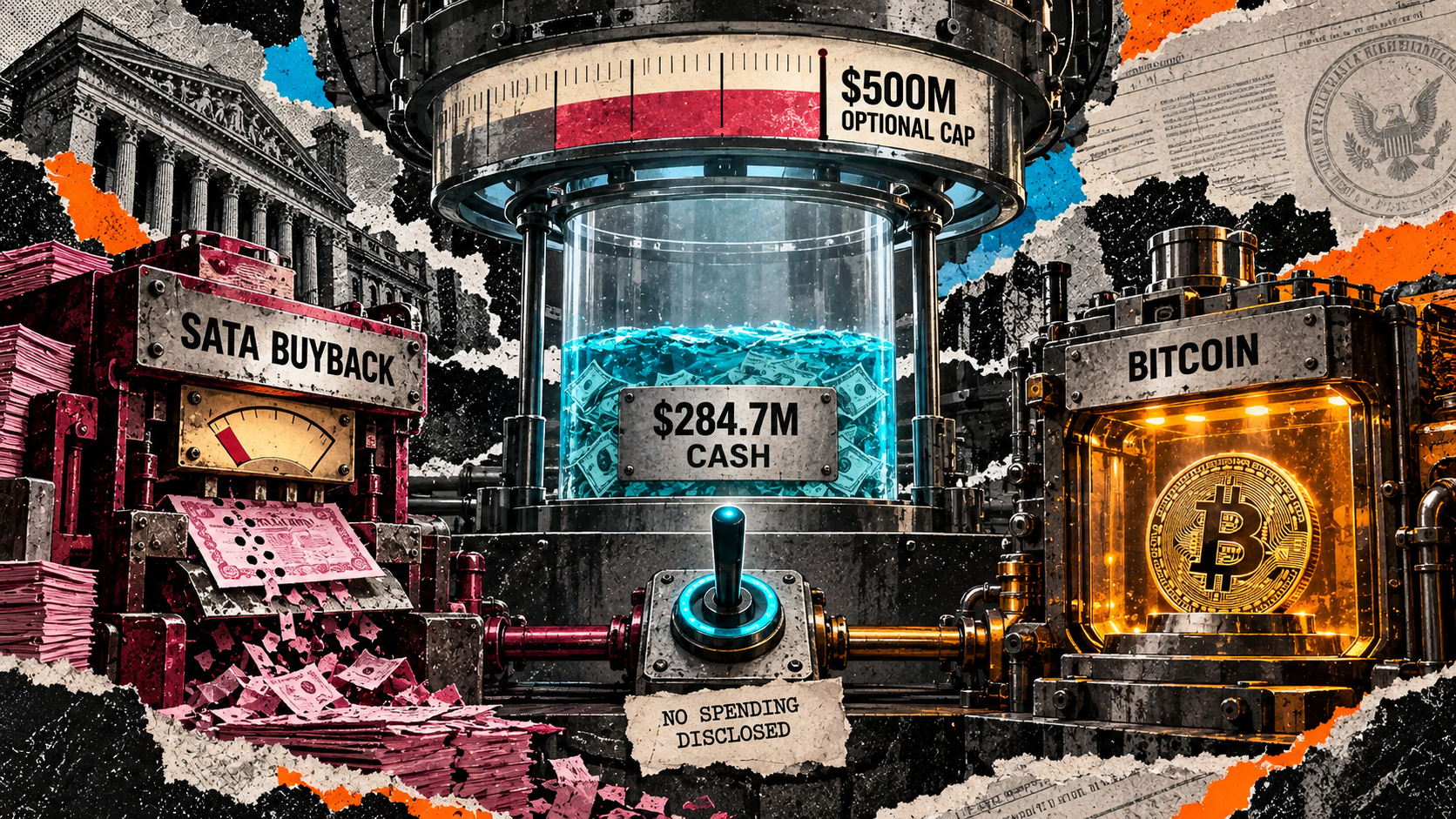
Strive disclosed an optional program on October 5 to repurchase up to $500 million of its variable-rate perpetual preferred stock, traded as SATA. The announcement raises capital allocation questions for the Bitcoin treasury company, as the buyback ceiling exceeds its reported October 2 cash balance of $284.7 million by $215.3 million.
The repurchase program gives management discretion to retire dividend-paying preferred shares as an alternative to purchasing additional Bitcoin. Retiring shares could reduce future dividend commitments, as Strive reported SATA dividends at $13 per share annualized, equivalent to 13 percent of the stated $100 per share amount.
According to SEC filings, the program creates no obligation to spend the maximum amount and does not establish a liquidity shortfall. The company disclosed no completed repurchases, dedicated funding source, or timetable for deploying the full capacity.
Capital allocation trade-offs
Strive reported 29,462 Bitcoin as of October 2 after purchasing 2,000 Bitcoin between September 28 and October 2 at an average price of approximately $84,422, including fees and expenses.
Cash spent on SATA buybacks would reduce capital available for additional Bitcoin accumulation. The savings from retiring preferred shares would depend on the number of shares repurchased and applicable dividend rates at the time, while the purchase price would determine the actual cash cost.
The company reported 13,498,082 SATA shares outstanding as of October 2, up from 12,193,180 on September 25.
Terms and future disclosure
Strive stated it intends to remain debt-free and may consider capital-allocation and financing alternatives. The company cautioned that its Bitcoin-per-share metrics do not capture the additional senior claims created when preferred issuance funds Bitcoin purchases.
For common shareholders, the next relevant disclosures will be actual repurchase spending, shares retired, and updated cash and Bitcoin balances, which will show whether the facility reduces the preferred dividend burden and how much capital remains for Bitcoin accumulation.