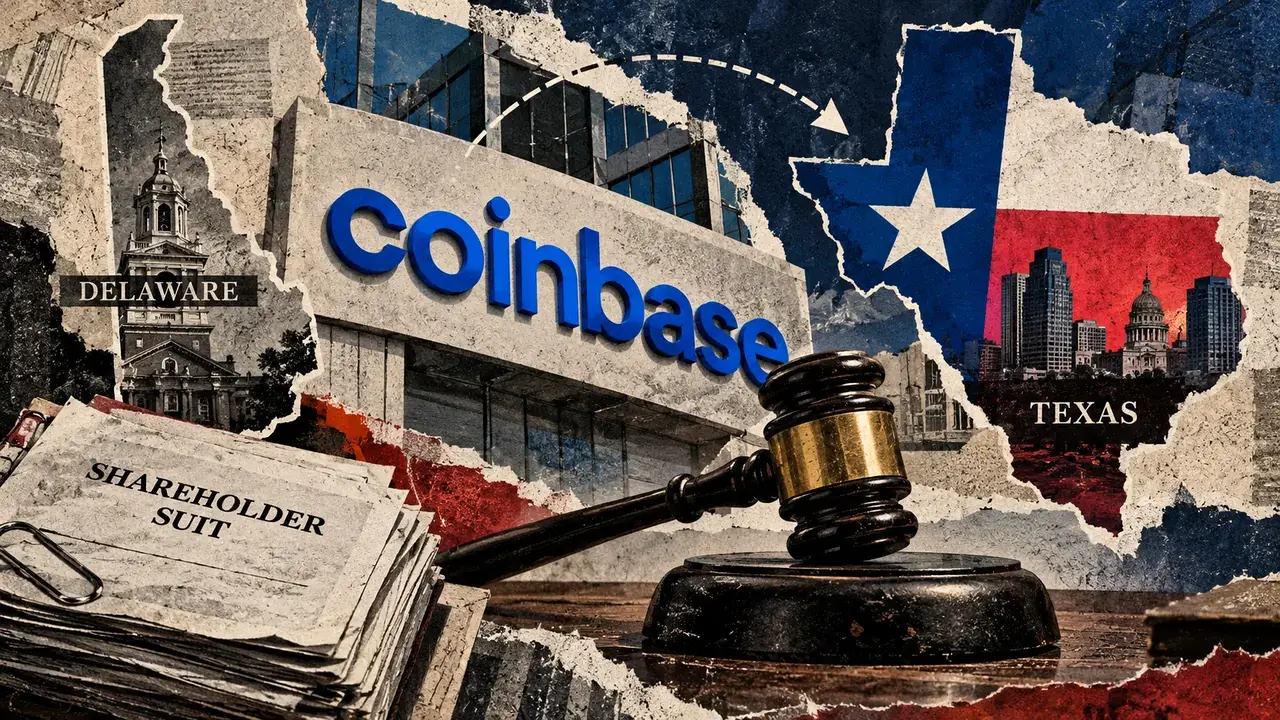
A Texas Business Court dismissed a derivative shareholder suit against Coinbase on October 2, finding that the plaintiff failed to satisfy Texas's demand requirement before suing the company's directors over alleged conduct from its Delaware years.
Shareholder Gary Guillaume filed the action on April 16, 2026, alleging misconduct between April 2021 and June 2023, when Coinbase was incorporated in Delaware. Coinbase converted to a Texas incorporation on December 15, 2025, several months before the suit was filed.
Demand Requirement Applies Post-Conversion
Judge Andrea K. Bouressa ruled that Texas law governs a shareholder's authority to pursue derivative claims following reincorporation, even when the underlying misconduct predates the conversion. Texas requires shareholders to make a particularized written demand identifying the disputed conduct and requesting corporate action before filing a derivative suit. Guillaume did not comply with this requirement.
Under Delaware law, which governed Coinbase during the relevant period, a shareholder could either make a demand or plead that doing so would be futile. Guillaume attempted the futility route but did not file the written demand Texas law now requires. The court found his futility allegations could not substitute for the written request.
The dismissal was without prejudice, and the court did not reach the merits of Guillaume's allegations.
Reincorporation Implications
The ruling establishes that a shareholder does not acquire a vested right to pursue corporate claims under the law in effect when those claims arise. Instead, the law of the state where a company is incorporated at the time the shareholder exercises authority determines the procedural requirements.
Coinbase's conversion disclosures stated that Texas law would govern the company's affairs following the move. The court rejected Guillaume's argument that the disclosures promised Delaware law would continue to apply to shareholder authority over earlier conduct.
Governance Structure
Coinbase conducted the conversion through a committee evaluation recommending Texas over Delaware and Nevada, followed by unanimous board approval and shareholder approval by written consent. According to Coinbase's filings, the Armstrong- and Fred Ehrsam-associated consenting group held approximately 78.4% of voting power at the time of the conversion vote in November 2025.
The company cited greater litigation predictability, potential cost savings on defense and insurance, and Texas's crypto-friendly environment as reasons for the move.