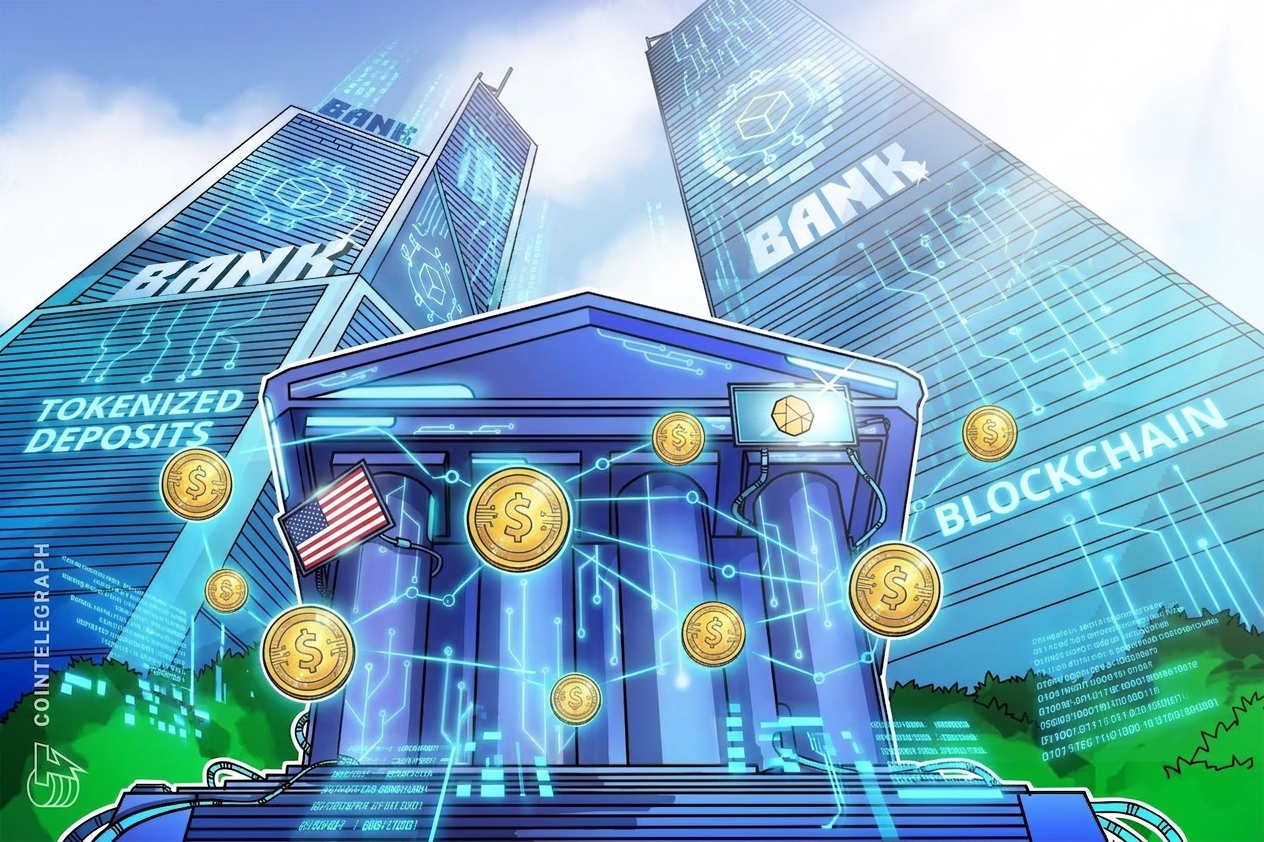
Tokenized deposits could make bank funding less stable and lead to higher credit costs for US households and businesses, according to an analysis published by two economists at the Federal Reserve Bank of Dallas.
Economists Rosie Levy and Srini Ramaswamy stated that instant settlement could enable depositors who are seeking higher yields to switch banks at a faster rate. They noted that programmable deposit tokens and agentic artificial intelligence might automate these transfers, which would shorten the duration that deposits stay at individual banks and increase their sensitivity to interest rates.
The economists calculated that if deposits were to become 10% more sensitive to interest rates, the capacity of banks to hold long-term loans and other assets could decrease by approximately $700 billion. In an alternative scenario, if deposits remained at banks for 10% less time, that capacity could drop by about $580 billion. Both figures are expressed in 10-year equivalents and do not reflect direct reductions in lending. The authors emphasized that these calculations are scenarios rather than forecasts and do not represent dollar-for-dollar reductions in bank credit.
These findings arrive as US banks construct shared blockchain networks intended to move tokenized deposits around the clock while keeping customer funds inside the regulated banking system. Recently, thirty-nine US state banking associations formed the BankChain Alliance to create a nationwide network supporting tokenized deposits, stablecoins, and automated settlement. Additionally, The Clearing House is developing a separate network backed by major institutions including JPMorgan Chase, Bank of America, Citi, BNY, and Wells Fargo. Individual banks have also begun connecting tokenized-deposit systems across institutions, such as an August 20 cross-border transaction completed by Standard Chartered and HSBC using Swift's blockchain ledger.
To manage more volatile deposits, Levy and Ramaswamy suggested that banks could hold larger portfolios of highly liquid assets, such as reserves and US Treasurys. They also noted that banks might depend more heavily on term debt to sustain their lending portfolios, though funding loans through wholesale debt would likely drive up credit costs for consumers and businesses. As a potential comparison, the authors cited Brazil's Pix instant-payment system—noting it is not identical to tokenized deposits—and pointed to a 2025 study showing that increased use of Pix led banks to hold more liquid assets and reduced credit intermediation.