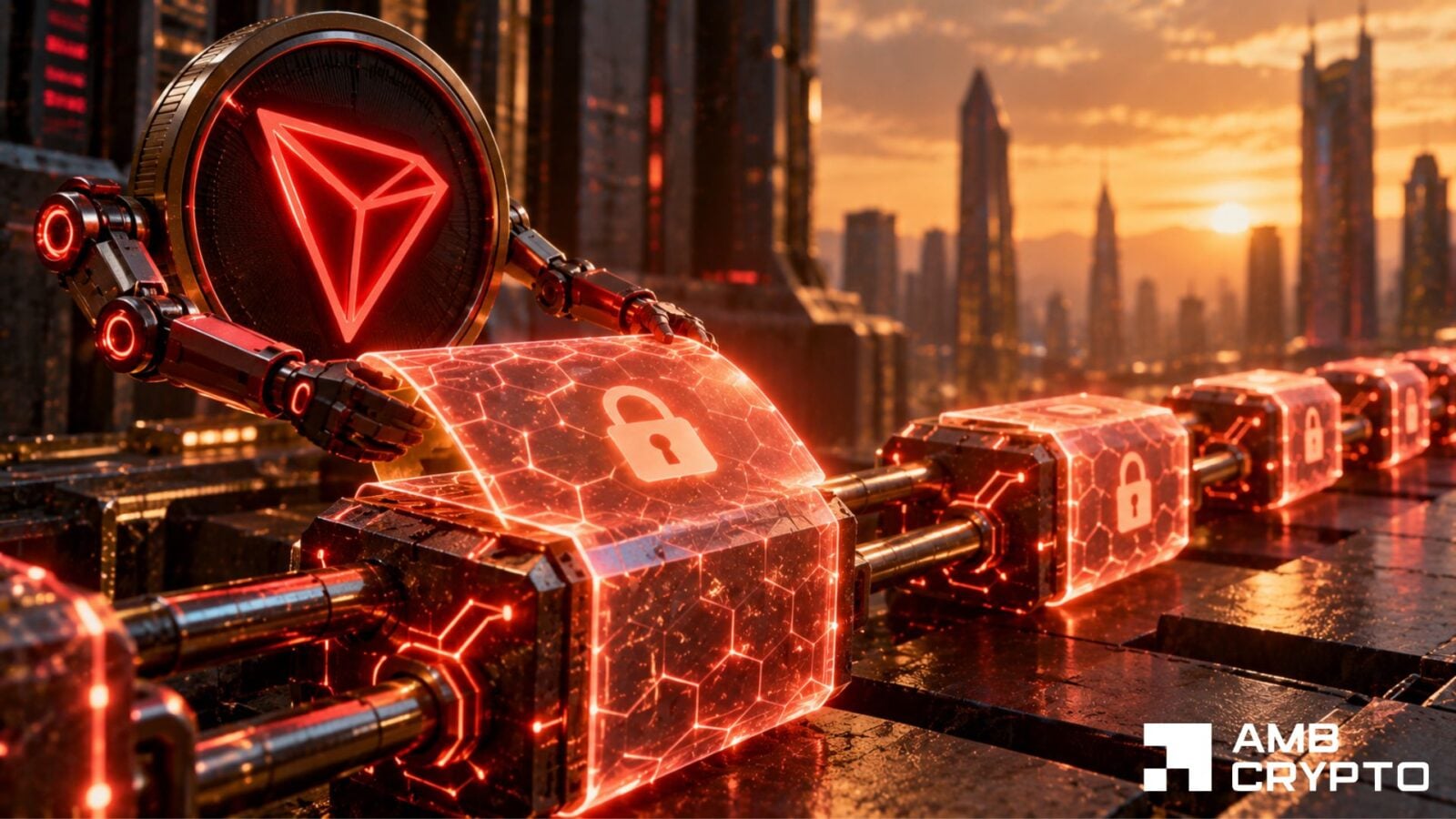
TRON could bring quantum-resistant security to its mainnet "any time," according to founder Justin Sun, as concerns about cryptographic threats intensify. The announcement reflects growing industry focus on Q-Day, when quantum computers could potentially compromise existing security protections.
Recent advances in artificial intelligence and mathematical computing have prompted fresh concerns about the vulnerability of elliptic curve cryptography, which underpins portions of current blockchain security infrastructure. This has shifted immediate security concerns from distant quantum threats to near-term AI vulnerabilities.
In response, security experts have proposed "bunker mode" protocols to reduce address reuse and limit public key exposure. Other projects are also accelerating post-quantum efforts. Starknet is considering transitioning from Ethereum to a full standalone Layer 1 blockchain to expedite post-quantum security deployment.
TRON's Post-Quantum Timeline
TRON announced its post-quantum upgrade plan in April following Google's guidance that the industry should take proactive steps. The project launched its first testnet, called Nile, in July, selecting Falcon-512, a lattice-based post-quantum cryptographic signature system.
However, unresolved technical challenges remain. It is unclear whether TRON has addressed the larger data sizes and increased computation overhead associated with proposed post-quantum systems. The migration of existing addresses to the new system also presents potential friction points.
Expert Calls for Thorough Review
Before mainnet deployment, experts including Ivan Miskovic, founder of Quantum Foundation, have urged comprehensive testing. "Rigorous internal testing and independent external reviews by global experts are the key to protecting users and partners assets on TRON," Miskovic stated.
TRON currently secures approximately $95 billion in stablecoin assets and $5 billion in decentralized finance total value locked, totaling roughly $100 billion in assets across the network.
While some blockchains like Quantus were built with quantum resistance from inception, TRON's proactive approach to addressing the dual AI-quantum security threat marks a significant industry response to emerging cryptographic risks.