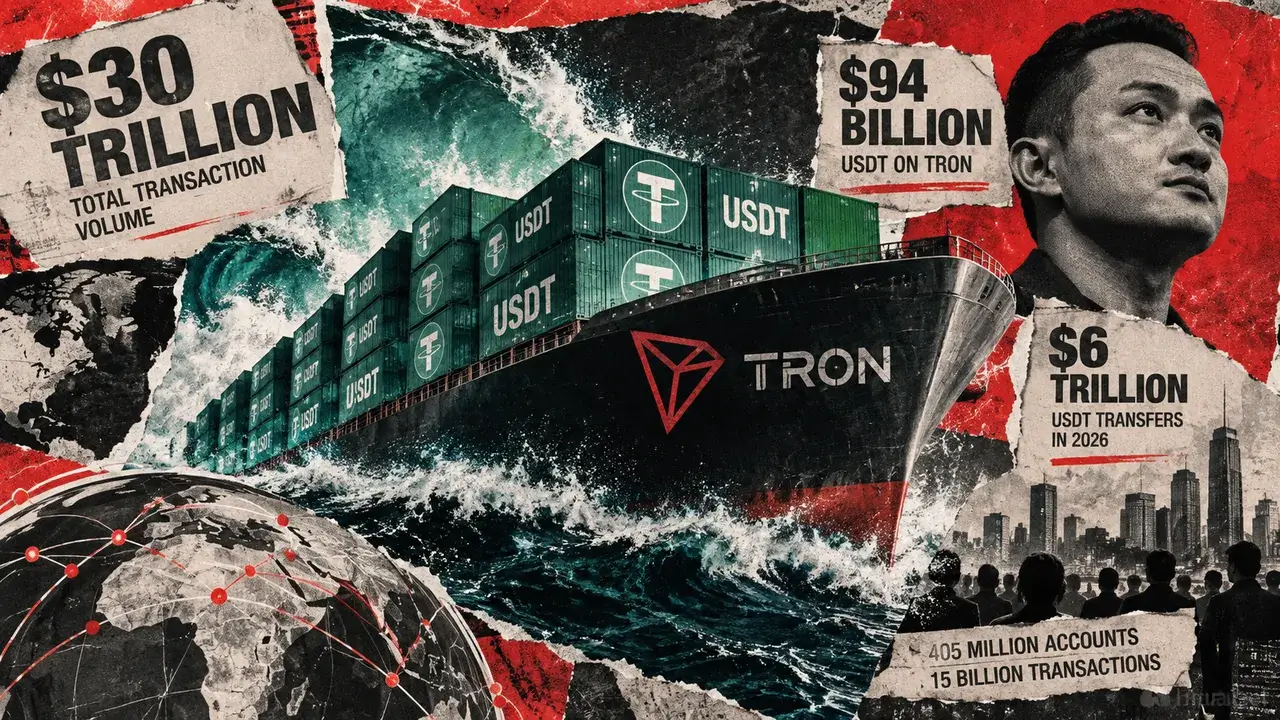
TRON has surpassed $30 trillion in lifetime transaction volume, driven largely by stablecoin transfers and an expanding payments footprint. More than $94 billion of Tether's USDT now circulates on TRON, the largest supply on any blockchain, according to TRON DAO. The network has processed approximately $6 trillion of USDT transfers so far in 2026, averaging roughly $25 billion daily.
The network has recorded more than 15 billion transactions across 405 million accounts since launch. TRON accounted for 34% of crypto payment-card volume in the second quarter, up from 33% in the first quarter, as overall card volume increased to $2.4 billion from $2 billion.
The $30 trillion figure represents cumulative value moved across the network since launch rather than commerce alone. TRON does not break out how much represents merchant payments, exchange transfers, or movements between wallets, making the composition of that volume less clear than its scale.
Illicit Activity and Enforcement
The same infrastructure that enabled TRON's low-cost stablecoin dominance has also made it a major route for illicit funds. TRM Labs estimated that TRON handled more than $26 billion of the $45 billion in illicit crypto volume identified in 2024, more than any other blockchain. The activity included funds tied to scams, hacks, sanctioned entities, and darknet markets.
In response, TRON and Tether established the T3 Financial Crime Unit with TRM Labs in 2024. By May 2026, the unit had frozen more than $450 million in illicit assets. The group works with authorities across 23 jurisdictions and has supported cases involving exchange hacks, North Korea-linked activity, terrorist financing, drugs, and violent crimes.
Regulatory History and Institutional Expansion
TRON and founder Justin Sun faced years of US regulatory scrutiny. The Securities and Exchange Commission sued Sun, the Tron Foundation, and related entities in 2023 over allegations including securities violations and manipulative trading. A March 2026 resolution settled a wash-trading claim and dismissed remaining claims.
TRON is expanding into regulated financial products. Canary Capital launched a staked TRX exchange-traded fund, Anchorage Digital added TRX staking and custody for TRC-20 assets, and a tokenized Hamilton Lane fund was issued through Securitize on the network.
These developments raise the stakes around TRON's compliance infrastructure. Regulated firms gain access to deep dollar liquidity but also inherit exposure to a chain with substantial illicit activity history. TRON's institutional growth may depend on whether enforcement tools can keep pace as stablecoin activity expands further.