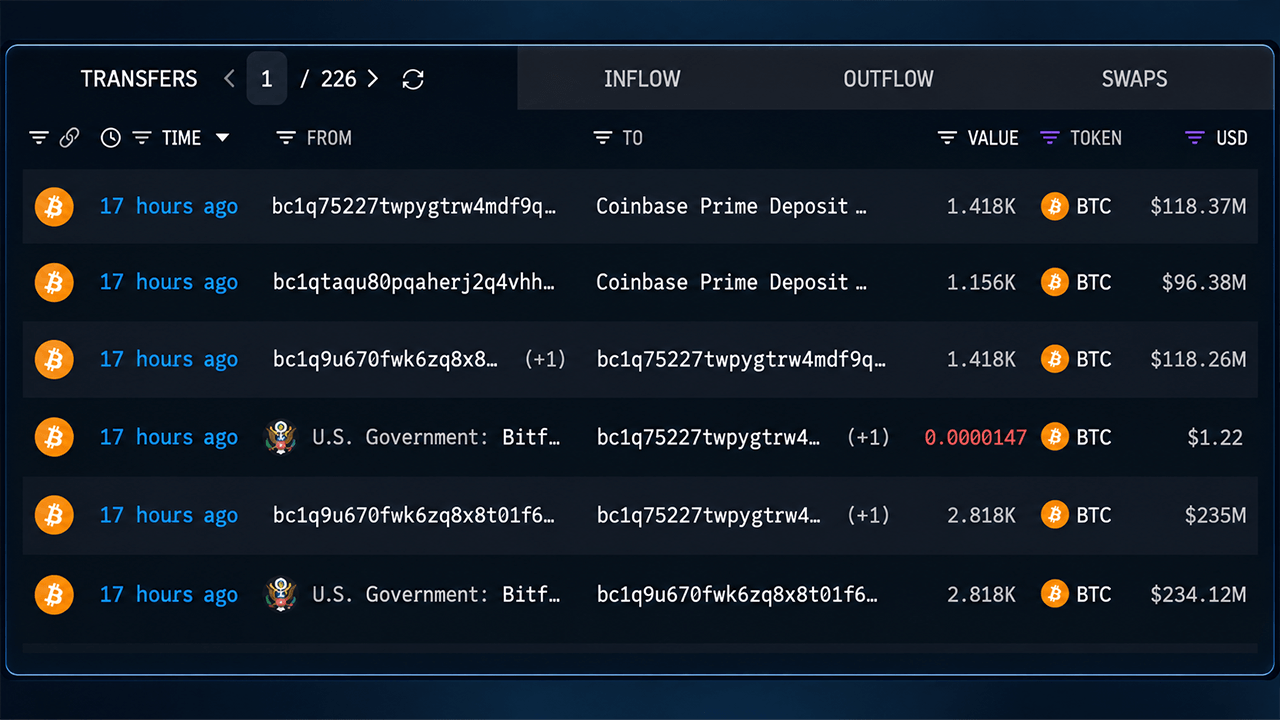
The U.S. government transferred approximately 9,261 BTC, valued at $770 million, to Coinbase Prime on Tuesday and Wednesday, according to Galaxy Research. The two-day transfer marked the ninth-largest daily bitcoin outflow from federal wallets since 2013.
Galaxy Research tracked the movement and found that while much of the bitcoin originated from known criminal seizures, including holdings from the 2016 Bitfinex hack and Binance seizures, researchers identified another 2,456 BTC from wallets not previously recognized as U.S. government holdings. The discovery adds to questions about the full scope of Washington's cryptocurrency inventory.
Unknown Holdings Raise Questions
Galaxy attributed the mystery coins to government seizures based on their destination to the Coinbase Prime deposit address, though the connection has not been independently established. The receiving address has accumulated 11,567 BTC since December 2025, including 6,406 BTC from recognized government wallets and approximately 5,160 BTC from unlabeled senders.
The federal bitcoin balance now stands at 319,086 BTC, down from a historical peak of 352,587 BTC on August 13, 2024. Galaxy noted that 71 percent of holdings remain unsettled government property, split between approximately 94,643 BTC associated with the Bitfinex breach and 127,271 BTC linked to the Lubian mining operation.
Unclear Next Steps
Coinbase Prime provides institutional custody and trading services to the U.S. Marshals Service, replacing auction methods previously used to dispose of seized cryptocurrency. However, a transfer to an exchange does not necessarily indicate an imminent sale. President Donald Trump initiated a Strategic Bitcoin Reserve executive order stating that BTC seized by the U.S. government will never be sold, leaving the ultimate destination of the transferred assets unclear.
Federal authorities have substantially increased seizures while reducing sales since 2020, marking a shift from earlier practices when marshals auctioned Silk Road bitcoin between 2013 and 2015.