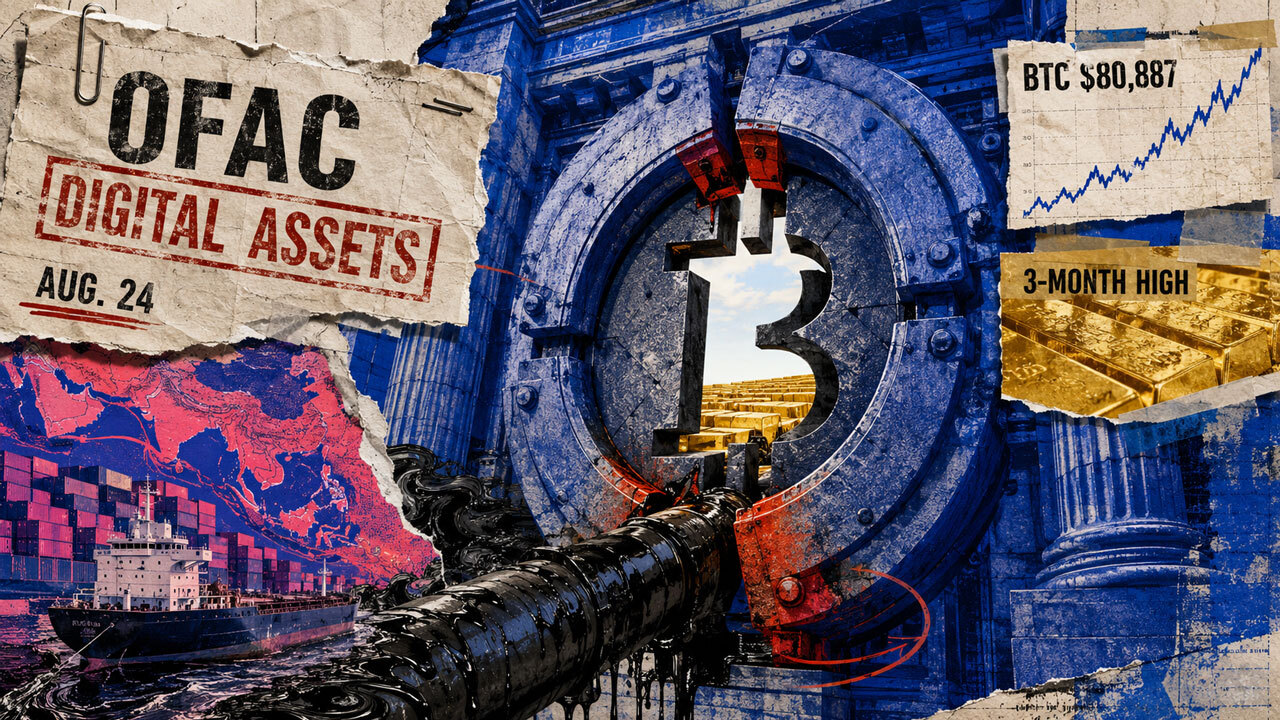
The United States has escalated its financial campaign against Iran by threatening to remove the country's trading partners from the dollar system while expanding its authority to sanction the Iranian crypto sector. Treasury Secretary Scott Bessent launched "Operation Economic Outcast," imposing sanctions on nearly 60 individuals, entities, and vessels. The action opens five Iranian sectors—digital assets, technology, gold, aviation, and shipping—to broader penalties and expands secondary sanctions exposure for foreign businesses dealing with Tehran.
Under new sectoral determinations, the Office of Foreign Assets Control (OFAC) has gained a wider route to pursue overseas companies without first tying every target to a previously sanctioned Iranian counterparty. OFAC can now sanction any person, regardless of location, determined to be operating in Iran's digital-asset sector. The Treasury stated that Tehran has increasingly turned to cryptocurrency for sanctions evasion and transactions linked to the Islamic Revolutionary Guard Corps and regime insiders.
Recent Treasury designations highlighted how digital assets have become intertwined with Iran's oil and security networks. For instance, UAE-based Ukrainian national Ivan Obukhov and his company, Foscom FZE, were sanctioned for processing more than $100 million in cryptocurrency payments since 2023 to facilitate oil sales for the IRGC-Quds Force. Treasury also targeted Iranian cyber actors, including individuals allegedly linked to financially motivated theft and infrastructure attacks.
The expansion tests Washington's leverage over China, which is Iran's biggest oil buyer. While Bessent warned that no one is above the reach of US sanctions, he declined to immediately penalize major Chinese financial institutions, noting the administration wants to avoid destabilizing the global financial system. Meanwhile, China's Foreign Ministry stated that cooperation with Iran is conducted within international law and that Beijing will take necessary measures to protect its interests.
The enforcement push coincides with Bitcoin crossing $80,000 and gold reaching a three-month high, reviving a debate over whether using dollar access as a geopolitical weapon could accelerate demand for assets outside the traditional financial system. Analysts compared the strategy to the Western response to Russia's invasion of Ukraine, which saw substantial freezing of sovereign assets and subsequent shifts in central bank gold demand. While market observers noted that factors like a weaker dollar, debt buybacks, and inflation also influence asset prices, the tension underscores the long-term debate surrounding reliance on dollar-based financial infrastructure.