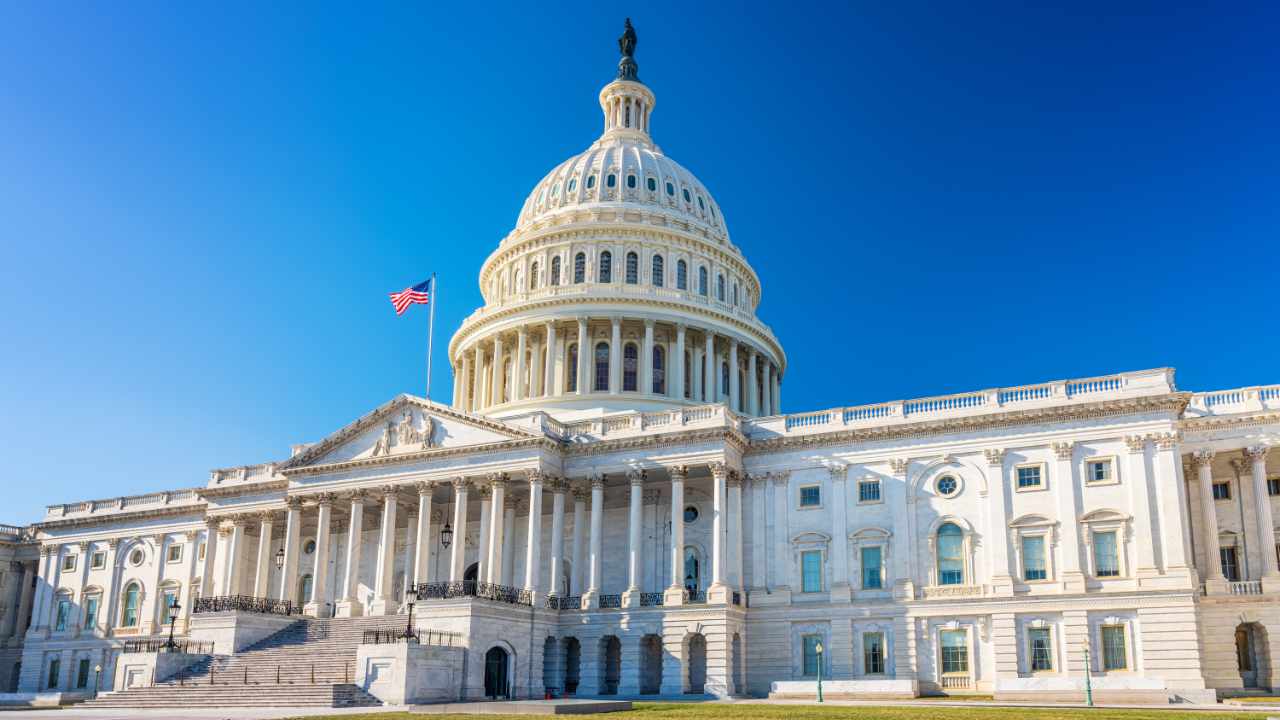
The US House of Representatives passed H.R. 9340, the Ratepayer Protection Act, with a vote of 417-3 on Wednesday. The legislation represents the first bill from the House to directly address the economic implications of expanding data center operations.
The law requires state utility regulators to consider whether large electricity consumers should cover the incremental infrastructure costs their demand creates. It establishes a federal standard mandating that utilities recover the full incremental cost of generation, transmission, and distribution improvements necessary to serve large-load consumers—defined as companies consuming at least 100 megawatts of energy at a single location.
States must consider the federal standard but retain discretion to adopt or reject it. The bill does not cap electricity prices or affect household utility bills. Instead, it focuses on determining which entity pays for infrastructure expansion triggered by heavy-load customers.
Rep. Frank Pallone, the ranking Democrat on the House Energy and Commerce Committee, characterized the measure as imperfect and noted it addressed only part of the problem. The bill now moves to the Senate.
Grid strain from rising data center demand
Electricity demand is intensifying. According to projections from the Energy Information Administration, electricity sales are expected to reach 4,135 billion kilowatt-hours in 2026, partly driven by data centers and industrial production. Residential electricity prices are projected to reach 18.2 cents per kilowatt-hour.
Research suggests residential electricity rates could rise between 15% and 40% by 2030, with some areas potentially doubling by 2050. A University of California study estimates data centers could account for 11.8% of total US electricity consumption by 2030.
Capacity costs have surged dramatically in some regions. In the PJM Interconnection, capacity costs increased roughly 1,038% compared to 2024 rates, with data centers representing approximately 40% of PJM's recent capacity auction valued at $16.4 billion.
Infrastructure economics reshaping investment decisions
The legislation follows President Donald Trump's March 4 Ratepayer Protection Pledge, under which Amazon, Google, Meta, Microsoft, OpenAI, Oracle, and xAI committed to securing new power and covering delivery-infrastructure upgrades for their data centers.
Energy availability, transmission capacity, and capital costs are increasingly becoming as important as computing hardware in determining where AI infrastructure gets built. PwC estimates global data-center capital expenditure could reach $31.6 trillion through 2050, with a potential upside near $50 trillion. Power availability is expected to be a decisive factor in where that investment flows.
By requiring large-load customers to absorb more infrastructure costs, the legislation could reduce cost shifting to households and smaller businesses while increasing upfront project expenses. Regions with abundant power supplies, faster grid connections, and lower financing costs may gain an advantage in attracting data center investment.