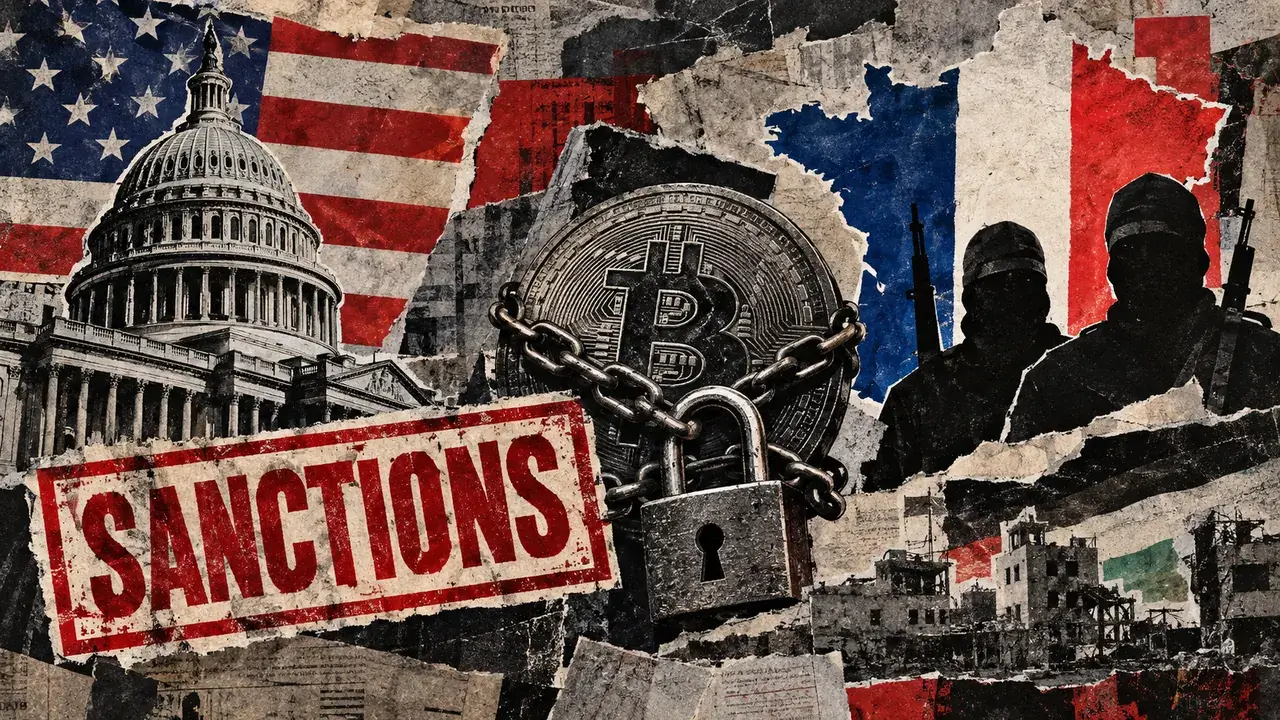
The US Treasury Department's Office of Foreign Assets Control (OFAC) sanctioned two French charities and three individuals on October 2 over allegations they helped finance Hamas through cryptocurrency transfers.
The designated parties are Association Baraka, Ensemble C Mieux, Faouzi Barika, Amel Oualid, and Saleem Abdallah Saleem al-Zaq. According to Treasury, Barika and Oualid, both based in France, sent hundreds of thousands of dollars in cryptocurrency to al-Zaq, described as a Gaza-based deputy battalion commander in Hamas' military wing.
Treasury alleged that the two fundraisers and their associated organizations collected more than $2 million for Hamas between 2020 and 2026, though the agency specified that not all of this amount was transferred using digital assets.
Compliance Obligations for Crypto Firms
US-regulated cryptocurrency exchanges, custodians, and payment processors must now screen for these designated parties and block any property in which they have an interest. The blocking requirement also extends to entities that are 50% or more owned by one or more blocked persons.
When a US-regulated crypto company identifies assets belonging to a blocked person, it must deny access to those assets and report the property to OFAC within 10 business days. Blocked assets remain subject to annual reporting requirements.
OFAC treats digital assets under the same sanctions framework as fiat currency. The agency does not require firms to convert frozen cryptocurrency into dollars, allowing custodians to maintain the assets in their existing form while preventing sanctioned parties from accessing or transferring them.
International Reach and Future Enforcement
Treasury warned that foreign financial institutions could face secondary sanctions for knowingly facilitating significant transactions for the designated parties, potentially affecting offshore exchanges and other intermediaries.
The enforcement scope depends on jurisdiction, ownership, the involvement of blocked property, and the significance and knowledge surrounding specific transactions. Enforcement does not automatically freeze every blockchain transaction connected to the sanctioned parties.
Future disclosures by US authorities of additional wallet addresses, intermediaries, or entities tied to the sanctioned network could broaden screening obligations beyond the names designated this week.