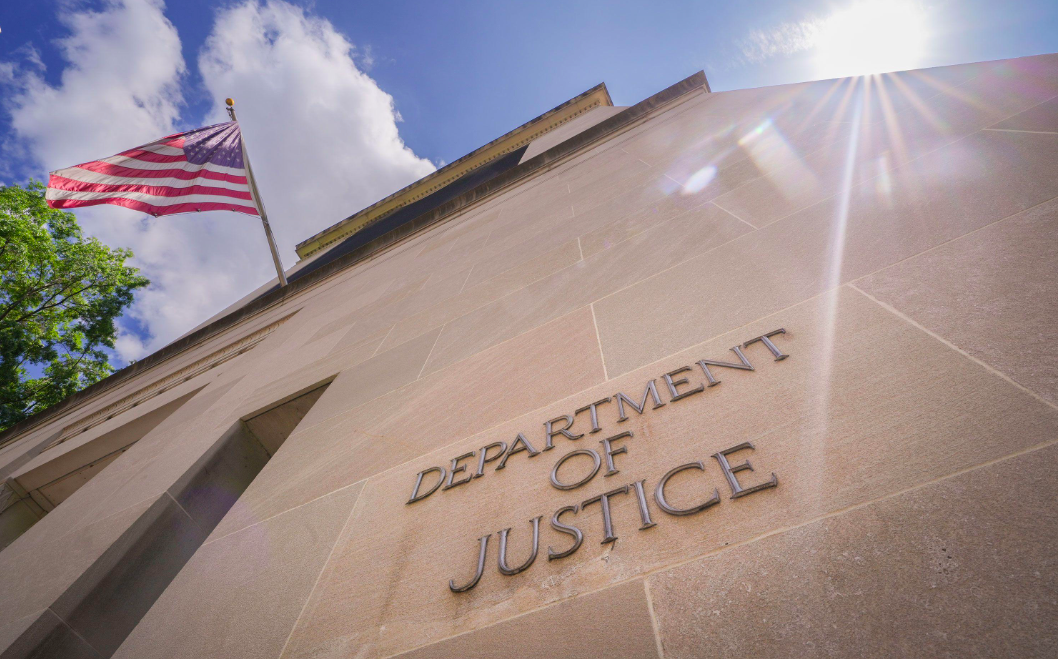
The US Department of Justice has obtained court authorization to seize or restrain more than $1.2 billion in cryptocurrency connected to a large cyberattack that investigators attribute to a North Korean hacking group, according to an announcement released on November 12.
The action marks a significant enforcement step in digital asset tracing, but it does not by itself indicate that a large volume of coins is headed to the market. The Justice Department has not said the recovered assets consist entirely of Bitcoin, and the legal process around the funds is still unfolding.
What the Justice Department Announced
According to the department's official announcement, US authorities secured court authorization to seize or restrain more than $1.2 billion in cryptocurrency linked to an attack carried out on October 29. Government agencies working with private-sector partners have collectively frozen more than $2.7 billion in stolen assets, the department said.
Investigators attributed the attack to TraderTraitor, a hacking group described as linked to the North Korean military and accused of stealing more than $6 billion in virtual assets. The recovery effort involves the FBI, the Justice Department, cryptocurrency service providers and other federal agencies.
M. Scott Proctor, a senior Justice Department national security official, said the government intends to use its available legal tools to seize illicit proceeds and return them to their rightful owners.
The work is not finished. Investigators are still tracing assets as they move through cryptocurrency bridges, mixers and exchanges, a process the department described as complex because funds can travel across multiple blockchain networks.
A Separate Case Involving Video Meetings
The department also announced action against a separate North Korean operation known as FaceStealer, which allegedly used deceptive video meetings and artificial intelligence-generated impersonations to steal more than $400 million over an 18-month period.
The two cases together point to the growing role of blockchain security as cryptocurrency use expands.
Freezing Is Not the Same as Selling
For investors, the key question is whether recovered assets could eventually add selling pressure. The distinction between freezing, seizing and selling matters here.
A frozen asset cannot necessarily be moved by its current holder, while court-authorized seizure or restraint does not automatically mean the government has liquidated the cryptocurrency. Recovered funds may also become subject to forfeiture proceedings, in which courts determine ownership and how the assets should be handled.
The $1.2 billion figure therefore should not be read as a government crypto sale in the near term. The announcement also covers virtual assets broadly, and the department did not establish that the full amount is Bitcoin.
For Bitcoin holders, any direct market effect would depend on whether Bitcoin is among the recovered assets, how much is involved, and whether any coins eventually reach exchanges. Government custody of recovered cryptocurrency does not necessarily increase circulating supply or create immediate selling pressure. If authorities return funds to victims, the recipients would decide whether to hold, transfer or sell them.
Why Tracing Progress Matters for Confidence
Beyond market implications, the operation highlights that blockchain transactions can be traced and that cooperation among exchanges, blockchain investigators and law enforcement can sometimes stop stolen funds from moving beyond recovery.
The department's ability to coordinate the freezing of billions of dollars in digital assets suggests growing sophistication in cryptocurrency investigations. That may matter as institutional investors increase their exposure to Bitcoin and other digital assets, since large financial institutions generally require reliable custody arrangements, risk-management procedures and effective responses to financial crime.
Better recovery mechanisms may address some of those concerns, though they cannot remove the risks associated with cryptocurrency theft. For Bitcoin, longer-term implications could prove more significant than any immediate price reaction, as a market where authorities and service providers can more effectively trace stolen assets may appeal to investors who previously saw cryptocurrency security as a major obstacle.
The outcome of the current recovery effort remains uncertain. Developments to watch include additional asset freezes, forfeiture proceedings and official announcements about the return or disposition of recovered funds.




