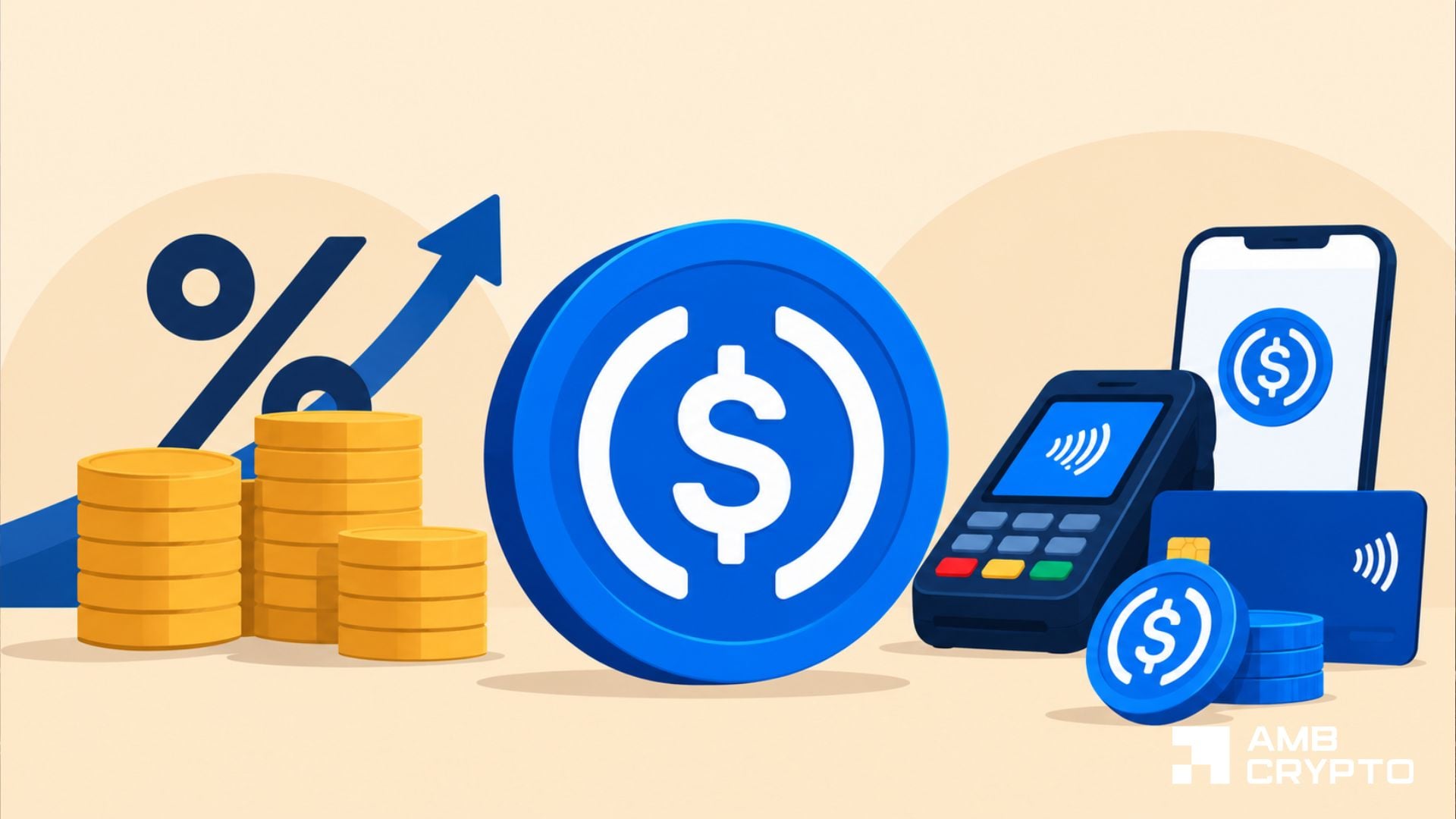
Stablecoin growth faces headwinds from rising bank deposit rates. According to research by the Bank for International Settlements, a one basis point increase in bank interest rates reduces stablecoin market capitalization growth by approximately 3% over ten weeks.
With stablecoins currently growing at around 15% annually, this pressure would reduce that rate to approximately 12% per year. USD Coin shows greater sensitivity than competitors, declining 4.8 percentage points compared with USDT's 1.9-point reduction. This difference reflects USDC's stronger ties to U.S. users and institutions, where higher bank yields make traditional deposits more attractive relative to stablecoins.
The effect remains specific to stablecoins, as researchers found no significant correlation with other cryptocurrencies. Increasing interest rates may slow growth but will not eliminate existing stablecoin supply, which currently exceeds $300 billion.
Payment Rails Expanding
Visa's growing integration of USDC payments offers a potential counterweight to these headwinds. Visa Direct now enables cross-border wage payments and purchases using USDC-funded payouts across more than 180 countries, with Inyo Global as an initial partner. This infrastructure allows businesses to access funds immediately, bypassing traditional banking hours and correspondent networks.
USDC settlement volume on Visa's network reached a $20 billion annualized run rate, representing more than a 15-fold increase year-over-year. This growth suggests stablecoins are increasingly used for actual payments rather than speculative holdings.
However, measuring transactional activity remains crucial. USDC total circulating supply stands at $72.6 billion. If settlement volume grows faster than circulating supply, it could offset some demand loss from rising deposit rates. Sustained growth depends on merchants continuing to process multiple transactions using prefunded USDC balances.