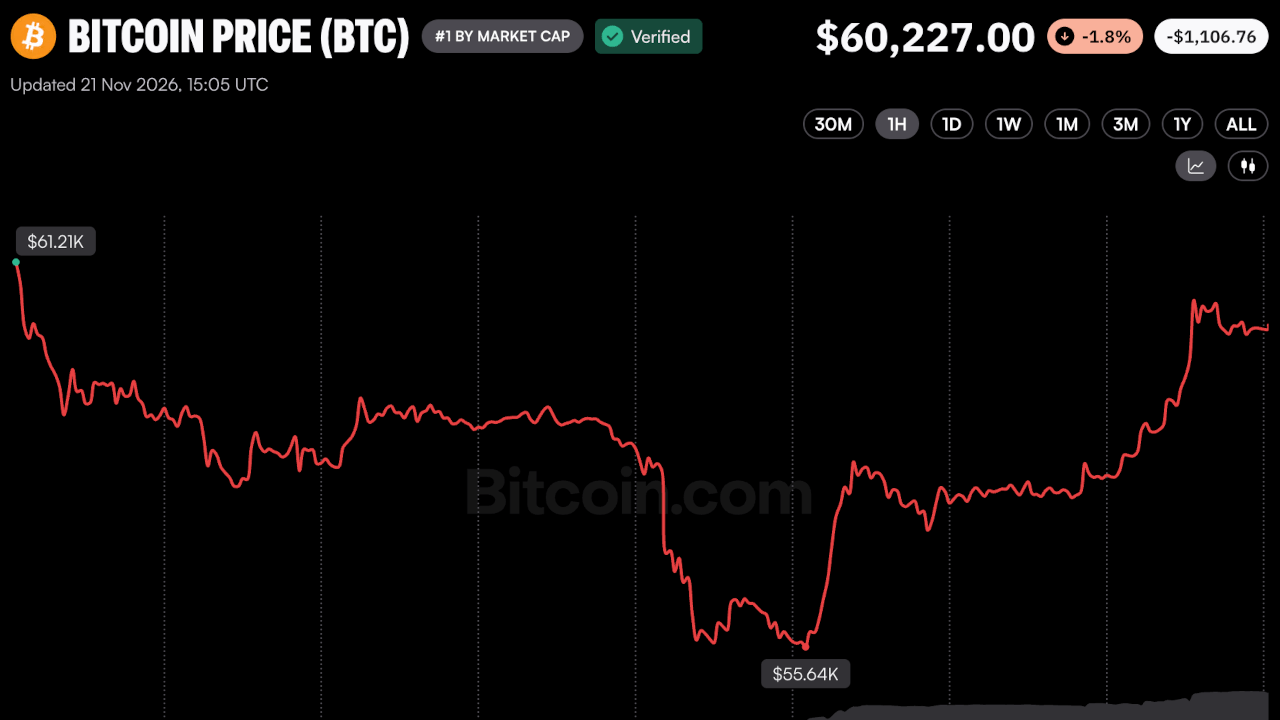
Bitcoin declined significantly in November, falling approximately 24% from its pre-election high to around $60,000. Despite the downturn, Matthew Sigel, head of digital assets research at VanEck, maintained a bullish stance on the cryptocurrency following the US midterms.
Sigel argued that rising government spending and debt issuance under a Democratic-led Congress could ultimately benefit Bitcoin by limiting its long-term risk compared with other assets. He attributed the recent price weakness to liquidity tightening and short-term market pressures, including factors outside the crypto sector.
To support his outlook, Sigel pointed to historical precedent. Following the 2022 midterms, Bitcoin rallied approximately 300%. He noted that similar Federal Reserve rate conditions and prior market dynamics exist in the current environment.
Sigel also cited on-chain metrics, specifically a measure called net unrealized profit/loss (NUPL), which he said currently sits in the "Hope/Fear" zone. This reading suggested that long-term Bitcoin holders were not capitulating despite liquidity pressures.
VanEck has forecast a $100,000 Bitcoin price target by 2027, anchored to the cryptocurrency's four-year cycle that tracks with network halving events. The firm identified two main catalysts for reaching this target: institutional adoption and regulatory clarity.
Near-term price action between $58,000 and $65,000 and developments in how incoming Congress addresses digital asset regulation could test whether VanEck's 2027 projection proves accurate.