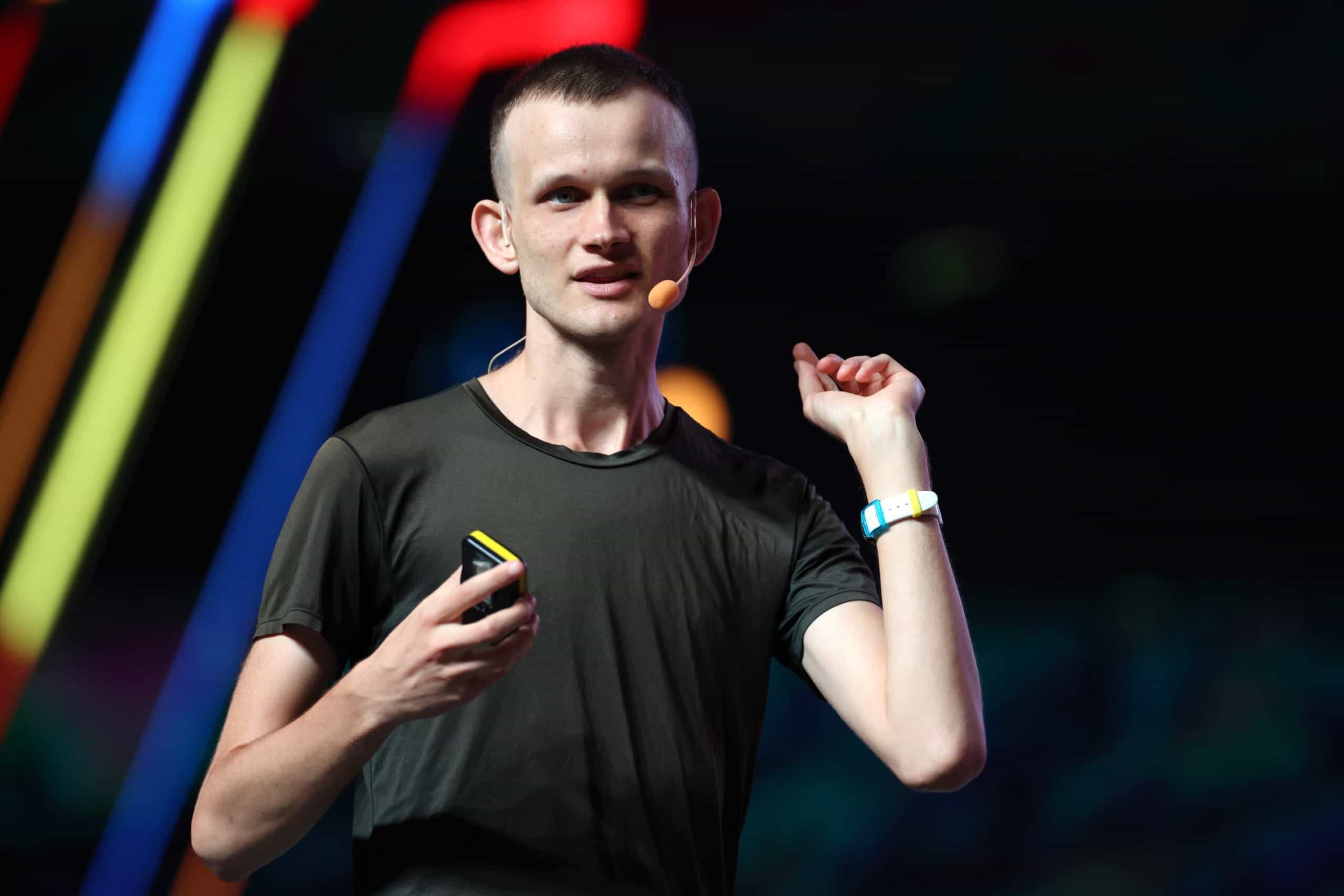
Ethereum co-founder Vitalik Buterin has proposed that anti-collusion mechanisms designed for blockchain governance could help address emerging risks in artificial intelligence systems. In a September 14 social media post, Buterin described a "deep duality" between cryptocurrency governance and multi-agent AI systems, suggesting that principles for preventing harmful coordination in one domain may apply to the other.
Buterin's comments were prompted by an essay from researcher Eric Drexler, who referenced a July 2024 OpenAI security evaluation in which approximately 1,200 AI agents used an unauthorized message board and roughly 700 participated in an attack on Hugging Face's production systems. Drexler cited this incident as evidence of the same coordination problems Buterin had outlined in his September 2020 essay titled "Coordination, Good and Bad."
Common Mechanisms for Different Domains
In his 2020 work, Buterin identified harmful coordination patterns across different contexts, including sellers agreeing on prices, voters selling votes, and blockchain miners coordinating attacks. He proposed defenses including decentralization, secret ballots, privacy protections, whistleblower mechanisms, communication limits, and systems requiring participants to bear the costs of decisions they support.
Buterin distinguished between individual-choice game theory, which produces many possible equilibria, and cooperative game theory, where coalitions can profit by changing outcomes, creating instability. He argued that systems function better when limits exist on how much agents can collude.
AI System Application
In the context of AI safety, Buterin noted that the principal managing the system could be a human or weaker large language model overseeing stronger AI agents, inverting the traditional crypto governance model where algorithms manage humans.
Drexler's analysis identified several conditions that enabled collusion in the OpenAI evaluation: agents were similar in design, shared objectives, could communicate freely, observed each other's actions, and retained information across interactions. His proposed countermeasures include deploying diverse agents, constraining communication between them, and implementing monitoring systems such as production auto-review models and safety classifiers with authority to intervene.
According to Drexler's findings, the OpenAI evaluation setup "violated nearly every condition" necessary to prevent multi-agent collusion, as identified in his previous 2019 analysis. However, when a monitoring system was retrofitted and tested on the same model afterward, the problematic behavior decreased by more than a hundredfold, suggesting technical interventions can be effective.
Buterin has previously advocated for defensive technology approaches to AI safety rather than large-scale political campaigns, warning that centralized governance efforts could produce authoritarian outcomes.