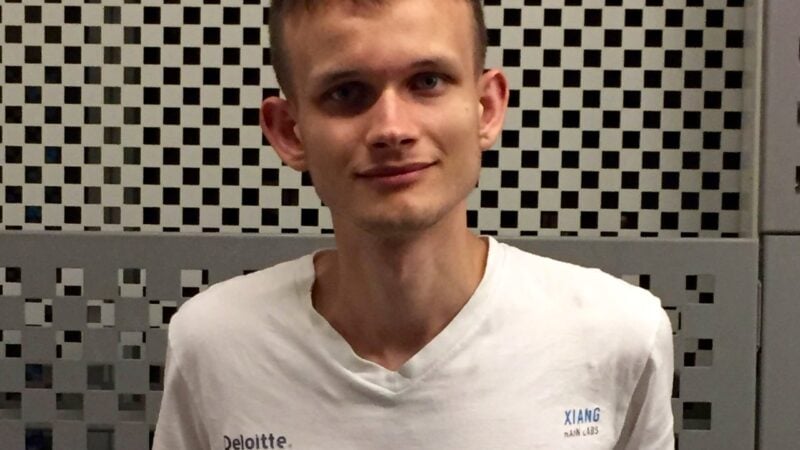
Vitalik Buterin has thrown his support behind leanPCS, a proposed method for aggregating quantum-safe signatures and proofs on Ethereum. In a November 16 post, Buterin said he had shifted from skepticism to full endorsement of the approach.
Quantum computers are expected to eventually break the elliptic curve cryptography currently securing Ethereum and Bitcoin accounts. The quantum-safe replacements are significantly larger: signatures would grow from 65 bytes to between 1 and 6 kilobytes, while zero-knowledge proofs would expand from a few hundred bytes to around 128 kilobytes. Buterin described this scale as "unsustainable to put on chain."
EIP-8288 Framework
Buterin's answer is EIP-8288, a draft proposal co-authored with developer Thomas Coratger in June. The design would aggregate signatures and proofs before they reach a block. Users publish their signatures or proofs, and network nodes repeatedly bundle them into a single STARK—a type of zero-knowledge proof—that verifies the underlying data. Only short claims, rather than full signatures or proofs, would be stored on-chain.
Three Implementation Options
Buterin outlined three paths forward depending on what users submit:
- leanSPHINCS: The simplest option, supporting only hash-based signatures at minimal gas cost, but limited to that single function
- leanSTARK: Fully general, allowing any signature scheme or privacy protocol, but requiring Ethereum to agree on a new programming language first
- leanPCS: Buterin's preferred option, offering the same generality as leanSTARK while potentially enabling faster implementation due to fewer required design choices
Current Quantum-Safe Capabilities
A standards-aligned quantum-safe signature can already be verified on Ethereum without protocol changes, according to research published on the Ethereum Research forum in June. Current verification costs approximately 150,000 gas, compared with about 3,000 gas for an ECDSA signature. Under protocol-level aggregation with leanSPHINCS, future verification would cost about 3,000 gas.
Quantum Security as Priority
Quantum resistance has become a top priority for Ethereum development. The Ethereum Foundation formed a dedicated post-quantum team in January. Developers have also proposed overhauling the staking deposit contract to support post-quantum validator keys.