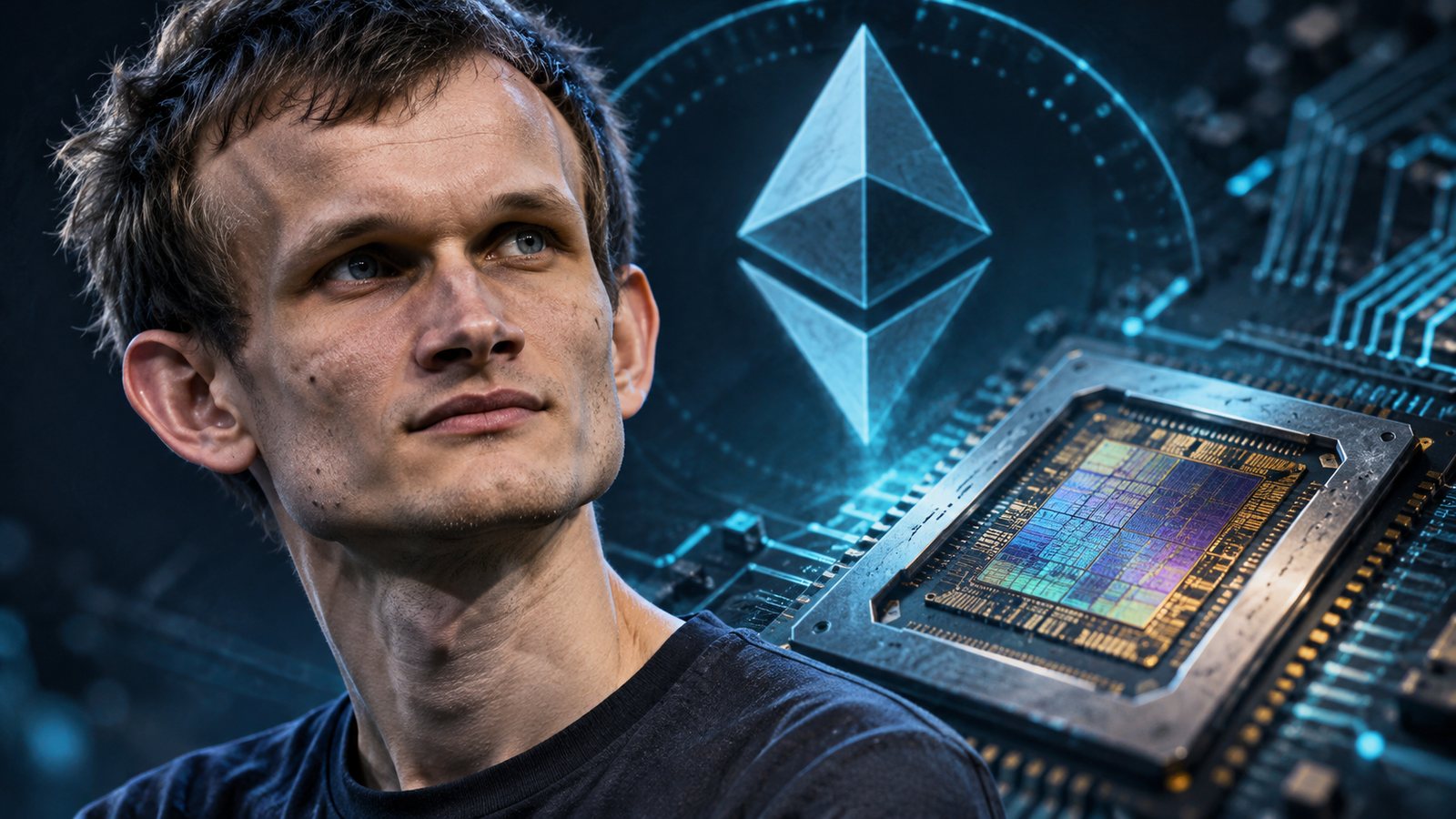
Ethereum co-founder Vitalik Buterin is extending his security argument beyond software to the physical chips inside cryptocurrency devices, warning in a November 26 essay that “Not your silicon, not your keys.” The proposal calls on manufacturers to publish physical chip layouts, known as GDS files, so investigators can compare real hardware with its intended design.
Buterin’s essay examines supply chain attacks involving tampered wallets and the possibility of malicious modifications hidden inside apparently legitimate chips. It is a proposal for improving security, not an assertion that existing hardware wallets have been compromised.
Who is Vitalik Buterin?
Buterin is a Russian-Canadian programmer, researcher and writer who conceived Ethereum in 2013 at the age of 19. Born in Russia in 1994 and raised in Canada, he discovered Bitcoin in 2011 and later co-founded Bitcoin Magazine.
He studied computer science at the University of Waterloo, where he worked as a research assistant to cryptographer Ian Goldberg. The University of Waterloo says Buterin received a $100,000 Thiel Fellowship in 2014 and left university to work on Ethereum full-time.
How Ethereum took shape
In November 2013, Buterin wrote the initial draft of what became the Ethereum whitepaper. The 2014 whitepaper described a programmable blockchain for smart contracts and decentralized applications, allowing developers to build on a general-purpose environment rather than creating a new network for every application.
Ethereum was not built by Buterin alone. Its founding team included Gavin Wood, Joseph Lubin, Charles Hoskinson, Anthony Di Iorio, Mihai Alisie, Jeffrey Wilcke and Amir Chetrit alongside Buterin. The first live network, Frontier, launched on July 30, 2015.
The platform later became a foundation for much of decentralized finance, including stablecoins, decentralized exchanges, lending protocols and tokenized financial assets. Its transition to proof-of-stake and development of Layer 2 scaling networks have shaped its first decade.
The hardware security problem
Hardware wallets are designed to keep private keys away from potentially compromised computers and smartphones. Buterin’s essay asks what happens if the device itself cannot be trusted.
Open-source firmware lets researchers examine the instructions a device runs, but it reveals little about whether a manufactured chip has been altered. Publishing GDS files would give investigators a reference for inspecting actual hardware. Knowing what a chip is designed to do is not the same as knowing what the chip inside a wallet actually does.
Buterin highlights work by hardware security researcher Andrew Huang, known as bunnie, on a technique called Infra-Red, In Situ inspection, or IRIS. The method uses the fact that silicon becomes transparent at certain infrared wavelengths, allowing researchers to examine parts of a chip’s internal structure without necessarily removing it from its circuit board. It could help detect substituted components or unexpected differences between manufactured chips and their intended designs.
The technique has limits. In a 2024 update, Huang explained that infrared imaging has resolution constraints and cannot reliably reveal every microscopic feature of modern chips. Combining imaging with additional electrical testing could improve confidence in a component’s integrity.
Buterin acknowledges that sophisticated hardware inspections are more likely to be carried out by specialist organizations than ordinary wallet owners. Publishing an open hardware design does not automatically make a wallet secure, just as publishing a smart contract’s code does not establish that it is free of vulnerabilities.
Does Buterin control Ethereum?
Buterin is Ethereum’s most recognizable co-founder, but he is not its CEO. The network is maintained through independent developers, researchers, node operators, validators and other ecosystem contributors. Changes involve technical proposals, discussion, software development and adoption by participants.
He has considerable influence over those discussions, but publishing a proposal does not give him authority to implement it unilaterally. In an April 2025 governance announcement, the Ethereum Foundation described his responsibilities as providing technical and intellectual guidance to the wider ecosystem.
What is known about his wealth?
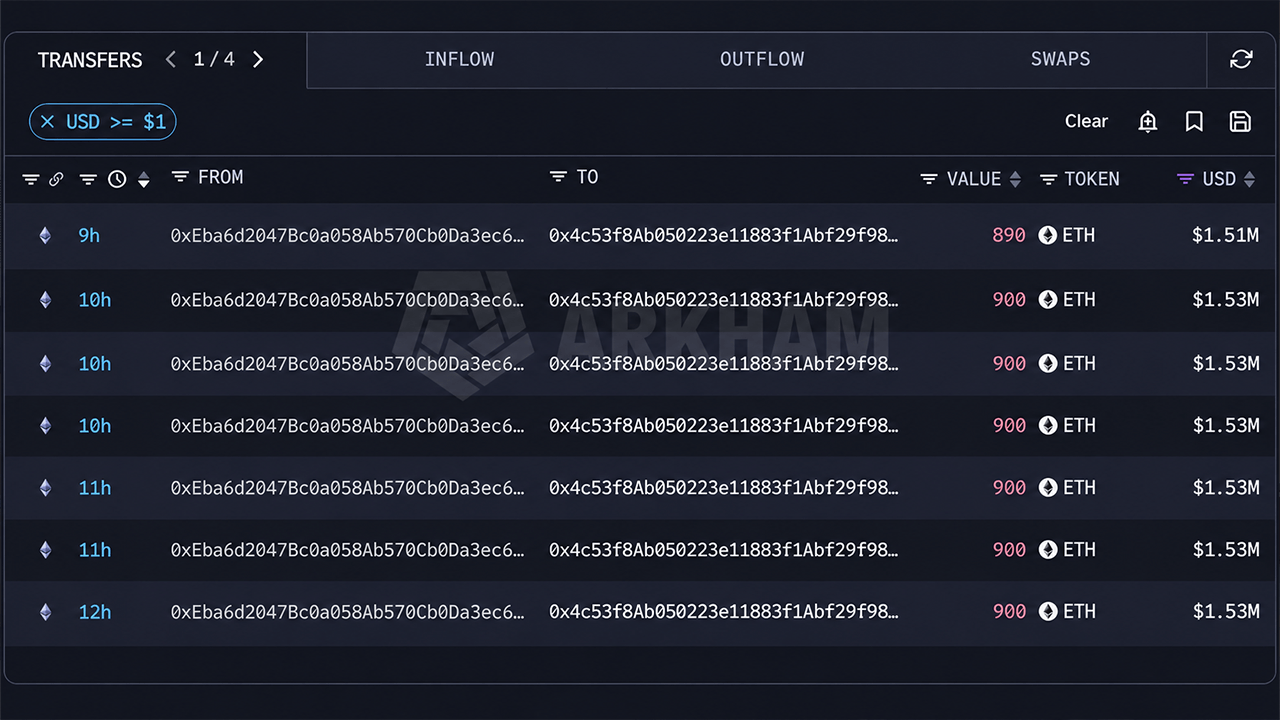
Much of Buterin’s publicly visible cryptocurrency wealth is tied to ETH. Arkham Intelligence attributes about $389.9 million in digital assets to wallets linked to him, including 224,249 ETH at the time of capture. Data attributed to Arkham also shows tracked Ethereum holdings falling from approximately 663,000 ETH in 2015 to 240,000 ETH in 2025.
His exact net worth is not publicly established. Blockchain analytics can estimate assets in attributed wallets, but those figures may not account for all investments, liabilities, private assets or holdings at unidentified addresses. Wallet valuations also fluctuate with cryptocurrency prices.
A broader push for verifiability
The hardware essay fits Buterin’s longer-running interest in making digital infrastructure independently verifiable. In September 2025, he published “The Importance of Full-Stack Openness and Verifiability,” exploring how transparency could extend across the hardware and software underpinning important parts of people’s lives.
His research also covers cryptography, privacy, blockchain scalability and Ethereum’s move toward greater quantum resistance. He has called for experimentation across Ethereum’s application layer without compromising censorship resistance, open-source development, privacy and security.
There is a commercial obstacle. Semiconductor manufacturers invest heavily in proprietary processes, and designing chips specifically for inspectability can involve performance compromises. But a device signing a cryptocurrency transaction does not necessarily need the computing power of a modern processor, making security-focused hardware a potential starting point.
For crypto investors, the next meaningful development may come from hardware manufacturers willing to make their products independently inspectable, rather than another software update promising greater security.