Web3 gaming is undergoing a significant market correction. After years of launching games built around token economics and NFT collections, the sector is now facing a fundamental shift: projects must prove they are entertaining games first, before blockchain features matter.
The industry remains active, with thousands of gaming decentralized applications still operating across multiple blockchain networks. However, the landscape has changed substantially. Capital allocation has become more selective, and projects that fail to retain players are disappearing faster than in previous market cycles.
The End of Token-Centric Design
Early play-to-earn games benefited from novelty, where simple gameplay could be tolerated if the earning mechanism was compelling. This model created structural fragility: games dependent on token prices became extremely sensitive to market volatility, while player retention often depended on continuous rewards rather than genuine engagement.
Successful Web3 games are now reversing this priority. Rather than building the game around token mechanics, developers are integrating blockchain as optional infrastructure that enhances specific features like ownership, marketplaces, or reward transparency. In this model, the game must function as entertainment independent of its blockchain components.
Reducing Friction for Mainstream Adoption
A notable trend among stronger Web3 titles is the reduction of cryptocurrency friction during onboarding. Many newer projects now offer browser logins and social account authentication before introducing wallet requirements, treating blockchain as background infrastructure rather than the product's central identity.
This approach mirrors how mainstream software typically succeeds: users engage with applications based on experience and functionality, not technical architecture. Tokens that serve a specific function within an active economy can become useful. Tokens created merely because a project desired one are increasingly difficult to justify.
Market Consolidation Accelerates
Current market data reflects this shift. While industry trackers documented over 2,300 gaming decentralized applications and a multi-billion-dollar gaming-token market in August 2026, traditional venture funding flowing into the sector was minimal during the same period. Web3 gaming has not disappeared; it has lost the assumption that attaching blockchain to any game concept deserves capital allocation.
This mirrors traditional gaming markets, where most projects fail and most studios do not create blockbusters. The distinction is that Web3 gaming once promised financial engineering could circumvent these market realities.
Digital Ownership and Use Cases
Digital ownership remains a potential advantage for certain gaming contexts. Players already engage with substantial virtual economies involving skins, collectibles, weapons, and trading cards. The question for Web3 adoption is whether clearer ownership, more open trading, and cross-ecosystem asset portability provide real value—an answer that will vary significantly by game genre and design.
Creator Economies as Alternative Applications
An often-overlooked opportunity exists in supporting creator economies around games rather than player-facing blockchain features. Modern games generate substantial economic activity through streamers, video editors, modders, and community organizers. This creator layer faces fragmented payments, difficult campaign coordination, and opaque reward systems—problems where blockchain infrastructure could provide genuine utility through transparent settlement, cross-border payments, and coordinated incentive systems.
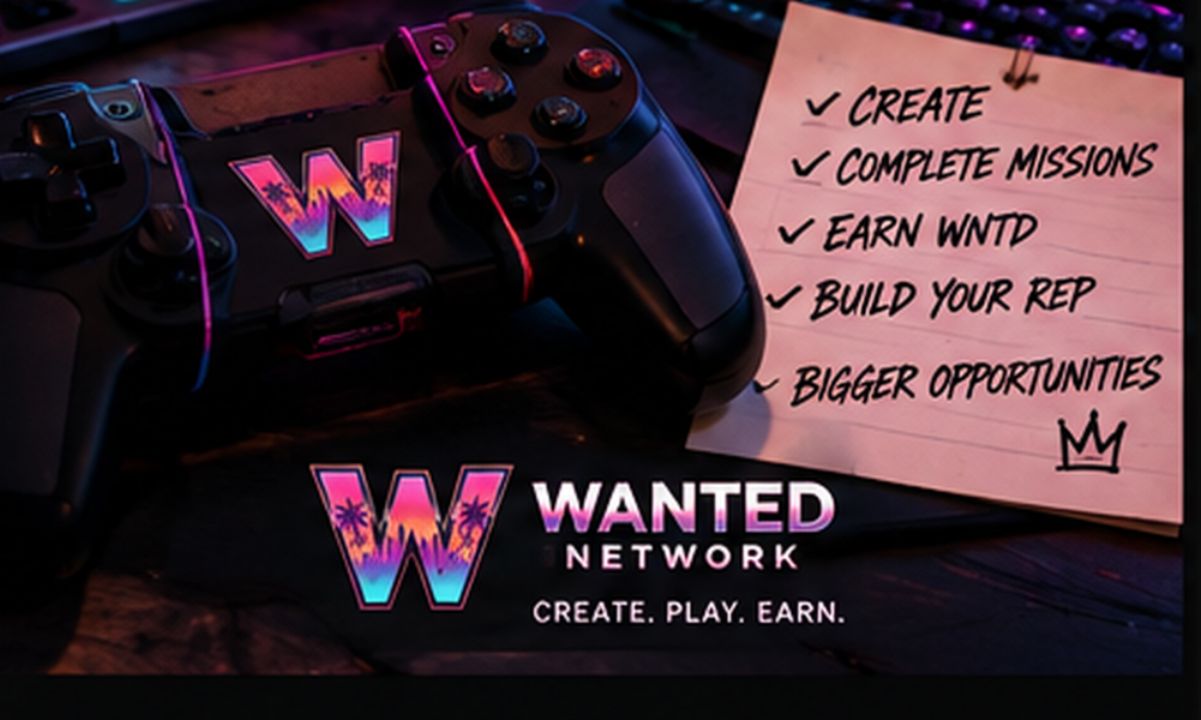
Wanted Network represents this alternative approach, focusing on a creator mission system with defined objectives and rewards rather than player-facing NFTs or tokens. The platform's WNTD token functions within a creator marketplace designed to facilitate advertiser-funded campaigns, making the token a coordination mechanism rather than a required game asset.
The Path Forward
The strongest versions of blockchain gaming will likely operate mostly invisibly. They will appear as well-designed games with unusually flexible ownership, competitive titles with transparent systems, or creator ecosystems with better payment coordination. Technology becomes more credible when users stop being asked to care about the technology itself.
The current correction is forcing the question Web3 gaming should have asked initially: would users value this if the token disappeared? Projects that can answer affirmatively may finally position blockchain as a genuine advantage rather than a distraction.