
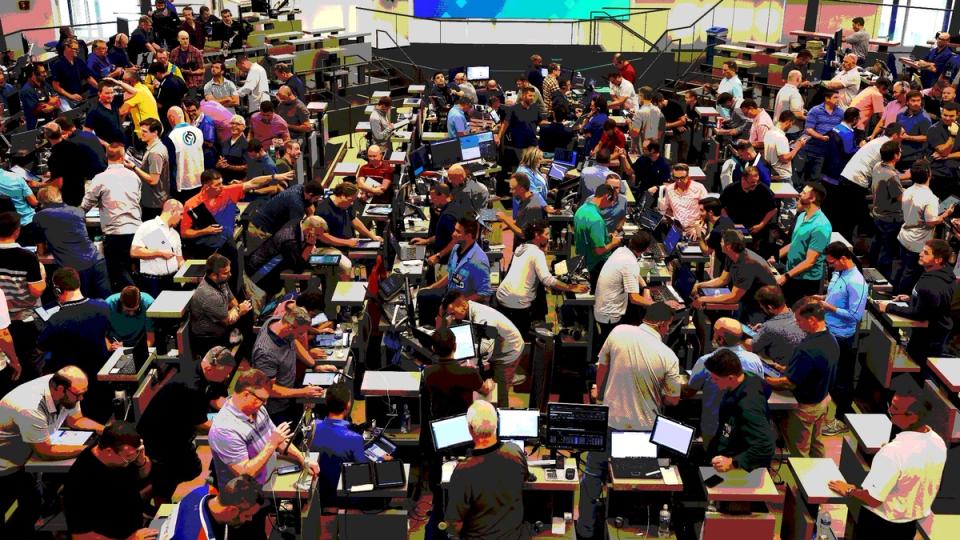
Those markets function because trading activity sits atop a vast network of credit relationships, clearing brokers and prime brokerage arrangements, Mercer says.
“That’s what the world’s economies and capital markets are built on,” he added.
When LMAX launched institutional crypto venue LMAX Digital in 2018, Mercer expected similar infrastructure would quickly emerge in digital assets. Eight years later, he believes its absence remains one of the industry’s biggest constraints.
Mercer remains an enthusiastic supporter of blockchain technology, citing instantaneous settlement amd transparent onchain records. But while atomic settlement and delivery-versus-payment transactions are valuable, he argues they are not sufficient for global capital markets.
“The world today is built on leverage and credit, and it will remain so,” Mercer says.
The collateral problem
A central challenge is the inability to move collateral efficiently between traditional and digital financial systems.
Today’s institutions often operate within separate regulatory and operational environments, with traditional assets, digital assets and stablecoins trapped inside distinct “walled gardens.” Collateral cannot move freely between them, reducing capital efficiency and limiting participation.
Market volatility during the first quarter highlighted the issue, Mercer said, as investors rotated between equities, gold and bitcoin in response to macroeconomic uncertainty.
“If you’ve pre-positioned fiat at a centralized exchange, you can’t necessarily deploy that collateral elsewhere when opportunities arise,” he said.