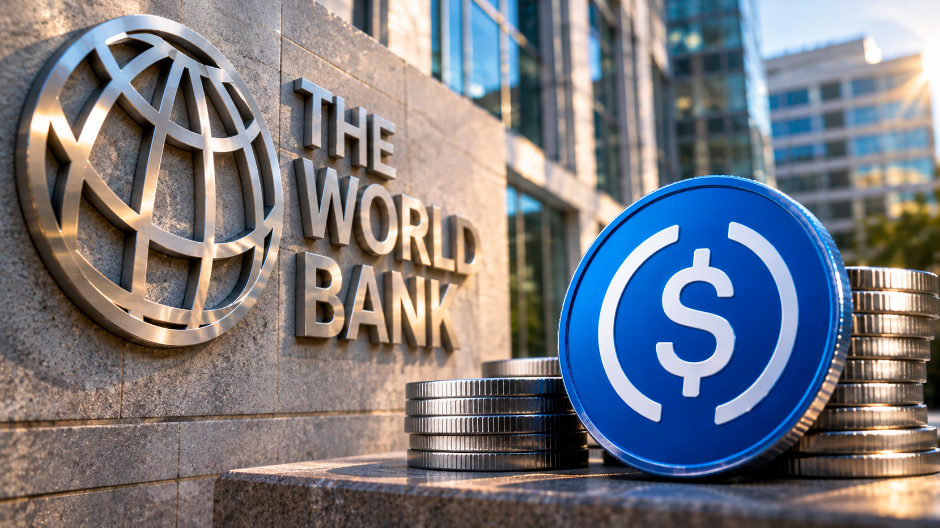
The World Bank Group announced Tuesday that it will explore using Circle's USDC stablecoin to facilitate faster and more cost-effective payments to borrowing countries. The collaboration involves Circle, which will provide tools for USDC issuance and transfers, and Citibank, which will connect the initiative to existing banking infrastructure.
The partnership builds on the World Bank's blockchain platform, which enhances fund traceability for investments in developing countries. The group plans to begin with borrowing nations that permit digital asset use, integrating stablecoin payments into its current international banking network.
The World Bank, a development institution owned by member countries, lends to governments in low- and middle-income nations and provides grants to support infrastructure including schools, health clinics, and clean water systems.
The bank launched its blockchain tool FundsChain in 2025 to provide transparency on project spending. The platform now covers more than 350 projects across 96 countries, allowing project teams and auditors to track fund allocation.
Prior Concerns and Recent Research
In 2023, the World Bank cautioned that widespread stablecoin adoption could displace local currencies and complicate central bank monetary management. More recently, in June, CGAP—a research organization based at the World Bank—published findings on using stablecoins for humanitarian aid delivery. The report noted that stablecoins can simplify cross-border money transfers for aid agencies, though recipients converting stablecoins to local currency may incur conversion fees.