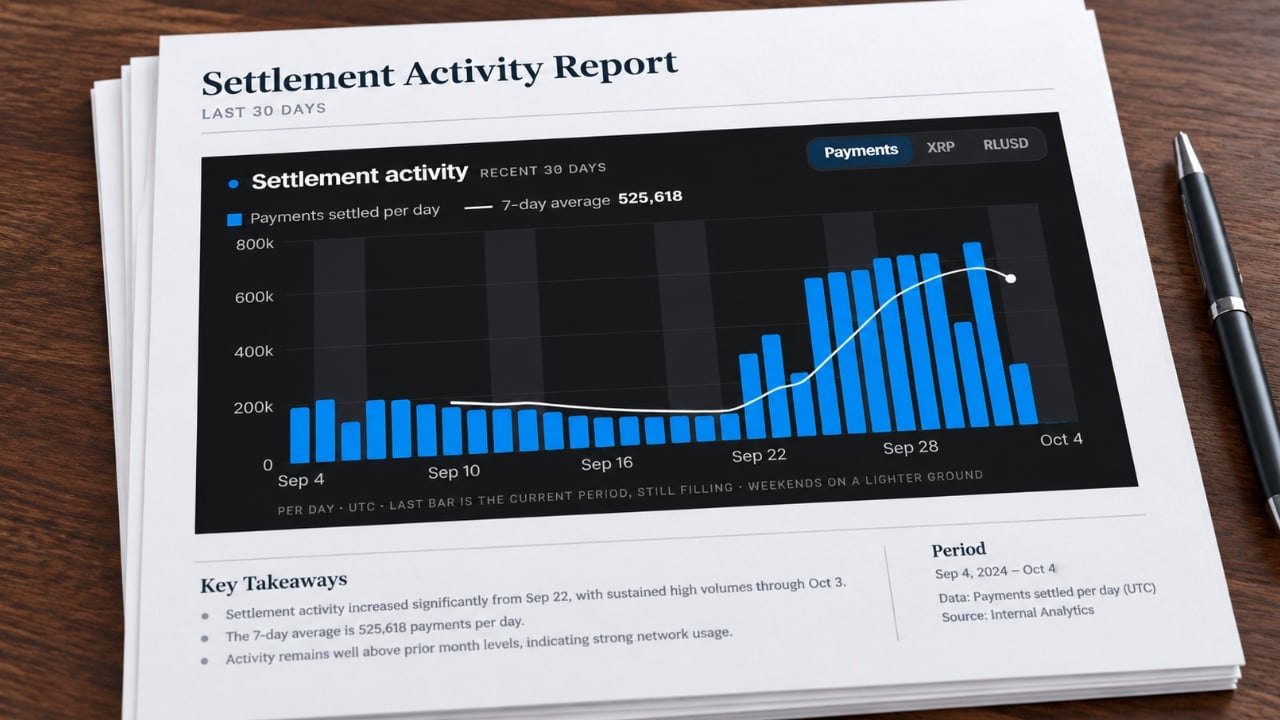
XRP Asia has officially launched as a Singapore-based regional organization, aligning with Ripple's broader preparation for a 2027 initiative to move a higher volume of customer activity onto the XRP Ledger (XRPL). Debuting on October 3, the group aims to connect regional ecosystem development with a company-wide strategy focused on channeling transaction volume, liquidity, and credit activity through the ledger.
The XRP Ledger Foundation stated that the organization will support builders, startups, and regional communities. Jointly founded by Ripple and the XRP Ledger Foundation, XRP Asia is led by Sabrina Tachdjian.
Expansion and Developer Support Across Asia
The organization plans to build upon established communities in Japan and Korea while expanding its programs into other technology hubs throughout the region. Developer initiatives will feature learning resources, system-integrator training, hackathons, office hours, and ship-it clinics designed to assist teams in deploying projects.
Startup support will also include go-to-market assistance, partner introductions, incubation, grant connections, joint events, and investor introductions. These efforts build upon prior ecosystem investments, including Ripple's creation of an XRPL Japan and Korea Fund under its one billion XRP developer-support commitment, which targeted tens of millions of dollars toward opportunities in those markets. Ripple has also expanded university blockchain research in South Korea, Japan, Singapore, Taiwan, and Australia.
The launch of XRP Asia coincided with XRP Seoul 2026, an event featuring discussions on payments, tokenized deposits, and on-chain finance involving banks and securities firms.
2027 Payments Strategy and XRPL Credit Integration
During the Seoul event, Ripple President Monica Long outlined a 2027 objective to route more customer transaction volume directly onto the XRPL. The strategy utilizes existing payment infrastructure alongside an expanded pilot that incorporates the ledger's decentralized exchange into the company's payment operations.
In addition to transaction routing, Ripple intends to connect its payment customers with XRPL lending infrastructure to deepen its credit business. According to Long, XRP deposited into lending pools could supply funding for payment customers, bridging pooled liquidity with credit utilized in the payments sector.
A key component of this approach is XLS-66, an XRPL-native proposal for fixed-term, uncollateralized loans funded through pooled assets in Single Asset Vaults. While the specification manages loan creation, repayments, and defaults on-chain—with credit assessment and risk management remaining off-chain—XLS-66 is currently a draft amendment requiring validator approval before any mainnet activation.