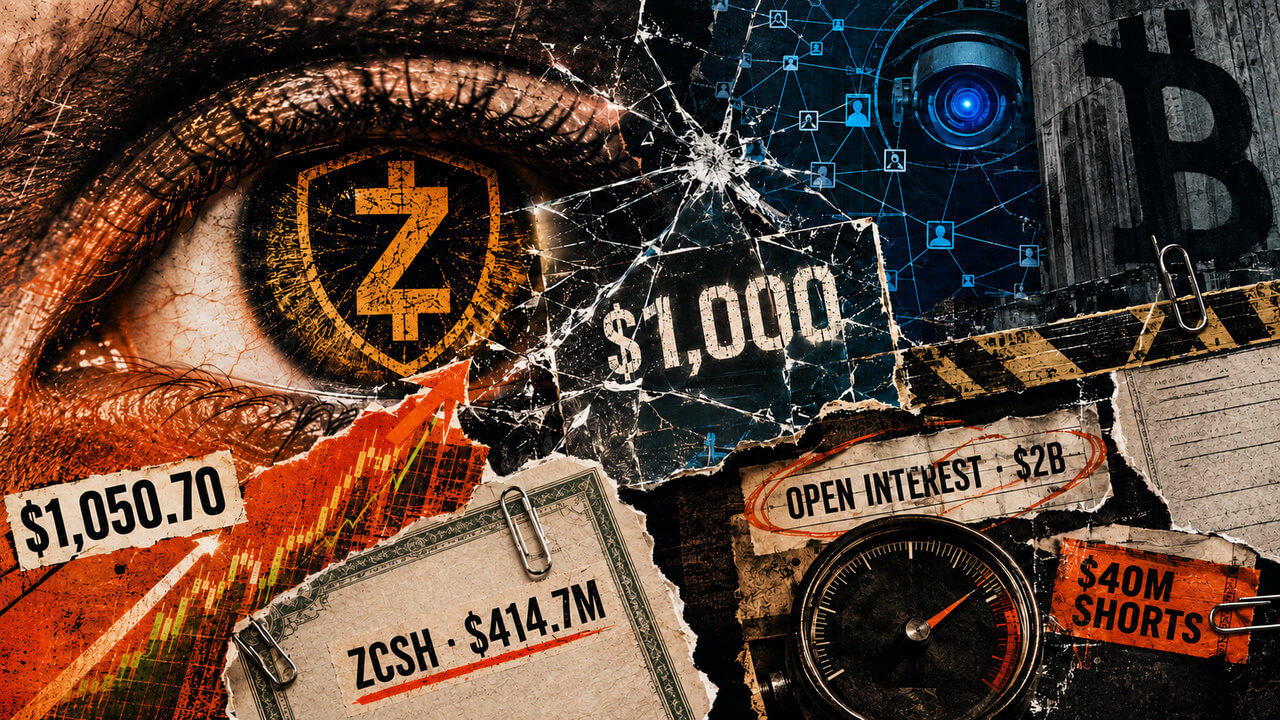
Zcash broke above $1,000 on September 4, pushing the asset value of Grayscale's ZCSH spot ETF past $400 million less than two weeks after its August 25 launch on NYSE Arca.
ZEC registered an intraday high of $1,050.70, gaining roughly 20% over 24 hours and nearly 100% over the preceding month. The ETF's assets climbed to $414.7 million as of September 3, compared with $304.6 million when trading began. ZEC holdings in the fund increased from 387,849 at launch to 428,613 by September 3, while shares outstanding reached 5.35 million. The fund inherited assets from the Grayscale Zcash Trust, with much of the growth driven by ZEC's price appreciation.
The September 4 surge occurred alongside Bitcoin's advance past $82,000 and Ethereum's reclamation of $2,500, though Zcash's move was considerably larger. Approximately $40 million of ZEC shorts were liquidated within 24 hours, intensifying a rally already building momentum. Zcash futures open interest crossed $2 billion for the first time, while 24-hour futures volume climbed above $6 billion for the first time since mid-August.
The price movement represents a dramatic shift over a longer timeframe. ZEC traded around $40 a year earlier and has returned to the top 10 largest cryptocurrencies by market capitalization for the first time since 2018.
Privacy and Differentiation
Grayscale argues that Zcash has advantages beyond its privacy features. The asset manager points to its fixed 21 million supply, Bitcoin-like emissions schedule, decade of distribution history, work on quantum recoverability, planned increases in transaction throughput, and formal verification efforts for its shielded pool.
Bitcoin transactions are permanently recorded on a public ledger, creating potential privacy vulnerabilities once an address is linked to an offchain identity. Zcash's shielded transactions use zero-knowledge cryptography to conceal sending and receiving addresses and transaction amounts, allowing users to retain Bitcoin-like scarcity without making transfers permanently visible.
Grayscale contends that advances in artificial intelligence could accelerate address labeling and blockchain analysis on transparent blockchains, potentially increasing the relevance of privacy features. The asset manager describes this as a third major wave of concern over financial privacy, following computerization of financial records in the 1970s and internet growth in the 1990s.
Regulatory and Competitive Challenges
Privacy architecture presents significant obstacles for Zcash adoption. Shielded transactions can complicate sanctions screening, anti-money laundering controls, and efforts to trace illicit funds, creating regulatory and compliance concerns that have historically weighed more heavily on privacy-focused cryptocurrencies than on Bitcoin.
Bitcoin maintains substantial advantages in liquidity, infrastructure, brand recognition, and more than 15 years of network growth. Bitcoin accounts for approximately 93% of the market capitalization of Grayscale's Currencies Crypto Sector. Zcash remains worth less than 1% of Bitcoin's value even after rising roughly 19-fold from its $40 level a year ago.
The question of whether Zcash's latest gains can produce durable market-share gains once current momentum cools remains unresolved, with regulatory acceptance and competitive dynamics likely to prove decisive.