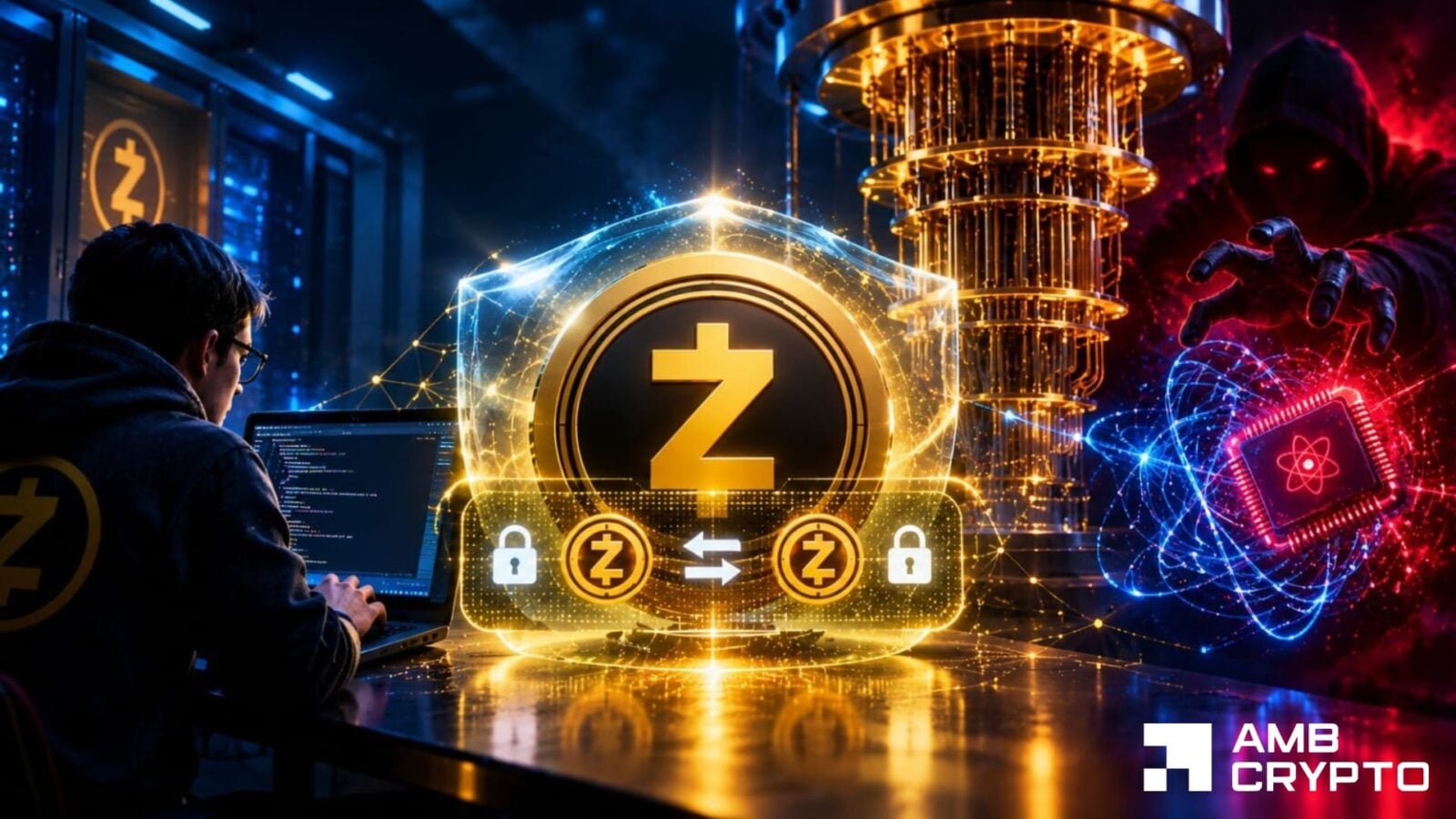
Zcash developers are advancing quantum-resistance measures for privacy transactions. The Zakura proposal aims to limit exposure to potential future quantum computing attacks by allocating unique private keys to individual ZEC swaps conducted through NEAR Intents.
Currently, when users swap private ZEC for USDC via NEAR Intents, a single private Zcash address is published on-chain and remains visible. While this address reveals minimal information to conventional computers, quantum computers could theoretically work backwards from public keys to recover private keys—a risk that persists as long as public keys remain accessible on-chain.
Proposed Solution
Zakura's fix assigns each swap its own viewing key while maintaining the user's spending key on their main account. This compartmentalization means the refund address exposed on NEAR would only reveal information tied to that specific swap, preventing exposure of users' complete payment histories.
The approach relies on a privacy-preserving database that wallets can query without revealing which address was accessed. According to the developers, no demonstrated quantum computer has shown capability to recover these keys.
Implementation Timeline
Zakura stated that wallets using its open-source libraries could integrate the feature within weeks, while hardware wallet support is expected by January.
As of the time of reporting, Zcash was trading around $1,171, representing a 3.8% daily gain.