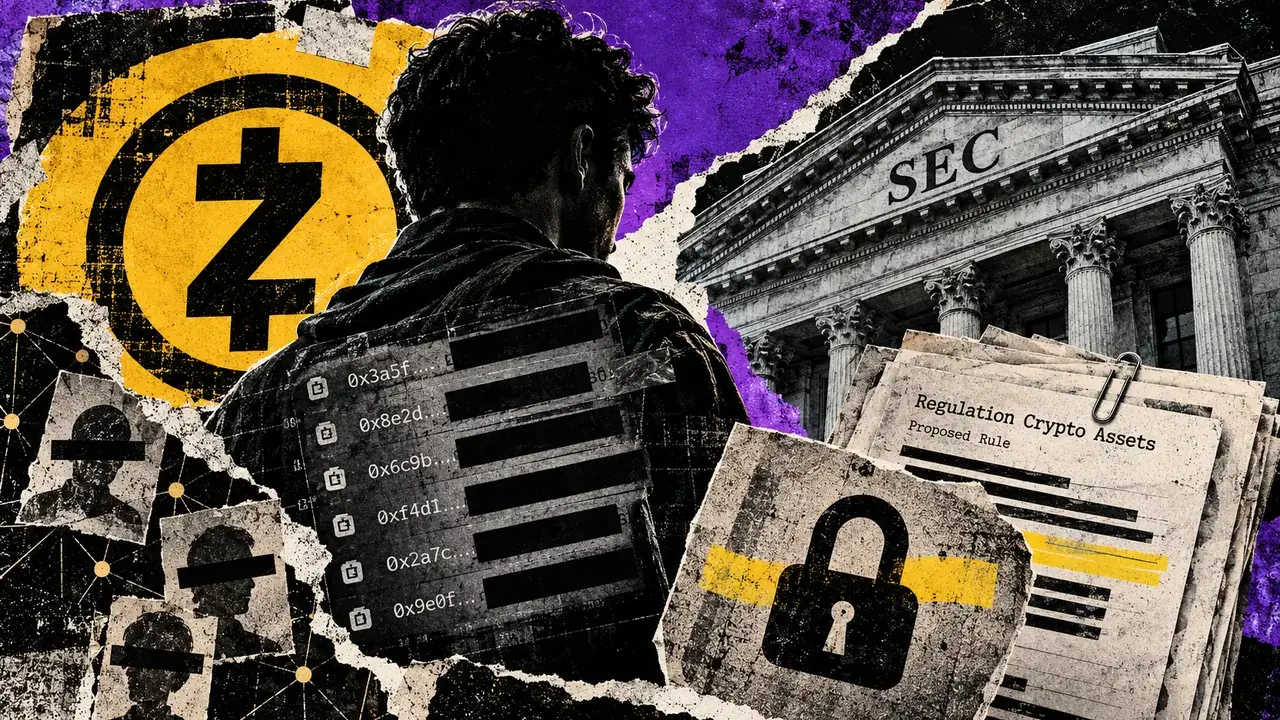
A Zcash‑focused policy group, Pretty Good Policy for Zcash (PGPZ), submitted comments to the U.S. Securities and Exchange Commission (SEC) on October 20, requesting that token issuers be permitted to prove compliance with fundraising disclosures while keeping unrelated financial activity private.
Background of the proposal
The SEC’s proposed Regulation Crypto Assets, released on August 18, would create a startup exemption for offerings of up to $5 million over four years and a fundraising exemption for up to $75 million over twelve months. Eligible issuers would follow a tailored disclosure regime under Rule 103, which requires narrative disclosures about token economics, allocations, use of proceeds, management, related‑person transactions and conflicts of interest.
PGPZ’s specific request
PGPZ argues that while proof of a transaction’s compliance with network rules can be demonstrated with zero‑knowledge proofs, selective disclosure and wallet designs, such evidence does not show how issuer funds were spent. The group asks the SEC to explicitly allow issuers to provide accounting records, cryptographic proofs, and selective disclosures that verify specific claims without exposing a full financial history.
The submission emphasizes that privacy‑preserving technologies should complement, not replace, conventional accounting evidence. It also seeks clarification that the SEC’s verification language does not require issuers to make viewing keys or complete transaction histories public.
Redaction provisions
PGPZ points to Form 1‑CRYPTO Item 15, which permits redaction of exhibits when disclosure would constitute an unwarranted invasion of privacy, citing crypto wallet addresses as an example. The group asks that the same redaction standards be applied consistently to Rule 103 disclosures, related forms and websites, allowing issuers to omit immaterial financial identifiers while still disclosing material holdings, relationships and conflicts.
Implications for Zcash and the broader market
The group notes that Zcash itself is not a security and does not assume that Zcash ecosystem participants would need to rely on the proposed exemptions. However, if the SEC adopts the requested privacy safeguards, it would set a precedent for how crypto founders can protect unrelated financial activity while providing investors with credible information about token allocations and use of funds.
The test, according to PGPZ, will be whether founders can balance privacy with transparency under the final rule.