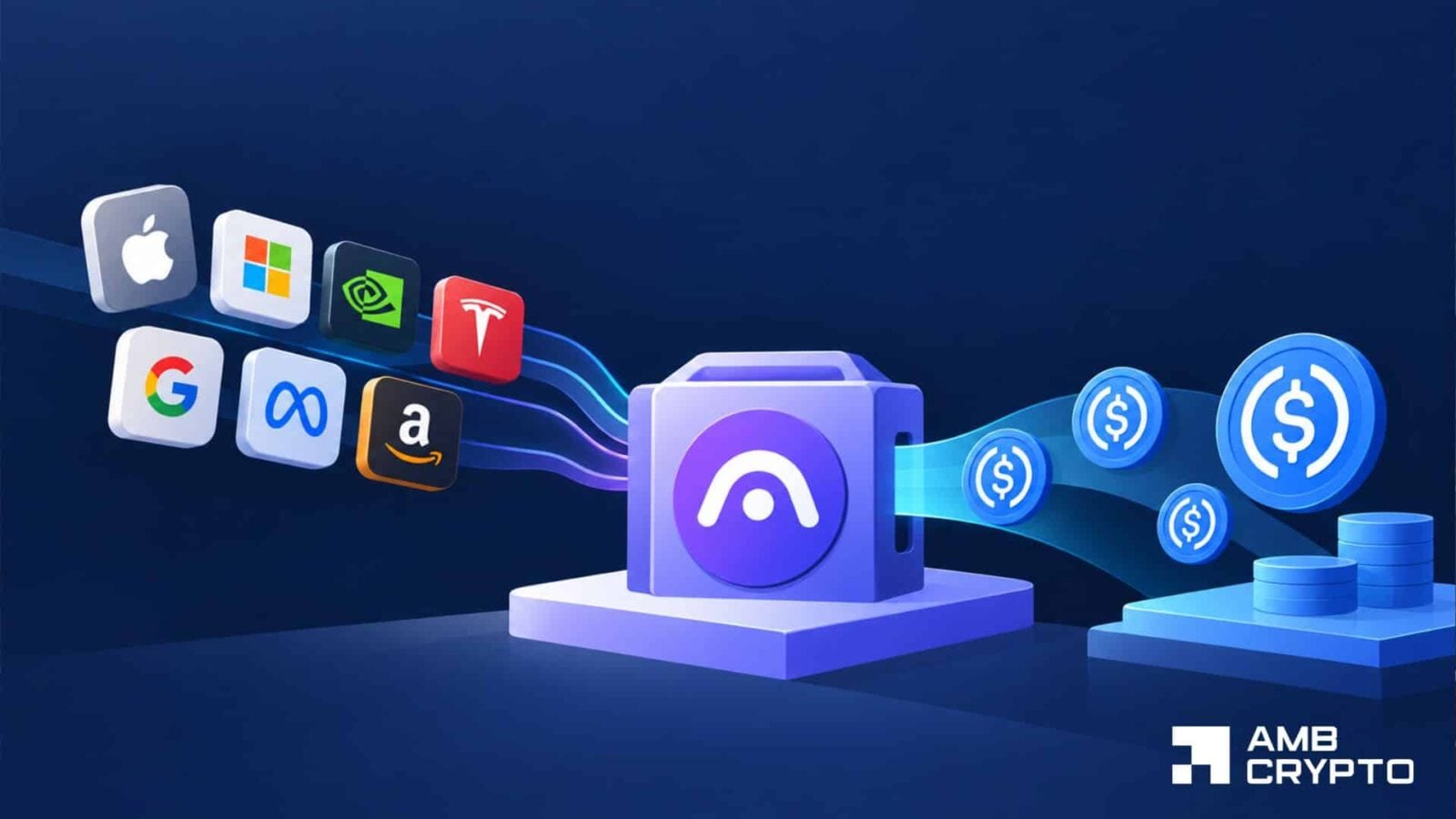
Aave has integrated tokenized equities into its lending protocol on Base, enabling eligible users to borrow USDC against seven Coinbase tokenized stocks without liquidating their holdings.
How It Works
The integration allows equity holders to use their tokenized stock positions as collateral to access liquidity. Asset valuations are determined using Chainlink pricing, and borrowing is currently available only to eligible non-U.S. users.
The Equities Hub limits borrowing through collateral factors ranging from 65% to 79% across the seven stocks, providing a buffer against price volatility.
Liquidity Challenges
Tokenized equity trading on Base has shown substantial activity, with approximately $1 billion in trading volume over 30 days. However, most activity remains concentrated in a few stocks and Aerodrome, creating limited depth for larger positions.
This concentration exposes a potential vulnerability: forced liquidations of significant collateral positions could trigger sharp price declines if market liquidity cannot absorb the sales. Many pools lack sufficient capital reserves to cover losses from large forced sales.
Market-Hour Constraints
The Equities Hub's risk management weakens when traditional equity markets close. Chainlink maintains the last recorded stock price over weekends and U.S. holidays while borrowers continue accruing interest on their positions, potentially weakening their health factors before new pricing updates.
Future Prospects
As additional tokenized assets gain approval, this collateral model could expand into a larger lending option across DeFi. However, increasing trading volume does not automatically translate to sufficient liquidity and safety for larger credit positions until deeper market reserves develop.