Binance founder Changpeng Zhao outlined several possible reasons for the recent cryptocurrency selloff on November 15, addressing widespread questions about downward price pressure across digital assets. Zhao cautioned that while multiple factors may be at play, the relationship between these pressures and price movements remains uncertain.
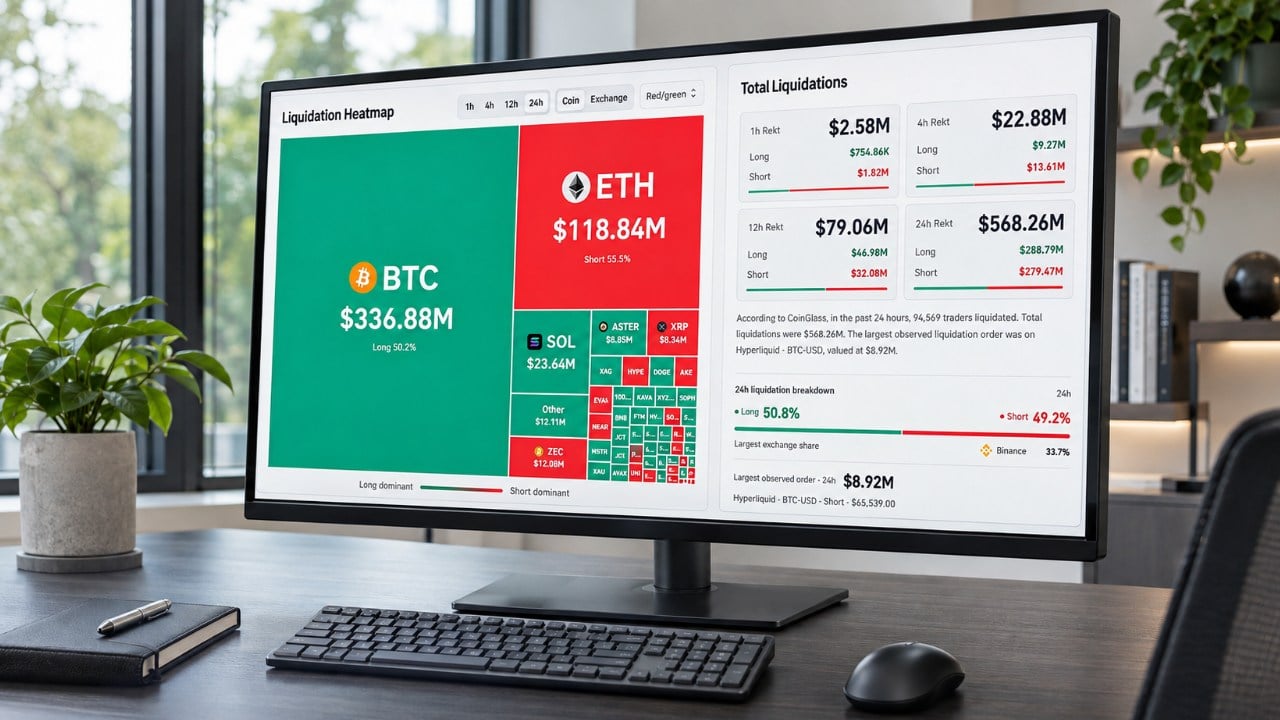
Bitcoin reached a low of $62,006 on the day Zhao shared his analysis. Over a 24-hour period ending at 5:30 p.m. EST on November 15, bitcoin liquidations totaled $336.88 million, with long positions accounting for 50.2% of those liquidations, according to data from Coinglass. Across all tracked assets, liquidations reached $568.26 million over the same period.
Capital Reallocation and Fund Outflows
Zhao identified potential money movement toward Anthropic, the artificial intelligence company behind Claude, which launched its IPO roadshow on November 10. The proposed offering could generate up to $64.35 billion before fees, potentially drawing capital away from cryptocurrency markets.
Fund withdrawals represented another significant factor. Approximately $1.9 billion flowed out of U.S. spot bitcoin exchange-traded funds over seven consecutive sessions through November 13, with roughly $1.07 billion of that occurring between November 9 and 13. Ethereum funds also experienced net outflows during this period.
Security Incidents and Vulnerabilities
Multiple security concerns emerged as potential contributors. A Binance hack drew significant attention after the Justice Department announced on November 12 that U.S. authorities had obtained court authorization to seize more than $1.2 billion stolen from the exchange. Government and private-sector efforts had frozen more than $2.7 billion in connection with the attack, which authorities attributed to North Korean hackers.
Binance responded by committing more than $6.34 billion in company funds to cover affected assets. The exchange published a reserve snapshot on November 12 detailing balances across 198 tokens. Additional security issues included compromised iPhone-linked wallets, a Chrome browser exploit, and a Microsoft outage.
Macroeconomic and Political Factors
Zhao also pointed to U.S. inflation concerns, noting that elevated readings had raised expectations of potential Federal Reserve rate increases. Higher bond yields can make interest-paying investments more attractive relative to cryptocurrencies, while a stronger dollar increases the cost of dollar-priced assets for international buyers.
Political uncertainty rounded out his assessment, with midterm election results raising concerns about potentially stricter U.S. cryptocurrency regulation.
Binance's Position During the Downturn
Zhao directly addressed speculation about Binance's activity during the decline, stating that the exchange had not sold cryptocurrency holdings. Regarding his personal transactions, Zhao disclosed that he had purchased crypto in recent days after acquiring stablecoins, characterizing his own buying as an unlikely cause of the broader selloff.
Zhao emphasized that his comments reflected his personal views and that longer-term cryptocurrency growth remained likely.