Bitcoin and gold are trading more closely than at any point since 2020, with their 90-day correlation reaching approximately 0.55 at the end of August—the highest level in nearly six years. The convergence reflects growing exposure to the same macroeconomic forces, though the two assets continue to respond differently to market stress.
Bitcoin's 90-day volatility stands at 36.2%, compared with 25.3% for gold, making Bitcoin 1.43 times as volatile as the precious metal. This marks a dramatic narrowing from 2021, when Bitcoin was 5.6 times more volatile. The shift has been driven primarily by gold becoming more volatile rather than Bitcoin becoming less so, with gold's 90-day volatility recently reaching levels in the 93rd percentile of its historical range.
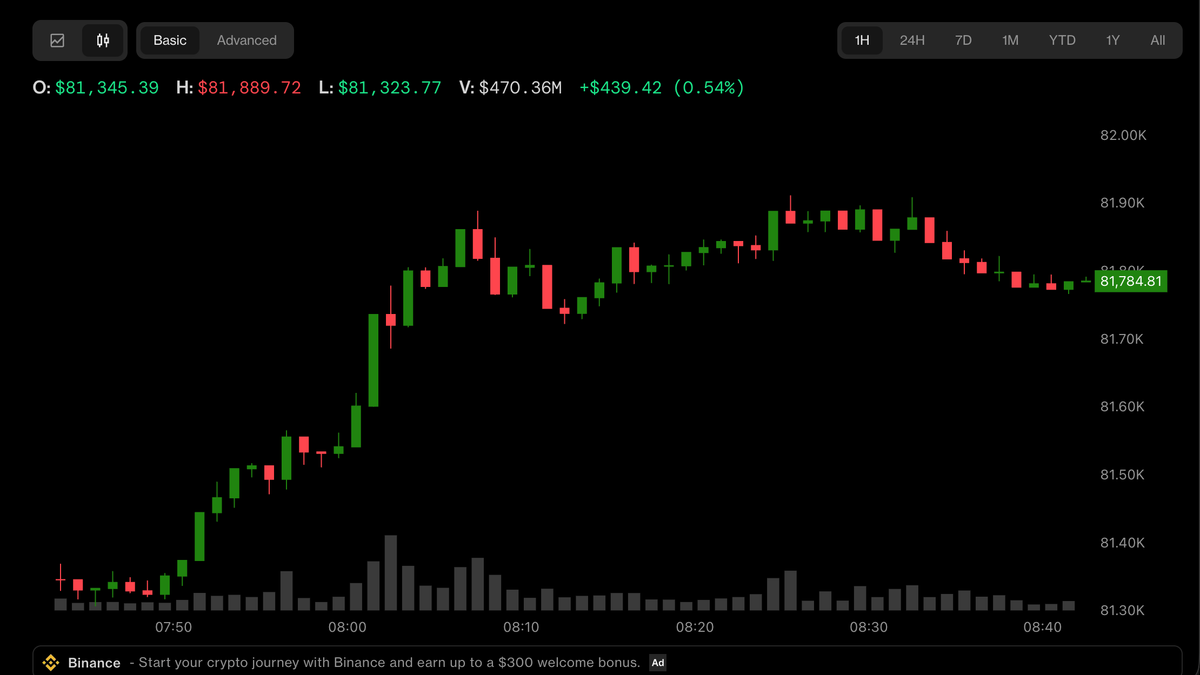
The recent period has tested this relationship. Gold declined more than 7% from a peak near $4,696 on August 25 to approximately $4,342 on September 1 as Treasury yields climbed and traders adjusted expectations for Federal Reserve policy. Over the same period, Bitcoin held relatively steady around $77,000 before rebounding above $80,000.
Macro Forces Driving the Convergence
The tightening correlation between the two assets reflects shared concerns over US fiscal deficits, sovereign borrowing, and currency debasement as federal debt exceeded $40 trillion. Long-term Treasury yields surged in August before the US Treasury expanded purchases of longer-dated securities. Following that intervention, Bitcoin gained 22.4% in the subsequent week while gold rose approximately 5%.
Bitcoin's relationship with traditional equity markets has also shifted. Its 90-day correlation with the Nasdaq 100 fell from above 60% to roughly 33% by mid-2026, while its correlation with gold rose from barely above zero at the start of the year to above 50%. Meanwhile, Bitcoin has shown a lower correlation with US stocks over the past six months than gold, small-cap equities, emerging-market stocks, and even Treasurys.
Different Transmission Mechanisms
Despite their increasing correlation, the two assets respond to market shocks through distinct channels. Gold remains acutely sensitive to real yields, dollar strength, and energy-driven inflation expectations. Bitcoin's recent performance also reflects cryptocurrency-specific conditions including leverage levels, perpetual funding rates, and spot exchange-traded fund flows.
US spot Bitcoin ETFs recorded inflows of $101.2 million on September 2 after posting $236.5 million of outflows the previous day. Despite the volatility, the funds have attracted more than $3 billion over the past 30 days, indicating sustained underlying demand.
Gold's sensitivity to rates and energy prices explains how it can weaken even amid longer-term supportive concerns about debt and currency debasement. Higher oil prices can push inflation expectations and bond yields higher, increasing the opportunity cost of holding non-yielding bullion. Bitcoin, by contrast, has absorbed the same tightening pressures with less volatility, helped by cleaner positioning following recent liquidations and moderate perpetual funding levels.