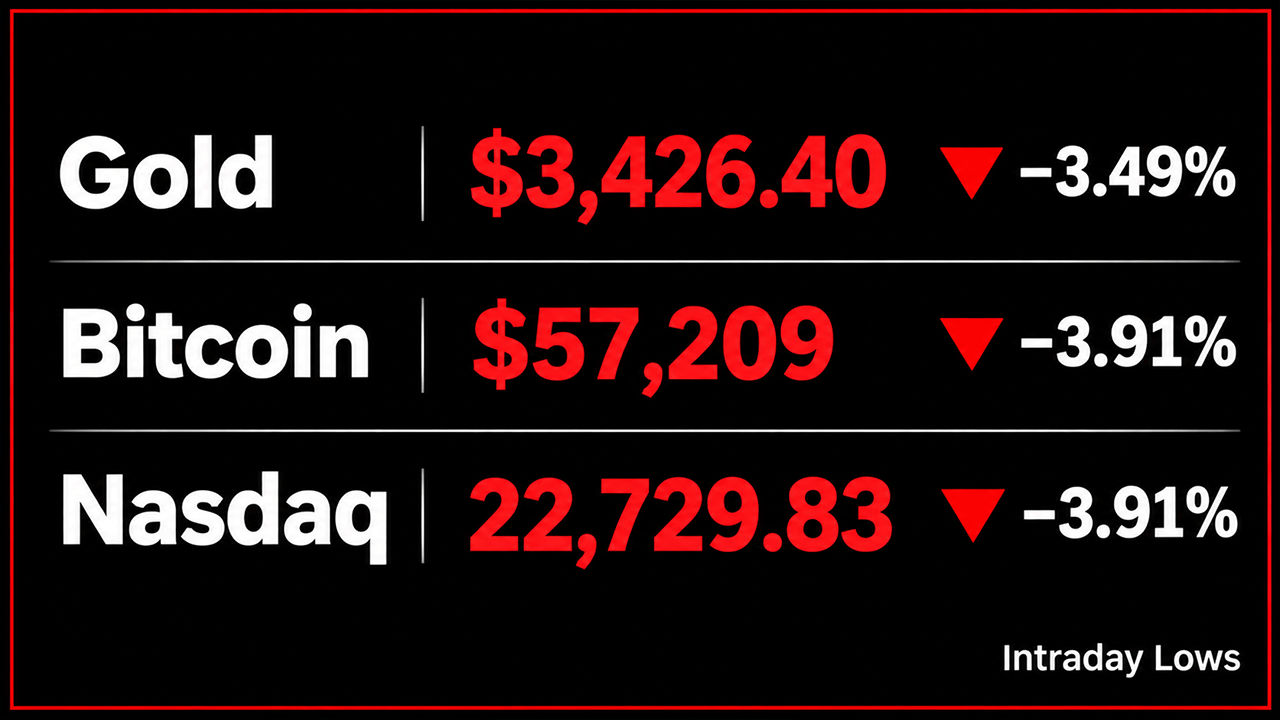
Bitcoin’s share of the crypto market fell below 60% after peaking at about 60.61% on Nov. 12, but the decline has not been accompanied by a broad rotation into altcoins.
By Nov. 25, market trackers placed Bitcoin’s dominance between 57.3% and 58.5%. The drop occurred during broader market weakness rather than a rally.
Where the lost share went
In late November, total crypto market capitalization was around $2 trillion. Bitcoin’s market cap was estimated between $1.16 trillion and $1.21 trillion, equal to roughly 58% of the market.
USDT’s dominance moved between 8% and 14% over the same stretch. Because Tether’s stablecoin is pegged to the US dollar, its share can rise when crypto prices fall or when traders sell volatile assets and hold stablecoins.
Altcoin season index stays neutral
The altcoin season index, which tracks whether alternative tokens are outperforming Bitcoin, registered between 45 and 56 in late November. That range reads as neutral.
Non-stablecoin altcoins have suffered significant declines in this environment, while Bitcoin has held up with some resilience. The pattern points to defensive positioning among crypto investors favoring the largest asset and cash-like tokens over speculative bets.
Reading dominance in context
The Motley Fool, which flagged the dominance move, framed it with a reminder about perspective. Its argument was that Bitcoin’s fixed supply and growing use on Wall Street matter more than a single short-term metric.
Dominance is a relative measure and can swing for reasons unrelated to Bitcoin’s own fundamentals. A rush into stablecoins, for example, can pull the figure lower even if Bitcoin’s investment case has not changed.
What investors are watching
For traders waiting on altcoin season, the signals are mixed. A drop below 60% checks one box on the traditional checklist, but the neutral altcoin season index and rising stablecoin share leave other boxes unchecked.
Bitcoin dominance, USDT dominance and the altcoin season index each tell part of the story and should be watched together rather than in isolation.
Bitcoin has kept relative strength through a weak patch, altcoins have struggled, and stablecoins have absorbed a growing share of the market. The 60% line has been crossed, but the crowd has not yet followed the altcoin narrative across it.