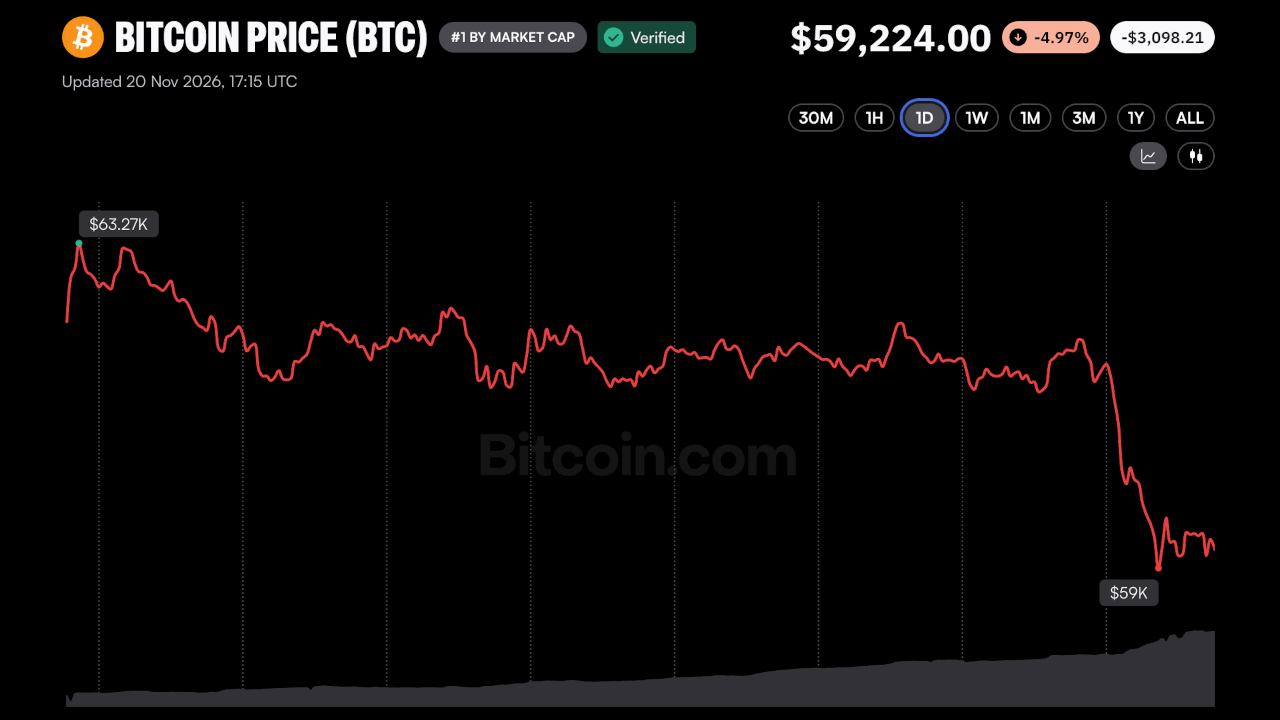
Bitcoin dropped below $59,000 on Friday, briefly touching $58,701 according to Bitstamp data—a level last seen in early July. The move extended Bitcoin's year-to-date decline to more than 30% and reflected a continued November downturn with no signs of abating.
The sharp price decline occurred between 11 a.m. and noon EST, when Bitcoin shed nearly $3,000 amid heavy selling pressure and limited buyer interest. Over 24 hours, the cryptocurrency fell approximately 5%, and more than 13% over the prior week.
The collapse proved particularly severe for leveraged traders. According to Coinglass data, liquidated long positions in Bitcoin exceeded $543 million over 24 hours, including $220 million wiped out in a single hour. Across the broader cryptocurrency market, long liquidations surpassed $1.38 billion over 24 hours, with short liquidations at approximately $142 million—totaling $1.53 billion in liquidations.
Market Context
Crypto market maker Wintermute noted in a November 16 update that Bitcoin's recent rebounds were driven primarily by short covering rather than fresh spot buying. The firm warned that Bitcoin would need to reclaim $68,000 on a sustained basis and show a clear return to net inflows in spot Bitcoin exchange-traded funds (ETFs) before a bearish outlook could be reconsidered.
Bitcoin ETFs have recorded approximately $1.9 billion in net outflows in 2026, according to Wintermute's analysis.
Broader Market Pressures
Bitcoin's decline mirrored weakness across risk assets. The Nasdaq fell approximately 3.5% on Friday, while the S&P 500 declined 2%. The sell-off followed Anthropic's initial public offering, which raised more than $81 billion but saw shares plunge nearly 13% following their trading debut.
Semiconductor stocks extended losses as investors reassessed artificial intelligence valuations and infrastructure profitability. Nvidia fell approximately 7%, Advanced Micro Devices dropped nearly 12%, and Broadcom, Marvell Technology, and Micron Technology each shed more than 9%.
Federal Reserve officials' hawkish signals reinforcing expectations of a December interest rate hike added further pressure on growth-oriented and speculative investments, pushing investors to reduce exposure across risk-sensitive assets.