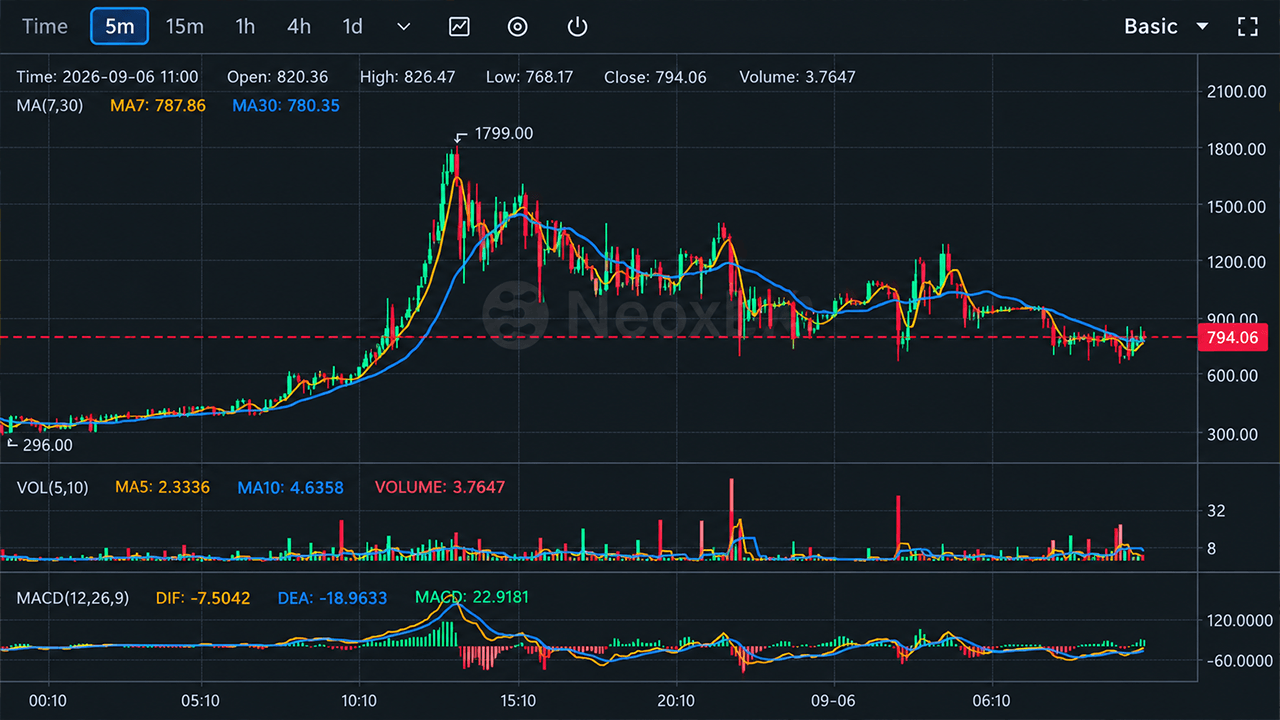
Bitcoin Blake2, known as BTCB2, reached $1,799 per unit on September 5 as traders engaged with the newly launched Bitcoin fork. The token emerged from a chain split on August 8, 2026, at block height 961632, following disagreement over proposed protocol changes.
BTCB2 originated from the BIP-110 proposal, which sought to restrict non-monetary data through large OP_RETURNs and bulky scripts. The majority of Bitcoin's SHA-256 hashrate rejected this change, resulting in the network split. Developers behind the fork subsequently altered the proof-of-work mechanism to use the Blake2 hash function and reduced block size, enabling mining with Blake2-compatible ASIC machines.
Trading remains confined to smaller exchanges. Neoxa Exchange recorded approximately $1 million in BTCB2 trades over 24 hours and listed the token with three pairs: BTC, USDC, and USDT. Nonkyc.io also began offering BTCB2 with a USDT trading pair. Neither platform compares in scale to major exchanges like Coinbase or Kraken, and major market data aggregators including CoinMarketCap and CoinGecko have not listed BTCB2.
At a $1,000 price point on Sunday morning, BTCB2's fully diluted valuation stood near $20.9 billion. However, the valuation remains speculative due to thin liquidity and limited trading volume relative to established cryptocurrencies.
A significant technical issue confronts BTCB2 holders: unspent transaction outputs must be separated from Bitcoin to avoid replay attacks, which could inadvertently transfer BTC if coins are not properly split. This risk has discouraged some traders from moving assets on smaller platforms, though splitting software and guidance have become available this week.
Network metrics show 5.1 petahash per second of mining power directed toward BTCB2, with hashrate increasing 30.41% over seven days. Mining distribution spans approximately 60 distinct pools and miners, with Pyblock leading the group.
The token's billion-dollar valuation faces substantial headwinds from thin liquidity, replay risks, and reliance on obscure exchanges. Major exchange listings could influence adoption, though current price movements remain driven primarily by speculation rather than demonstrated utility.