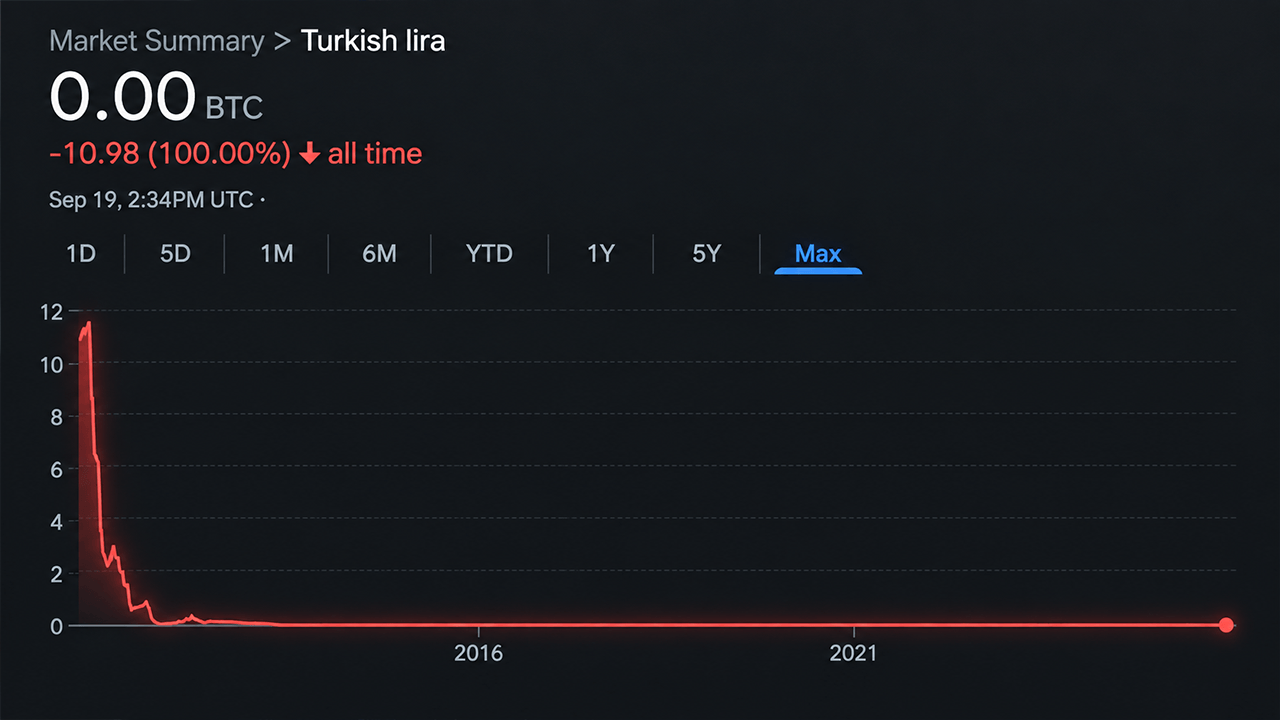
Turkey's lira has reached a fresh record low near 48.8 per dollar, while bitcoin's price has climbed to roughly 3.95 million lira. Five years ago, a dollar exchanged for approximately 8.3 to 8.9 lira, meaning the greenback now buys nearly six times as many lira.
The gradual weakening has coincided with persistent inflation. Official inflation came in at 31.51% in August, though the independent inflation group ENAG calculated a higher rate of 49.03%. The Central Bank of the Republic of Türkiye has set its policy rate at 37%, offering savers limited real returns against official inflation figures and negative returns against higher independent estimates.
The lira has lost roughly 18% against the dollar over the past year and approximately 86% of its purchasing power over five years based on official inflation. Turkey's dependence on imported energy, particularly oil paid for in foreign currency, compounds the challenge, as a weaker lira raises domestic costs.
Household Alternatives to Currency
Turkish households have responded by diversifying their savings. Officials estimate approximately $600 billion in household gold sits outside the banking system, much of it held as physical coins and jewelry. Foreign currency accounts for roughly 38% to 41% of deposits, while property and cryptocurrency have also become wealth storage options.
Turkey ranked 14th on Chainalysis' 2025 Global Crypto Adoption Index and led the Middle East and North Africa region by transaction volume at approximately $200 billion annually, suggesting that bitcoin and stablecoins function as alternative savings instruments alongside traditional stores of value.
Legal Status and Restrictions
Turkish residents can legally buy, hold, and sell bitcoin through regulated platforms funded with lira. However, a 2021 central bank rule prohibits using cryptocurrency to pay directly for goods and services. Turkey's 2024 Crypto Asset Law brought platforms under the Capital Markets Board, tightening regulatory oversight while keeping trading itself legal.