Bitcoin's sharpest rally in two years was driven primarily by bears exiting positions rather than new bullish bets entering the market, according to joint analysis from analytics firm Glassnode and crypto exchange Bybit.
Over a five-day stretch in August, Bitcoin rose 24.6% while coin-denominated open interest—a measure of active leverage—fell 12.6%. The divergence indicates that the rally stemmed from forced unwinding of existing shorts rather than traders opening fresh long positions. Approximately 64,000 BTC worth of open interest was closed out, with short positions accounting for 89% of every liquidated dollar during the period.
The options market reflected the same dynamic. Put contracts, which traders use to protect against price declines, had priced at higher premiums than calls for 361 consecutive days before a single session reversed that trend. Bybit's volatility index moved four times its normal daily range in one session, suggesting the market viewed the move as a temporary event rather than a lasting shift in sentiment.
Market structure also signaled a one-off event. The front of the futures curve repriced sharply while longer-dated contracts barely moved, indicating traders did not perceive the rally as the beginning of a new regime.
The analysis covers crypto-native venues through August 23 and excludes CME data, so it describes the crypto-native market rather than all venues where Bitcoin trades.
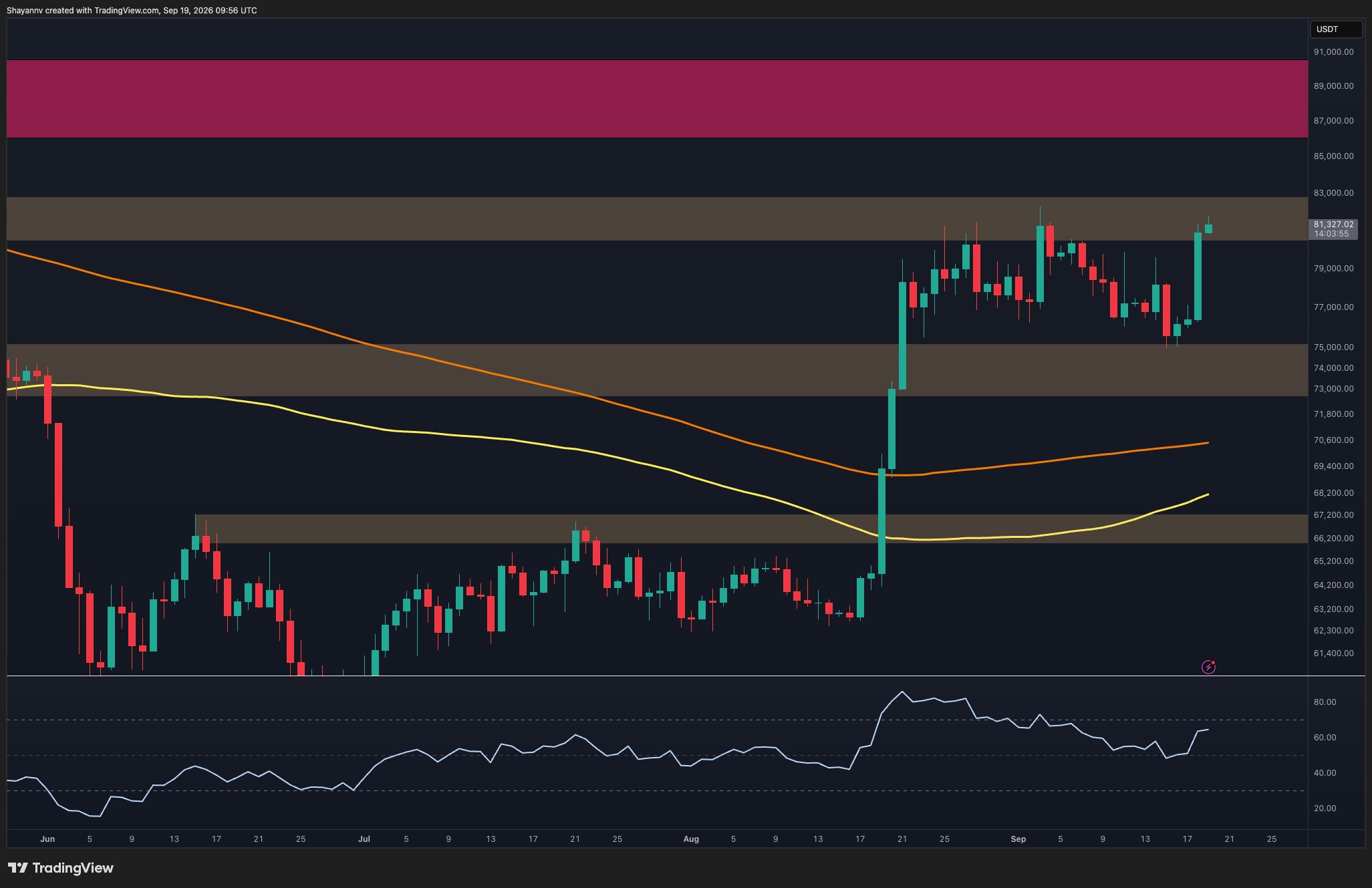
A subsequent surge in early September again triggered short liquidations. Bitcoin's move above $80,000 following a Federal Reserve rate decision liquidated more than $230 million in Bitcoin shorts and over $445 million in shorts across the broader crypto market in a single session.
The open question remains whether the repricing seen in August persists. A durable shift would show call-bid skew holding and the front of the futures curve staying firm, while a return of put premium and fading funding would indicate the market treated it as an absorbed event rather than a shift to a new regime.