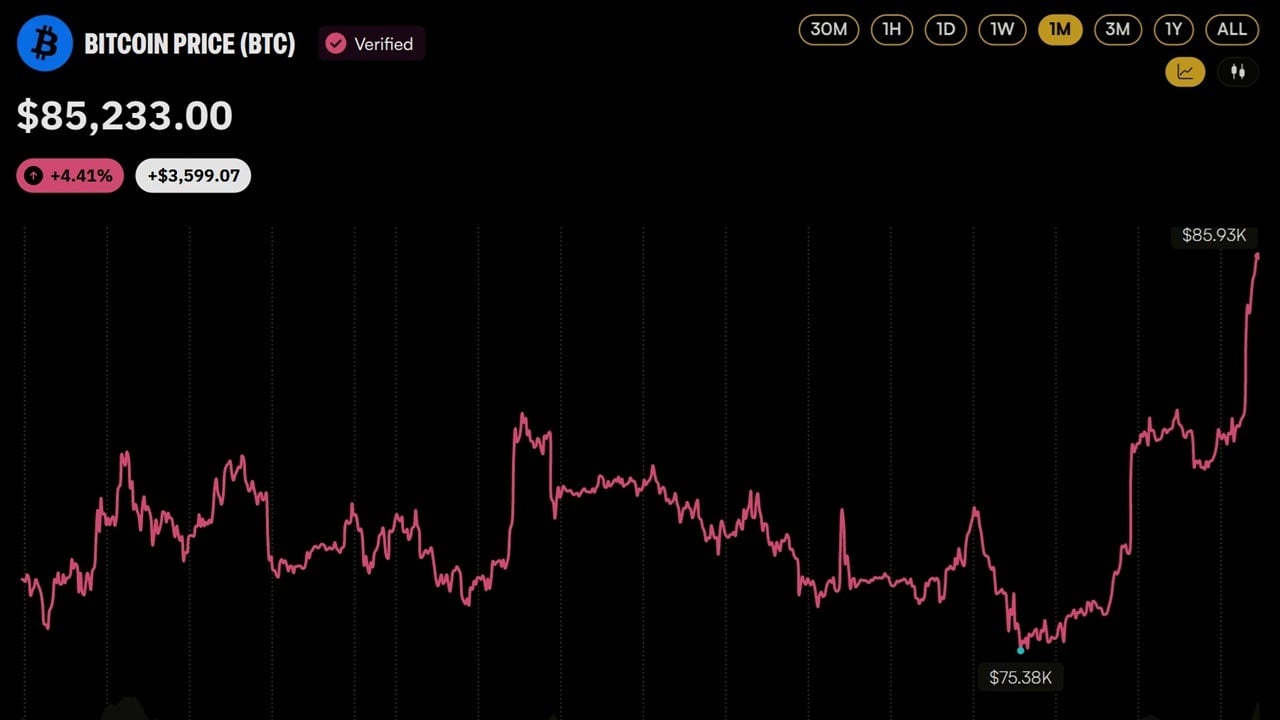
Bitcoin traded near $80,443 on Sunday, down about 1% over 24 hours, after failing to sustain a push above the $81,900–$82,300 resistance zone. The price stalled following a sharp rebound earlier in the week that recovered nearly $7,000 from lows.
BTC fell to $74,913 on September 16 before climbing back to $81,914 by September 19. The rally encountered resistance and sharp declines pulled the price back toward $80,300. Short-term support now sits between $80,000 and $80,300, with a drop below that level potentially sending BTC toward $79,000.
Technical Indicators Show Mixed Signals
On the daily chart, thirteen of fifteen tracked moving averages remain positive, with Bitcoin trading above every listed exponential and simple moving average from the 10-period up to the 200-period. The only bearish reading is the fast Hull moving average at $81,075.
Oscillators present a quieter picture. The RSI sits at 61, considered neutral, while the MACD reading is negative. The broader uptrend from a $57,735 low earlier in the year remains unbroken, and Bitcoin continues to trade above its base established in the mid-$70,000s during August.
Institutional Activity Sends Mixed Messages
CFTC data released for September 15 showed leveraged funds cut their net-short position in Bitcoin futures by 7,275 BTC-equivalent, leaving them net short approximately 32,602 BTC-equivalent. Asset managers moved in the opposite direction, with their net-long position falling by 4,733 BTC-equivalent to roughly 14,133 BTC-equivalent.
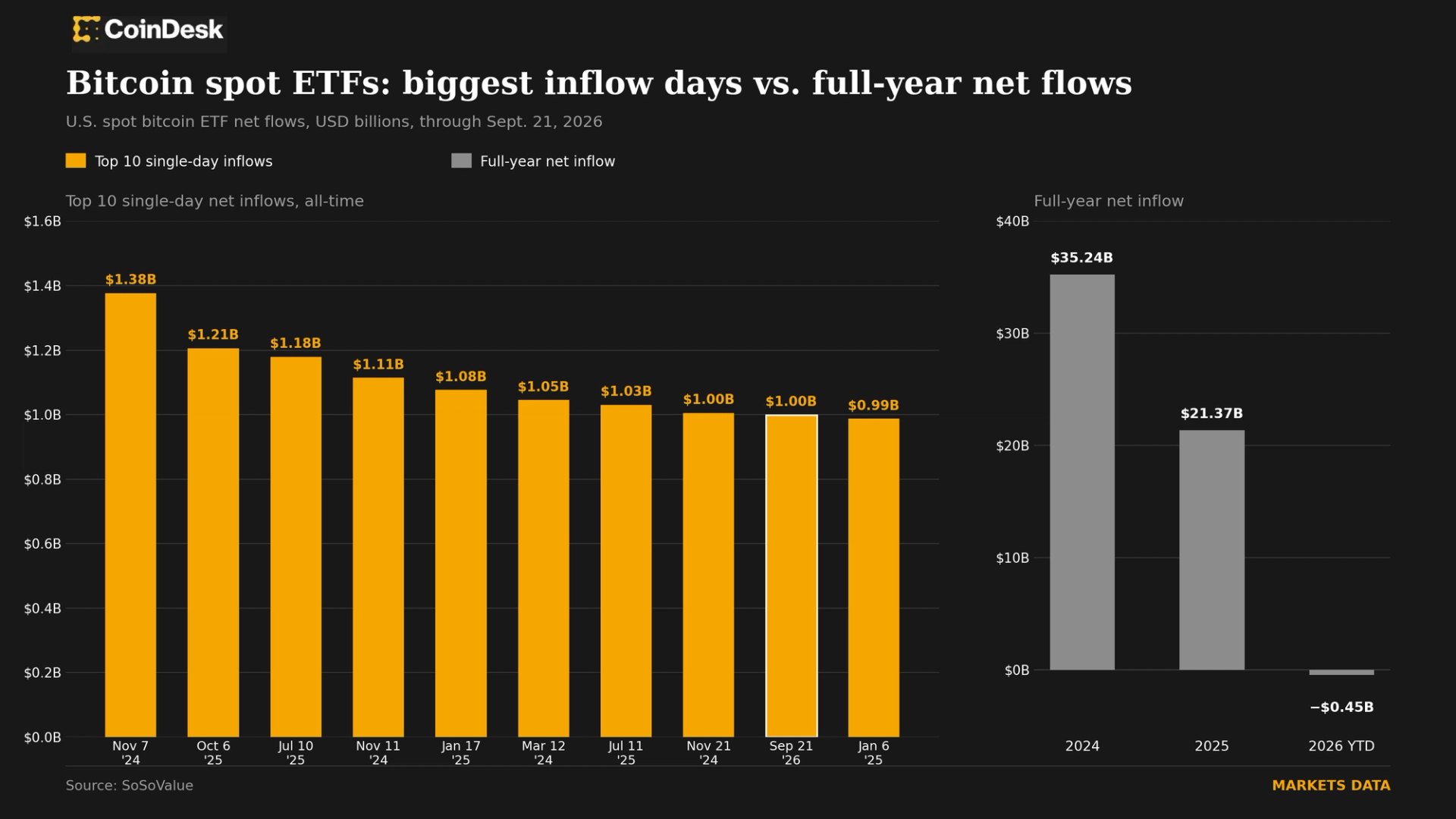
US spot Bitcoin ETFs added $592.5 million over September 17–18, though the full week ending September 18 brought in only $6.1 million when earlier outflows were factored in.
At the time of report, Bitcoin traded at $80,338.71 with $22.38 billion in 24-hour volume, remaining below the $82,000–$82,200 resistance band.