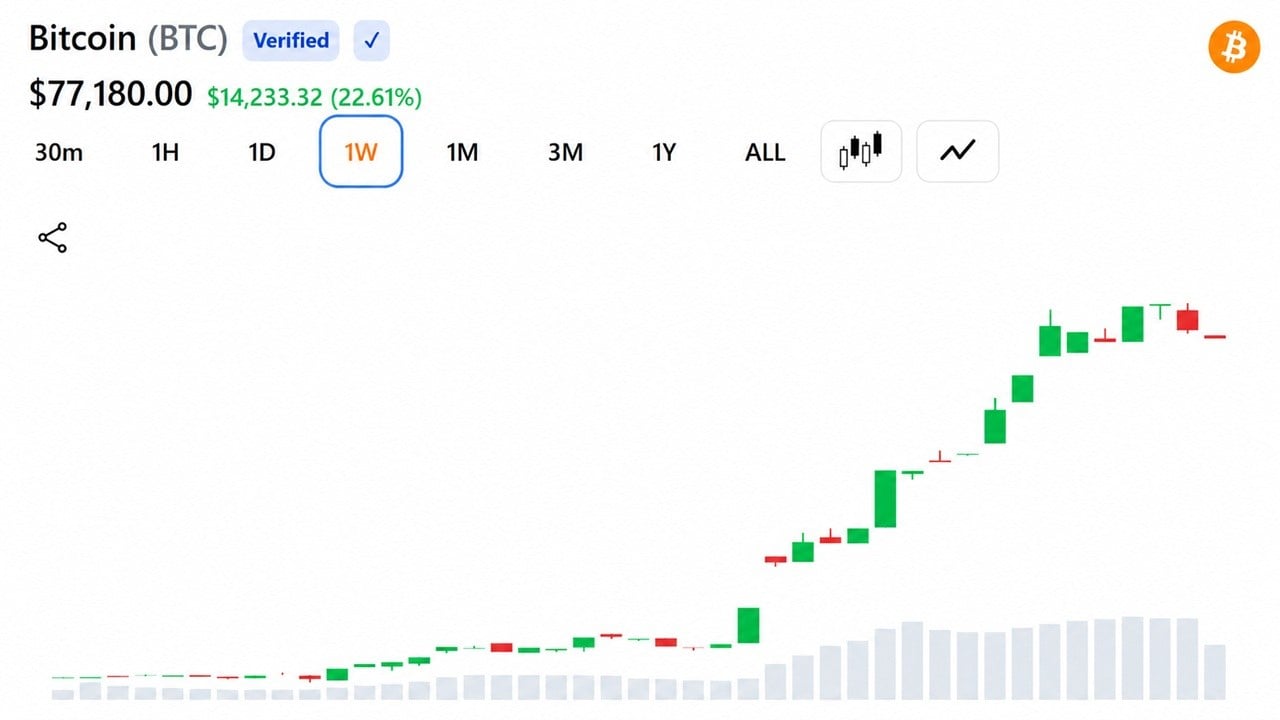
Bitcoin surged roughly $10,000 over the past week, breaking above $77,000 for the first time since May and briefly touching $79,500. The rally wiped out billions of dollars in short bets and followed a decision by the U.S. Department of the Treasury to double its long-dated bond buybacks.
Prior to the breakout, the cryptocurrency had spent six weeks trading between $60,000 and $65,000. The upward movement began after the Treasury announced it would raise its liquidity-support buyback operations for longer-dated coupon securities from $2 billion to $4 billion per operation. The buyback expansion, scheduled to take effect on September 9, is designed to repurchase older bonds before maturity, ease borrowing costs, and inject cash into the market.
Following the announcement, the 10-year Treasury yield fell roughly six basis points to about 4.647%, while the 30-year yield dropped nine basis points to 5.196%. Bernstein strategist Gautam Chhugani noted that the strong catalyst for bitcoin was driven by the Treasury's move to buy back bonds at the longer end of the yield curve, leading traders to rotate into the asset as a hedge.
As the price crossed resistance near $70,000, automated liquidation engines force-closed 172,108 short positions across derivatives exchanges. Traders betting against bitcoin lost $2.7 billion to $3 billion in a single 24-hour window, marking the largest short-side wipeout since 2021.
Additional tailwinds accompanied the rally. President Donald Trump publicly urged Congress to pass the CLARITY Act, a bill aimed at establishing clearer federal rules for digital asset markets. The market activity also coincided with a White House meeting between Trump and crypto industry leaders, including executives from Coinbase and Robinhood, though no official policy outcome was announced.