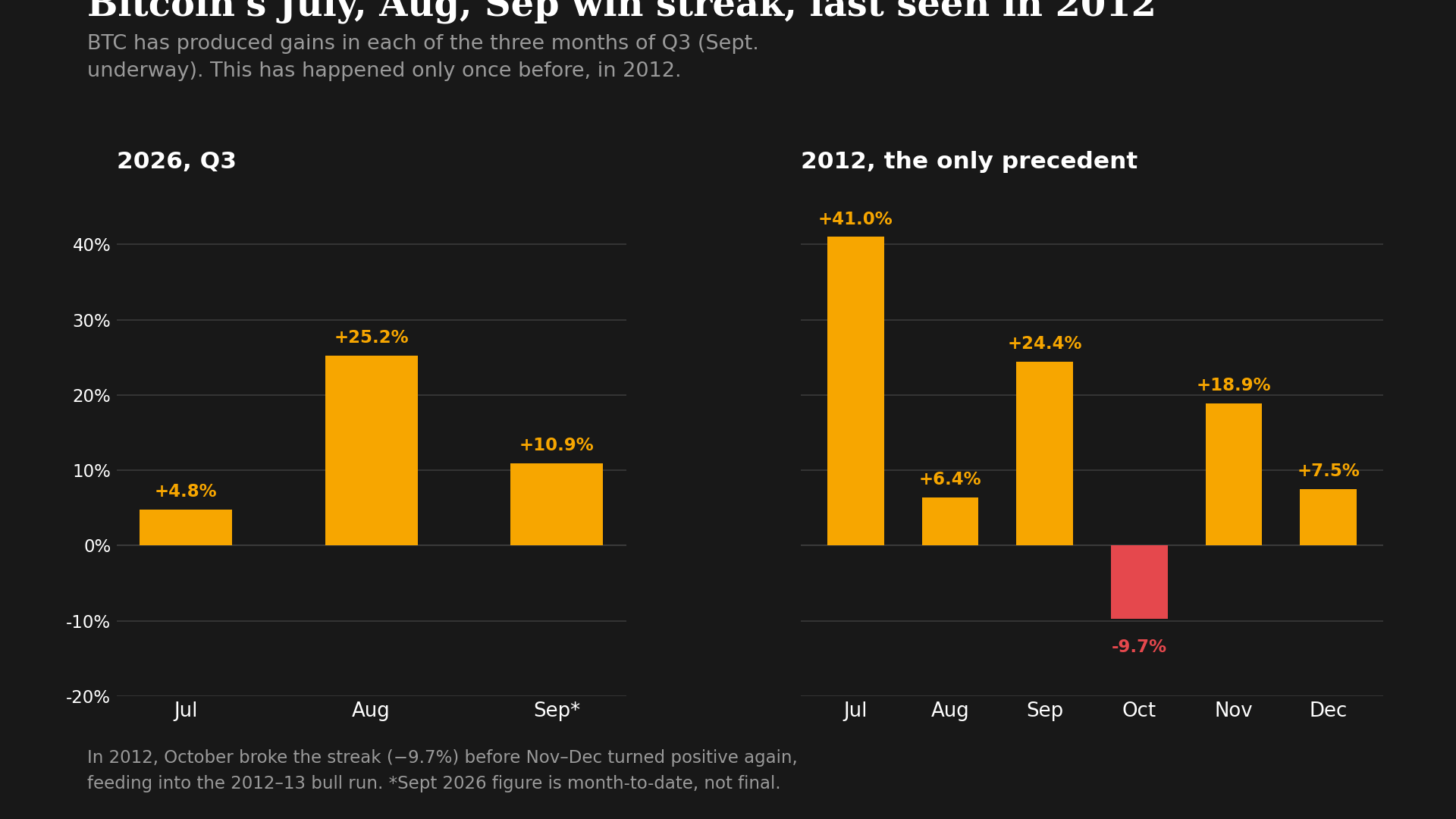
Bitcoin is trading at $86,767.30, up 1.1% over 24 hours and 14.6% over the past week, following a rally that pushed it to $87,000, its highest level in eight months. The move came amid a liquidation cascade that wiped out over $1 billion in crypto positions.
Three Major Headwinds
The rally defied three significant developments that analysts expected would pressure the market. The CLARITY Act, which sought to establish federal market structure rules for crypto, failed on the Senate floor with a vote of 49-50, falling ten votes short of the 60 needed to pass after two years of lobbying efforts. Coinbase stock fell approximately 8% that day, while Circle fell roughly 10%.
The following day, the Federal Reserve delivered a unanimous 25 basis point rate hike under new chair Kevin Walsh, its first increase since 2023. This occurred as the 10-year Treasury yield remained above 5% and the Bank of Japan raised rates to a 31-year high in the same period.
Additionally, the AI sector experienced weakness after industry concerns about safety emerged. The semiconductor index dropped over 5% by the following Monday, marking its worst session since July, with major companies including Nvidia, ASML, and SoftBank declining sharply.
Liquidation Mechanics Drive the Move
Roughly $1 billion in crypto positions were liquidated during the breakout, with $843 million—84% of the total—coming from short positions. Between 126,000 and 135,000 accounts were closed during the sharpest hour, with single-hour liquidations exceeding $300 million, 97% of which were shorts.
The liquidation cascade created a self-reinforcing dynamic. Leveraged short positions require only minor adverse price movement to trigger forced closures, which requires exchanges to buy to close positions, pushing prices higher and triggering additional layers of short liquidations. One wallet reportedly faced liquidation four separate times within 14 hours, losing 375 BTC, roughly $32.5 million.
Institutional Demand Remains Strong
US spot Bitcoin ETFs experienced a redemption of approximately $450 million on the day of the failed Senate vote, the heaviest single-day outflow since June. However, just three sessions later, the ETFs attracted $433 million in inflows. Morgan Stanley's Bitcoin ETF has now recorded 20 consecutive trading days of net inflows without a single down day.
Between September 14 and 20, coinciding with the worst headlines, institutional buying continued, with Strategy disclosing the purchase of 950 BTC for $75 million. Total futures open interest rose 7.5% to roughly $156 billion following the rate hike, suggesting the move reflects genuine demand beyond short-covering mechanics alone.
Historical Pattern
Bitcoin has demonstrated a pattern of rallying during periods marked by significant negative catalysts. China's 2021 mining ban eliminated more than half the global hash rate, yet Bitcoin rallied from $29,000 to a new all-time high within four months. FTX's collapse in November 2022 marked the cycle's low point, while three US bank failures and USDC briefly losing its peg in March 2023 preceded a roughly 40% Bitcoin rally.
The inverse has also held true. Coinbase's NASDAQ listing in April 2021, considered a major bullish milestone for crypto, marked the approximate top of that cycle's leg. Spot ETF approval in January 2024, following years of regulatory efforts, was followed by Bitcoin falling from $49,000 toward $38,000.