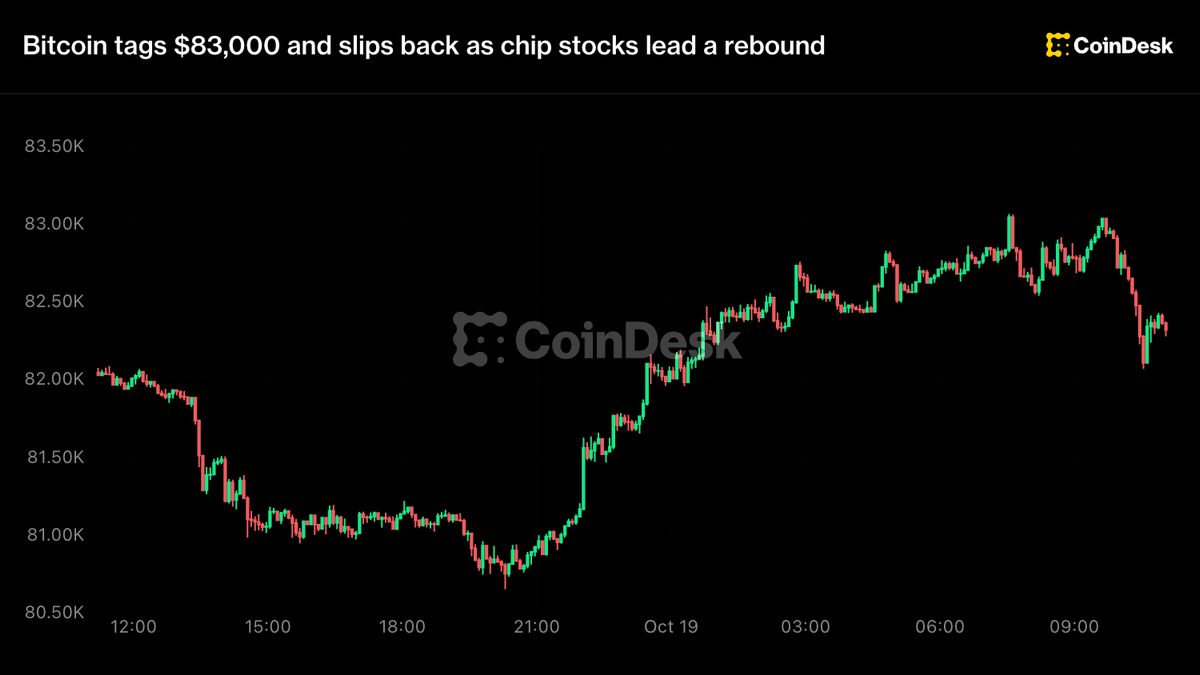
Bitcoin climbed to $83,000 on Monday, marking its highest level since mid-week declines triggered by inflation data. The rebound came as markets opened stronger than some analysts had predicted, defying expectations for a significant downturn.
The cryptocurrency had dipped to $80,500 on Sunday before the swift recovery. The earlier weakness followed disappointing inflation readings last week, when the Consumer Price Index and Producer Price Index both exceeded expectations on October 14 and 15, prompting a sharp selloff that drove Bitcoin from above $84,000 to just under $80,000 within 24 hours.
Bitcoin's recovery accelerated following a flash crash on Saturday evening, which had intensified concerns among analysts about a potential Black Monday event—a reference to the market crash that occurred 39 years prior. However, Monday's market open proved resilient, with US futures trading in positive territory alongside Bitcoin's gains.
Bitcoin was trading up more than 1% on the day and saw its market capitalization climb to $1.660 trillion, with dominance over alternative cryptocurrencies holding above 60%.
Altcoins Show Broad Strength
Most alternative cryptocurrencies posted gains on Monday. Ethereum defended its $2,400 support level with a mild increase, while XRP held steady near $1.32, also maintaining a key support threshold. Other gainers included SOL, XMR, LINK, NEAR, and BCH, with ZEC up 2.6% to $1,170.
ARB led the day's gains with a 9% increase, followed by RAY at 7%. TIA, STRK, and BTW posted the largest declines.
The total cryptocurrency market cap increased over 1% in 24-hour trading, reaching $2.760 trillion.