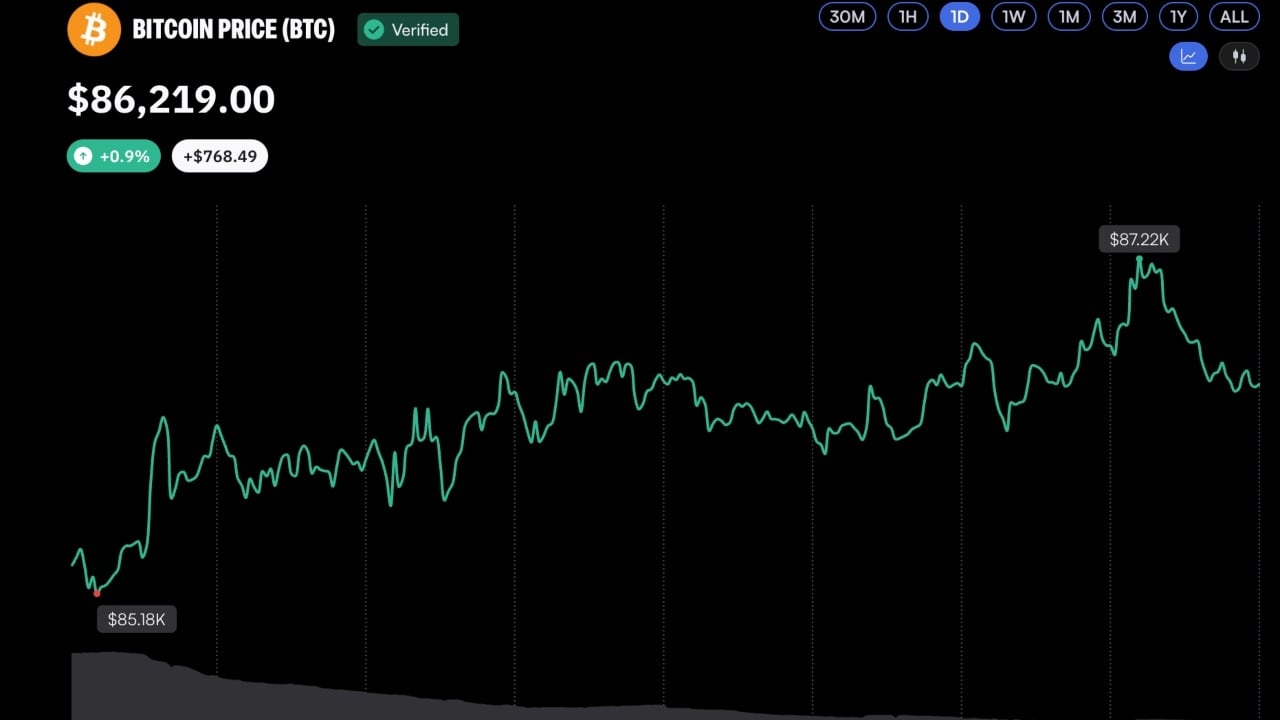
Bitcoin reclaimed the $87,000 level for the second time in 48 hours on September 22, peaking at $87,251 before retreating to approximately $86,400. The cryptocurrency's market capitalization stood near $1.74 trillion at press time.
The price movement follows bitcoin's first breach of $87,000 on September 21, when it reached $87,374, its highest level since late January. Despite the pullback, bitcoin remains up 35% from pre-August 19 levels, with the asset establishing strong support above $85,000.
Liquidation Patterns Shift
Liquidation data showed diverging trends in the market. Short liquidations narrowed to $48 million, down from $171 million 12 hours earlier and $454 million the previous day. Long liquidations rose to nearly $14 million, compared to $6 million on Monday.
Regulatory and Macro Support
According to Tony Dicarlo, director of institutional propositions at Rootstock Labs, several developments have sustained bitcoin's uptrend. The SEC advanced support for digital assets through the Innovation Exemption, while the American Reserve Modernization Act cleared committee this week, reigniting discussions of a Strategic Bitcoin Reserve.
On the macroeconomic front, Japan's rate hike and weaker yen suggest a dovish Bank of Japan path, maintaining carry trade conditions and loose liquidity that support bitcoin's advance.
Technical indicators show bitcoin trading above its 50- and 200-week moving averages, up approximately 29% over 35 days. The Crypto Fear and Greed Index has remained mostly above 60 since mid-August.
ETF Inflows Signal Institutional Interest
U.S. spot bitcoin exchange-traded funds recorded $999 million in net inflows on September 21, marking one of the largest single-day inflows in the last 11 months. Historically stronger months for bitcoin, October and November, combined with current macro conditions, position the asset for potential momentum through year-end.