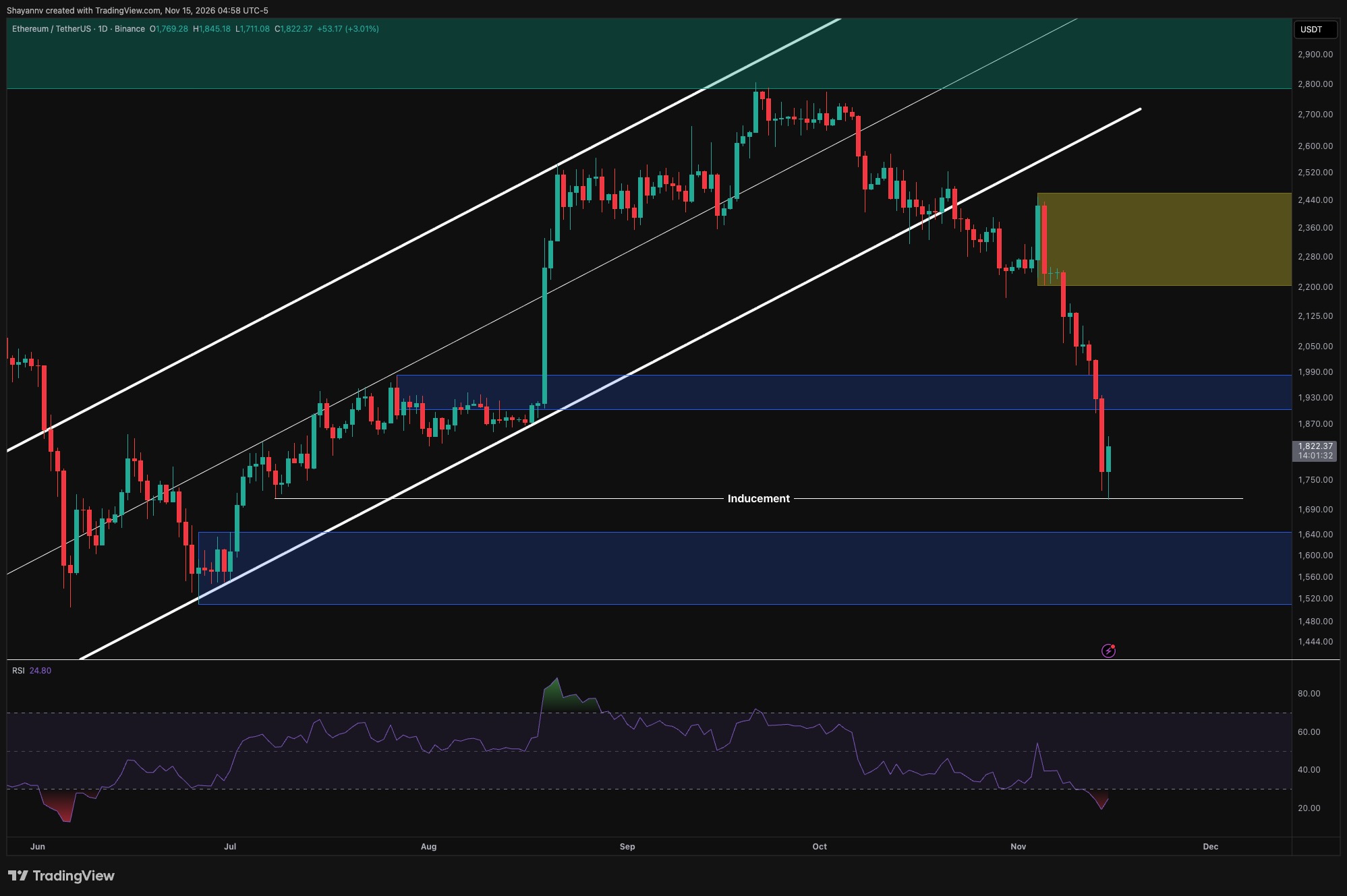
Bitcoin plunged to nearly $62,000 on November 15, marking its lowest level since July. The decline wiped out months of gains and sparked more than $2 billion in liquidations across the market, affecting over 312,000 traders primarily in long positions.
The sharp move has divided analysts on its cause. Some market observers claim large players deliberately orchestrated the crash, while others point to excessive leverage and broader market conditions as simpler explanations.
Manipulation Claims
Several analysts flagged suspicious timing around the move. Bitcoin had reclaimed its 50-week moving average and flipped its weekly Supertrend before the decline, leading some to question why such a sharp reversal occurred without typical warning signals.
Some traders pointed to concentrated selling activity on major exchanges during weekend hours when liquidity thins. One analysis cited price-insensitive, institutional-scale selling on Coinbase described as exceptionally aggressive.
Alternative Explanations
Other market participants rejected the manipulation narrative, instead attributing the decline to excessive leverage that accelerated selling once key support levels broke. This pattern, they noted, resembled the October 2025 crash.
Technical factors also weighed on price. Bitcoin spot exchange-traded funds experienced outflows across consecutive sessions. Additionally, stronger-than-expected US inflation data lifted Treasury yields and increased expectations for potential Federal Reserve rate hikes.
Technical analysts flagged possible distribution patterns and rising supply held at a loss, comparing current price action to previous market cycles in 2018 and 2022.
Current Status
Bitcoin traded near $64,300 following the decline, down 4.6% in 24 hours and approximately 15% over the past week. The cryptocurrency remains roughly 49% below its all-time high. The speed of the move has prompted renewed calls for greater transparency around large orders and exchange practices.