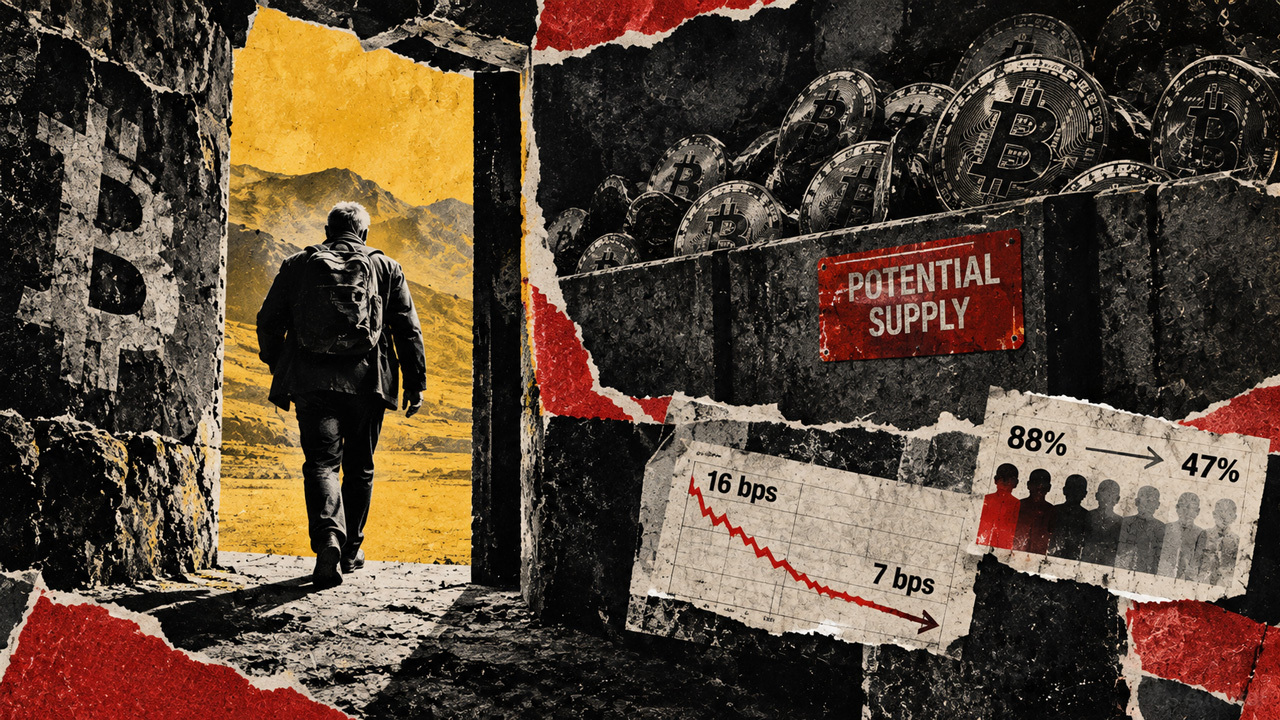
Bitcoin's on-chain sell-side risk has declined to less than half its August peak, marking a reduction in one measure of potential selling pressure. According to analytics firm Glassnode's Sept. 9 report, the Sell-Side Risk Ratio fell to 7 basis points per day on a seven-day basis, down from 16 basis points at August's peak.
Long-term holders contributed 47% of realized profit in the measured period, compared with 88% at the August peak. This shift indicates that older coin holders are taking less profit from the market, though this percentage does not measure their share of all Bitcoin sales by volume.
The Sell-Side Risk Ratio measures value realization relative to realized capitalization, indicating potential selling pressure. A lower ratio suggests reduced pressure from profit-taking activity relative to the broader capital base.
Glassnode identified approximately 1.07 million BTC acquired between $83,000 and $86,000, held almost entirely by long-term holders. This block remained largely unchanged over the prior 30 days, though it represents potential supply if those holders eventually sell.
On-chain data showed negative exchange spot cumulative volume delta on Sept. 8, meaning aggressive exchange selling still outweighed aggressive buying in that measure. This suggests that demand remains a separate test for the market, distinct from the profitability dynamics tracked by the Sell-Side Risk Ratio.
The report distinguishes between holders' reduced profit realization and the actual volume of Bitcoin sold on exchanges, noting that a declining risk ratio does not necessarily mean exchange selling volume has proportionally declined. A sustained advance would require buyers to absorb the supply that actually reaches the market.