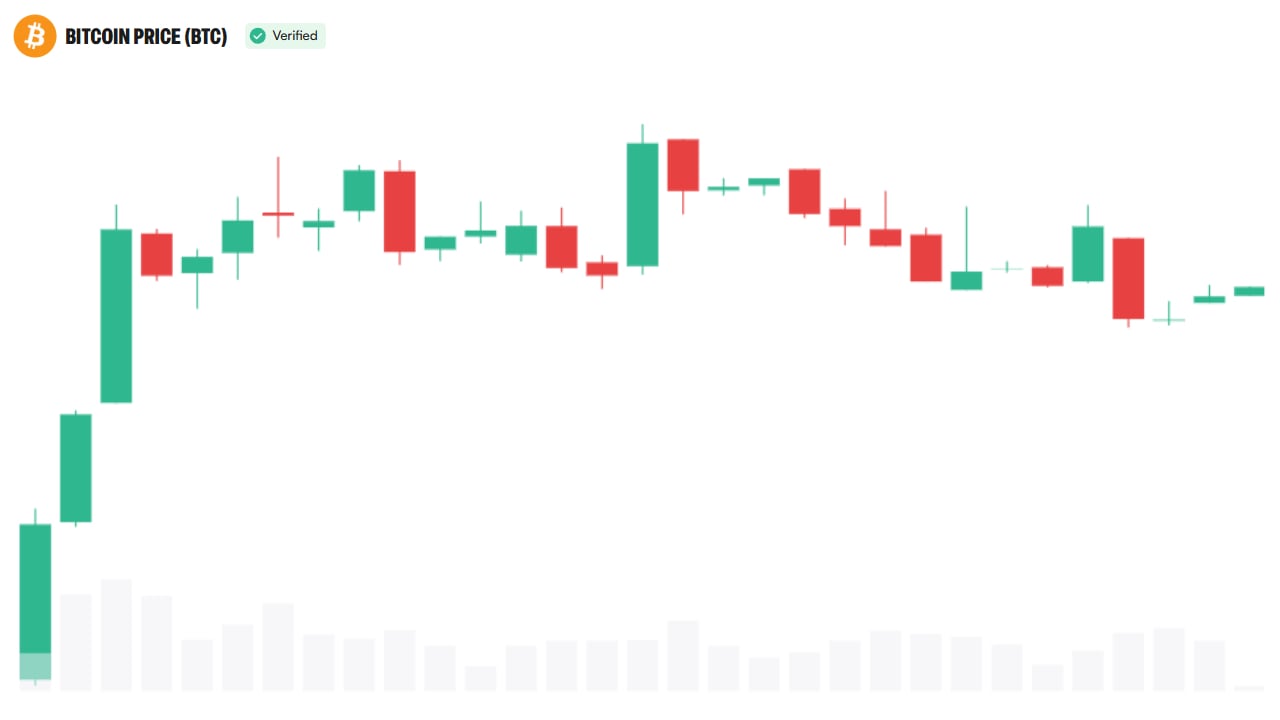
Bitcoin confronts a more challenging path above $80,000 following the Federal Reserve's recent rate increase and revised projections suggesting monetary policy will remain restrictive longer than previously expected. The Senate's failure to advance digital asset legislation compounds the near-term pressure on cryptocurrency markets.
The Federal Reserve raised its target rate range by 25 basis points to 3.75%-4% on September 16, marking its first increase since July 2023. More significantly, the Fed's September projections placed the median federal funds rate at 4.1% for both 2026 and 2027, compared with June projections of 3.8% and 3.6% respectively.
Monetary Policy Creates Difficult Setup
James Butterfill, head of research at digital asset manager Coinshares, identified the Fed's hawkish rate path as the primary obstacle to a stronger near-term crypto recovery. The higher projected rate trajectory supports the dollar and short-dated yields while delaying broader improvements in liquidity conditions that typically support risk-sensitive assets like bitcoin.
The restrictive monetary environment, combined with elevated inflation and solid economic expansion noted in the Fed's statement, reduces the likelihood of near-term policy shifts. Additional rate increases later in the year remain increasingly plausible under current conditions, according to the analysis.
CLARITY Act Setback Adds Regulatory Uncertainty
The Senate rejected a procedural motion on September 15 to advance the Digital Asset Market Clarity Act, with a 49-50 cloture vote stalling the proposed federal framework for digital asset markets. The rejection centered on unresolved ethics provisions involving elected officials and crypto-linked ventures.
Seven Democratic senators who opposed the motion pledged to continue negotiations, characterizing the vote as a setback rather than a final defeat. A revised version of the legislation could return early next year, though the immediate impact introduces additional uncertainty for cryptocurrency markets.
Differential Impact Across Cryptocurrencies
The regulatory setback affects different cryptocurrencies unequally. Bitcoin remains relatively insulated due to its already-established regulatory status, while Ethereum and other altcoins face greater exposure, particularly given their role as infrastructure for stablecoin payment systems.
The inability to distribute yield on digital assets has also faced strong resistance from incumbent financial institutions, further delaying regulatory clarity for cryptocurrencies beyond bitcoin.
The combined effect of restrictive monetary policy and regulatory uncertainty creates what Coinshares describes as a subdued near-term picture, with the heaviest pressure likely to remain on altcoins. A decisive bitcoin move above $80,000 appears unlikely without either meaningful improvement in the inflation outlook or a significant change in monetary policy expectations.