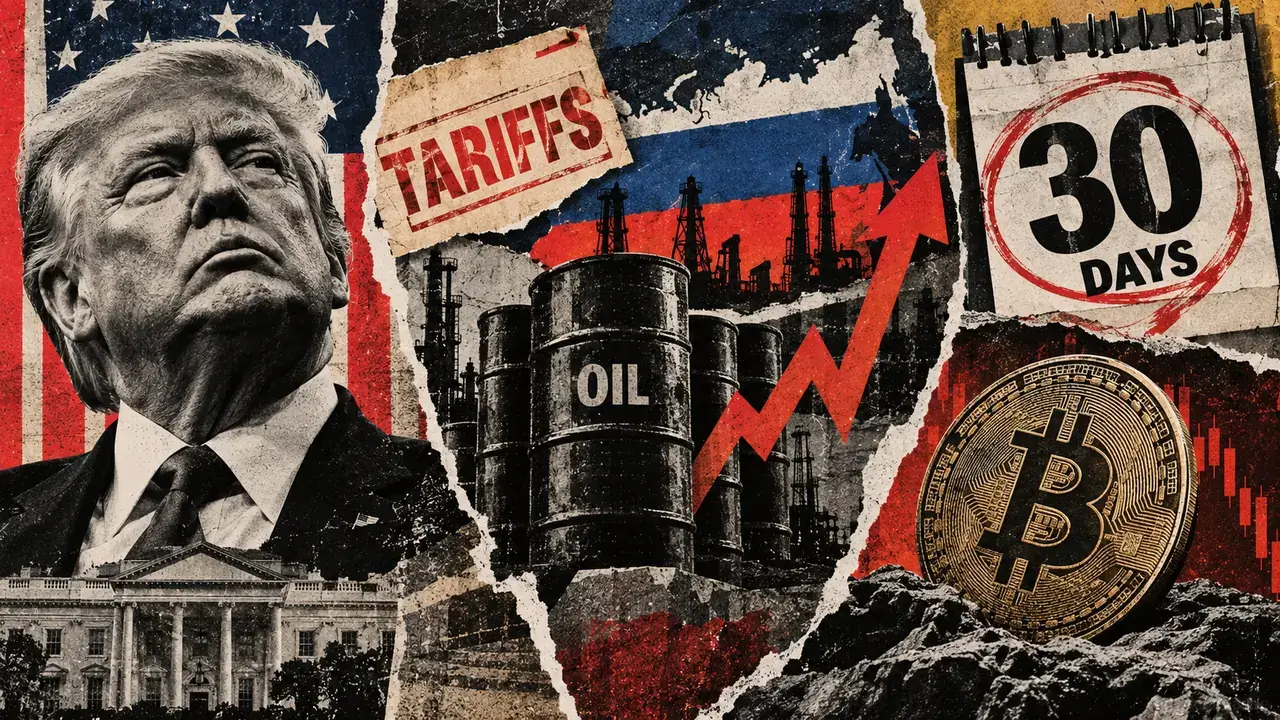
President Donald Trump signed legislation on September 18 that requires his administration to implement tariffs on Russian goods within 30 days, creating an October 18 deadline that cryptocurrency markets are monitoring closely.
The law mandates tariffs on Russian energy imports, including oil, natural gas, and petroleum products, with potential rates reaching up to 500%. A separate provision allows for tariffs up to 100% on goods from countries that continue purchasing Russian energy or facilitate sanctions evasion, targeting the five largest buyers in each category.
The administration retains significant discretion in implementation. The legislation does not specify which countries will be affected or mandate minimum tariff rates, leaving the October 18 deadline as a test of whether the policy becomes a major economic shock or remains limited in scope.
Bitcoin traders are tracking the potential impact through energy markets. Large tariffs on major Russian energy buyers could alter global trade flows and affect oil and gas prices, depending on which countries are targeted and how aggressively tariffs are imposed.
Financial Conditions as the Key Transmission Channel
Energy price changes could ripple through inflation expectations and monetary policy. According to Federal Reserve Governor Christopher Waller, prolonged increases in energy costs can spread to other goods and services as businesses pass along higher input costs. Repeated energy and tariff shocks could lift inflation expectations and complicate monetary policy.
The Federal Reserve raised its benchmark rate to a range of 3.75% to 4% on September 16, citing elevated inflation. A renewed inflation impulse from energy prices could reduce the Fed's flexibility to ease financial conditions, potentially pushing Treasury yields higher and strengthening the dollar.
Research from the Bank for International Settlements has found that tighter US monetary policy is associated with falling cryptocurrency prices and lower stablecoin demand, linking digital-asset liquidity to conventional financial conditions.
Signals to Watch Before October 18
The administration must provide congressional committees with written justification of tariff rates and country selection at least 10 days before implementation. The law includes exceptions for some natural gas purchases and allows the president to waive duties if certified as serving US national interests.
Market watchers will track three sequences of signals: the administration's congressional notices indicating targeted countries and tariff proximity to statutory ceilings; oil and gas price movements reflecting actual disruption to energy flows; and changes in bond yields, inflation expectations, and the dollar strength indicating spillover into broader financial conditions.
A mild implementation with broad use of waivers or stable energy markets would limit transmission to crypto markets. Aggressive tariffs combined with sustained energy price pressure would increase the likelihood that the sanctions regime becomes another constraint on financial conditions.