Bitcoin treasury companies that are built primarily around purchasing the cryptocurrency may find it difficult to compete with Michael Saylor’s Strategy, according to economist and The Bitcoin Standard author Saifedean Ammous.
Speaking on Cointelegraph’s Proof of Thesis podcast, Ammous stated that he does not see a compelling case for investing in other Bitcoin treasury firms when compared to Strategy.
According to an 8-K filing, Strategy maintains the world’s largest corporate Bitcoin treasury, holding 847,666 BTC acquired for $63.95 billion. The firm also holds a $5.02 billion US dollar reserve designed to cover debt interest and preferred stock dividends.
Advantages of Scale and Cash Reserves
Ammous noted that Strategy’s significant Bitcoin holdings enable the company to borrow at lower interest rates, providing a distinct advantage over smaller treasury competitors. He added that previous market drawdowns have not brought the firm close to liquidation.
Strategy’s financing model faced scrutiny during the summer when Bitcoin dropped below $60,000 and its STRC preferred stock traded well below its $100 target price. In response, the company raised the annual dividend rate for STRC to 12%, repurchased shares, built up its cash reserves, and briefly sold a portion of Bitcoin to fund dividends and repurchases before resuming its accumulation strategy.
“Even a much bigger Bitcoin drawdown is going to leave them in a decent situation because they have enough cash on hand to make their payments,” Ammous said.
While Ammous suggested that businesses with positive cash flow should consider allocating surplus funds into Bitcoin as a long-term reserve asset—separating these from funds required for daily, weekly, or monthly operations—he cautioned that investing in Strategy carries risks and stated a personal preference for holding Bitcoin directly.
Market Cycles and Outlook
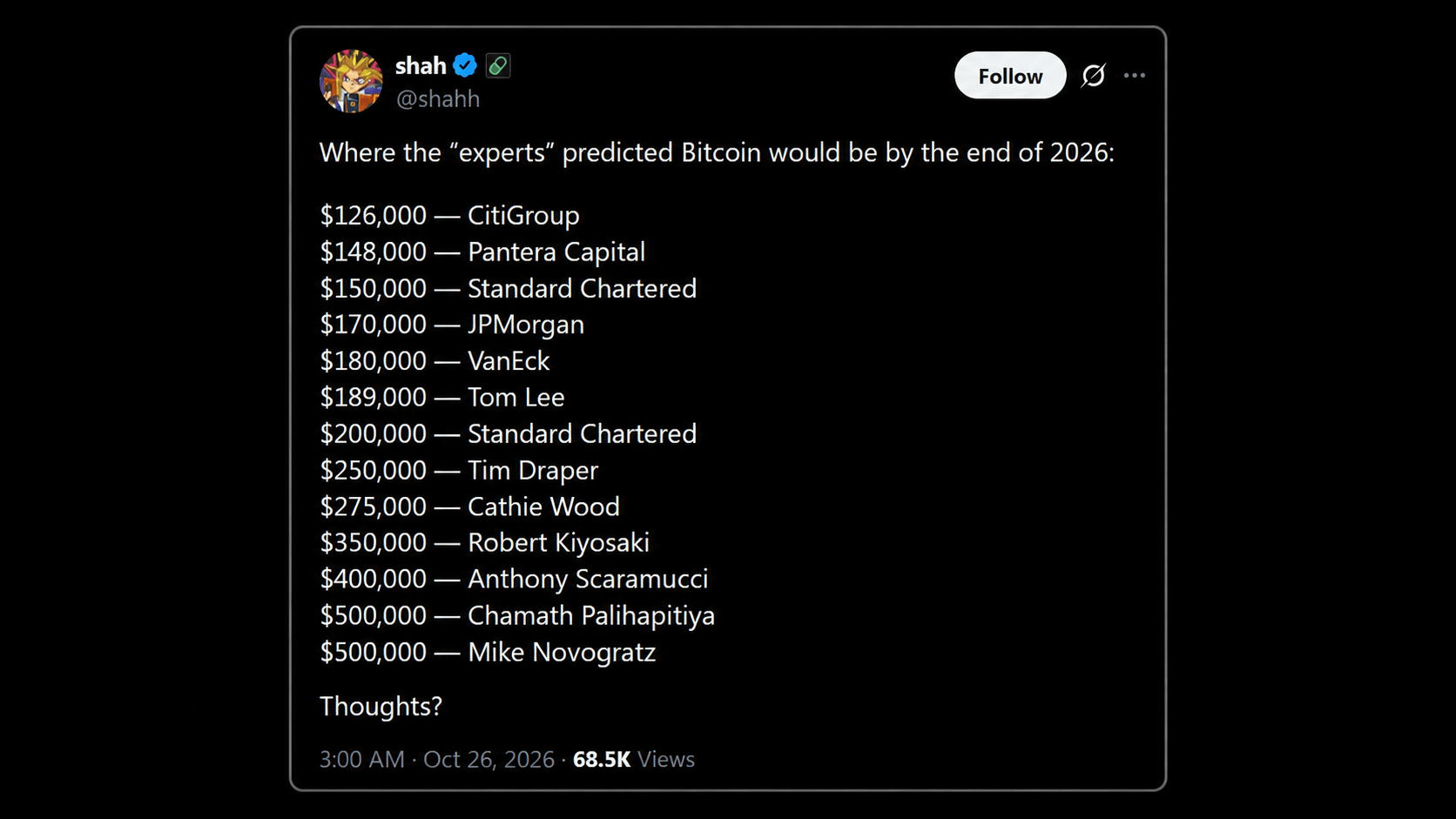
Addressing broader market trends, Ammous remarked that Bitcoin has likely bottomed, though he acknowledged that additional crashes could still drive prices lower. He suggested that Bitcoin's next cycle could peak around 2029, with prices predominantly rising until that time, while smaller drawdowns could help make the asset more appealing to large asset managers.
When asked for a price estimate for the year 2030, Ammous provided a rough estimate of $200,000, basing the figure on the lower end of the range generated by the Bitcoin power-law model, though he emphasized that he would not bet on the prediction.