Ethereum co-founder Vitalik Buterin has called for open-source chip design, arguing that key safety increasingly depends on hardware that users and independent researchers can inspect. In a blog post titled A shallow dive into open-source chip design, published on 26 November, Buterin framed the issue as an amendment to crypto’s oldest security motto.
Buterin argued that while the crypto industry has focused on securing software, cryptographic protocols and private keys, the underlying hardware remains an overlooked security risk. Even if wallet software is secure, compromised hardware could expose sensitive information, including private keys and seed phrases.
Why hardware matters
Buterin believes verifying how a computer operates ultimately requires examining its underlying hardware, including transistors, silicon and electrical circuits. Even when software is open-source and independently audited, users have limited visibility into what the underlying chip actually does.
He described the opacity of chip design as a central problem: “Probably the most frustrating thing about chip design is how opaque and proprietary the whole thing is.”
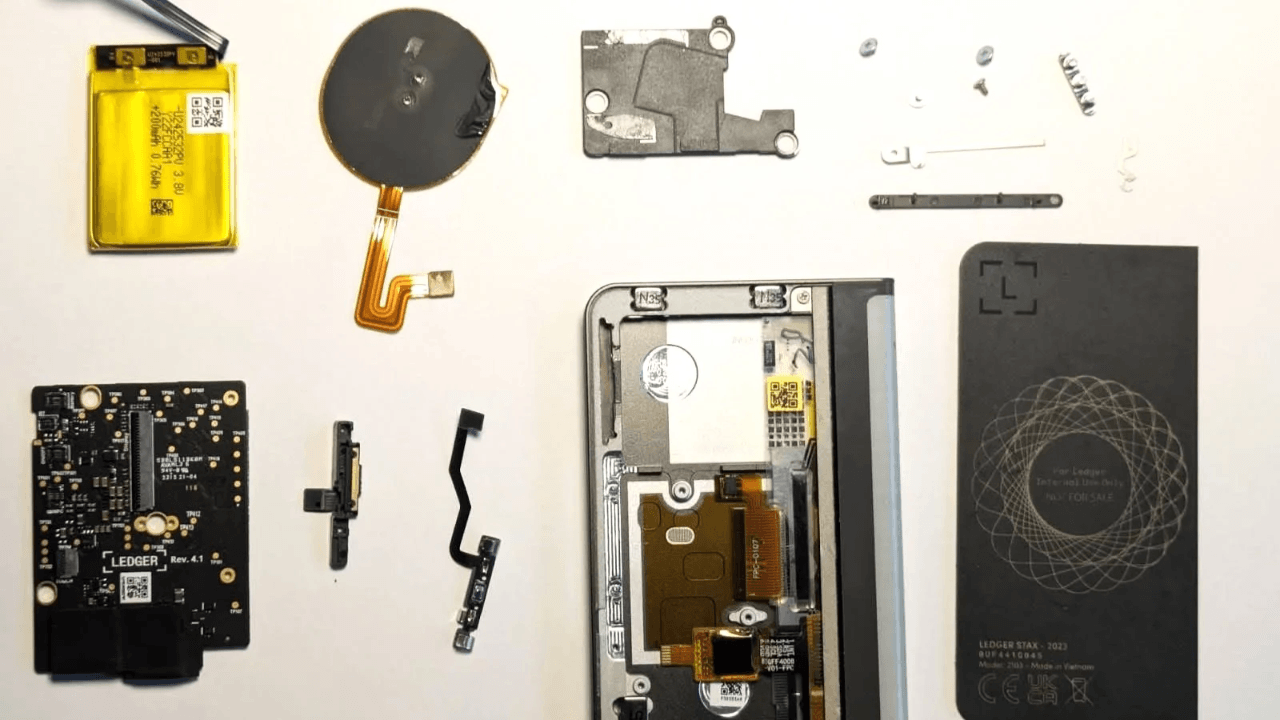
As an example, he cited an attack involving a malicious implant with an eSIM inserted into a hardware wallet before it reaches consumers. Once activated, the implant can exfiltrate the wallet’s seed phrase. He also warned that attackers could replace legitimate chips with nearly identical versions containing additional malicious features, which could bypass software-level security checks.
How open-source designs could help
Buterin said publicly accessible hardware designs would allow independent researchers to verify whether chips perform their intended functions. However, he argued that publishing a chip’s Verilog code alone is insufficient. Meaningful verification requires openness down to the GDS level, which describes the actual physical geometry of a chip’s components.
He also highlighted Process Design Kits, or PDKs, which contain manufacturing-specific information and design rules needed to produce and validate chips.
Detecting compromised chips
Buterin pointed to IRIS, a chip-inspection technique being developed by hardware researcher Bunnie that uses optical imaging to examine chip structures. More sophisticated attacks involving changes to doping levels may require destructive methods such as Focused Ion Beam-Scanning Electron Microscopy, or FIB-SEM.
He proposed designing chips for easier inspection by enabling independent testing of smaller components, reducing dependence on fragile configurations and making physical layouts more inspection-friendly.
Rather than expecting consumers to inspect chips themselves, he envisions professional auditors, journalists and civil society groups using specialized equipment to verify manufacturers’ claims.
A split hardware market
Buterin acknowledged that performance-intensive sectors such as AI are unlikely to adopt open-source manufacturing entirely. Instead, he expects a divide between performance-focused and security-focused hardware, with the latter prioritizing transparency and verifiability over efficiency.
He concluded by extending crypto’s familiar motto, “not your keys, not your coins,” with a hardware-focused warning: “Not your silicon, not your keys.”