The US Commodity Futures Trading Commission (CFTC) has released comprehensive guidelines for crypto market trading. CFTC Chairman Mike Selig formally announced the proposal on October 5, following a confidential White House review. The announcement fulfills a commitment made by the CFTC and the US Securities and Exchange Commission (SEC) to provide regulatory directives for the crypto industry.
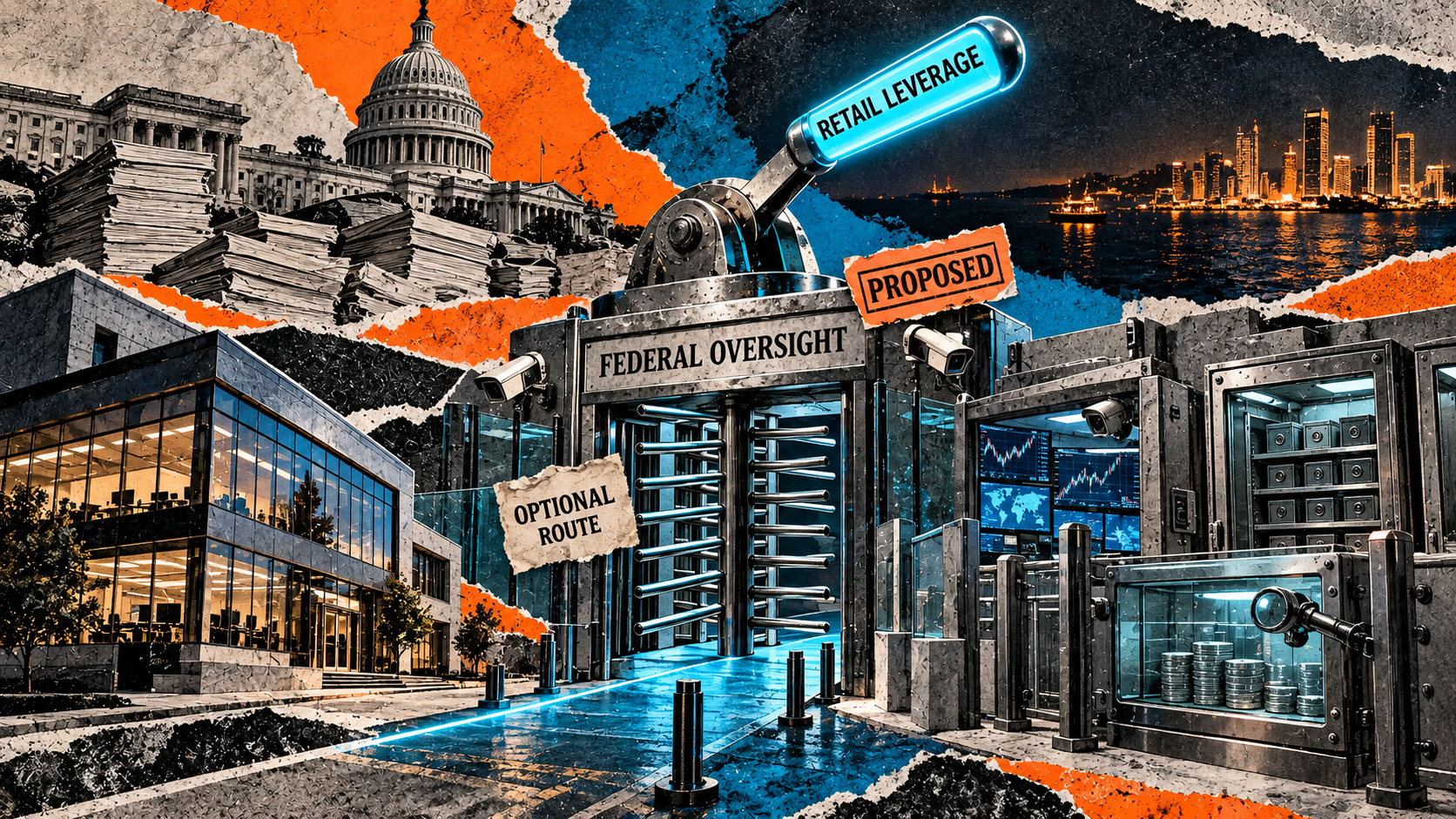
The CFTC's proposal includes two main regulatory frameworks aimed at establishing federal oversight of crypto asset markets.
Regulation Crypto Asset Transactions (Regulation CTX)
This framework targets the derivatives and financing layer of the crypto industry, regulating retail crypto trading that uses borrowed funds, leverage, and margin under Section 2(c)(2)(D) of the Commodity Exchange Act.
The CFTC stated that crypto purchased and sent to non-custodial wallets will be recognized as "actual delivery" if the transaction is completed within 28 days. This provision keeps standard crypto buying and self-custody away from heavy exchange regulation.
Regulation Crypto Asset Markets (Regulation CAM)
This framework addresses market structure and platform registration. The CFTC proposes new customized and optional federal licenses for crypto exchanges under its Designated Contracts Management (DCM) system.
The federal license would require strict platform operational protections, including proof-of-reserves audits, anti-money laundering safeguards, and mandatory intermediation by the commission's merchants. A key benefit is allowing exchanges to bypass state-by-state regulatory requirements through a single federal registration. The license also permits exchanges to offer leveraged and financed trading, both of which are prohibited at the state level for spot market trading.
The CFTC will maintain ultimate oversight across the entire system despite differences between federal and state licensing benefits.
Public Comment Period
Stakeholders, industry participants, and the public will have a 60-day commentary period following the proposal's publication in the Federal Register.
Industry lawyers have cautioned that the guidelines lack permanence and are susceptible to changes with shifts in agency leadership and presidential administrations.