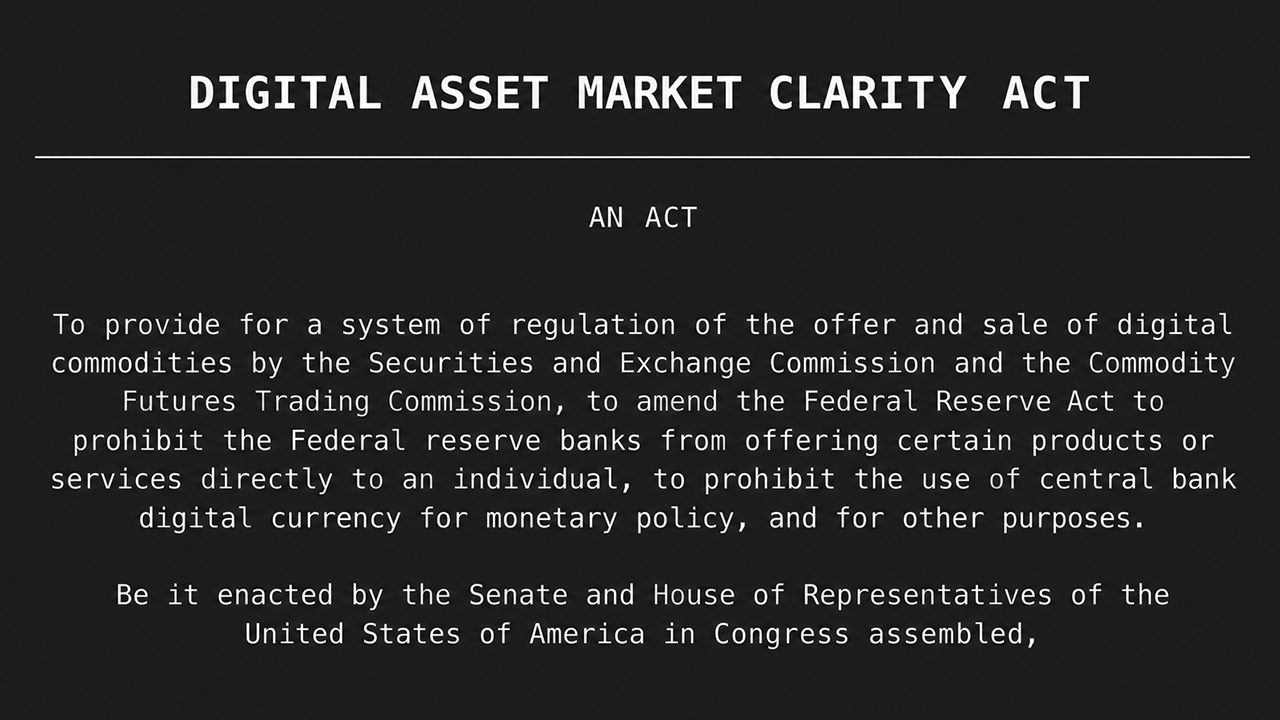
The Senate is set to vote at 2:15 p.m. ET Tuesday on whether to advance the CLARITY Act past a critical procedural step. The vote will determine whether senators can move past a filibuster and proceed toward a final vote on the cryptocurrency market structure legislation.
Republicans hold 53 Senate seats, which falls short of the 60 votes required for cloture—the procedural motion to end debate. This means at least seven Democrats must join Republicans to allow the bill to advance.
How Senate Procedure Works
Under Senate rules, at least 16 senators must first sign a cloture motion. A mandatory waiting period follows before the chamber votes on ending debate. When that vote occurs, three-fifths of all sworn senators must agree. With 100 total senators, this requires 60 votes.
If cloture succeeds, debate becomes limited and the Senate can proceed toward a final vote. The final passage vote typically requires only a simple majority—51 votes. However, reaching the 60-vote threshold for cloture can be considerably harder than securing a simple majority on the bill itself.
If cloture fails, the filibuster remains in place and debate can continue. Sponsors commonly withdraw legislation when they determine they cannot break the procedural blockade.
Prediction Markets Show Mixed Signals
Prediction market traders distinguish between whether the Senate will vote on the legislation and whether it will actually become law.
On Kalshi, traders assign a 93% implied probability that the Senate will hold a recorded CLARITY Act-related vote before October 1, with more than $1.3 million traded on that outcome. The same platform gives qualifying crypto market structure legislation only a 39% probability of becoming law before July 1, 2027, with more than $9 million in trading volume.
On Polymarket, traders are more skeptical about the immediate outlook. They price the CLARITY Act itself at just a 13% chance of becoming law by December 31, 2026, after more than $17.5 million in trading volume.
What Comes Next
Today's vote is significant but not the final step. A successful cloture vote would allow the Senate to move toward a final vote on the legislation, but passage of cloture alone does not guarantee the bill will pass.