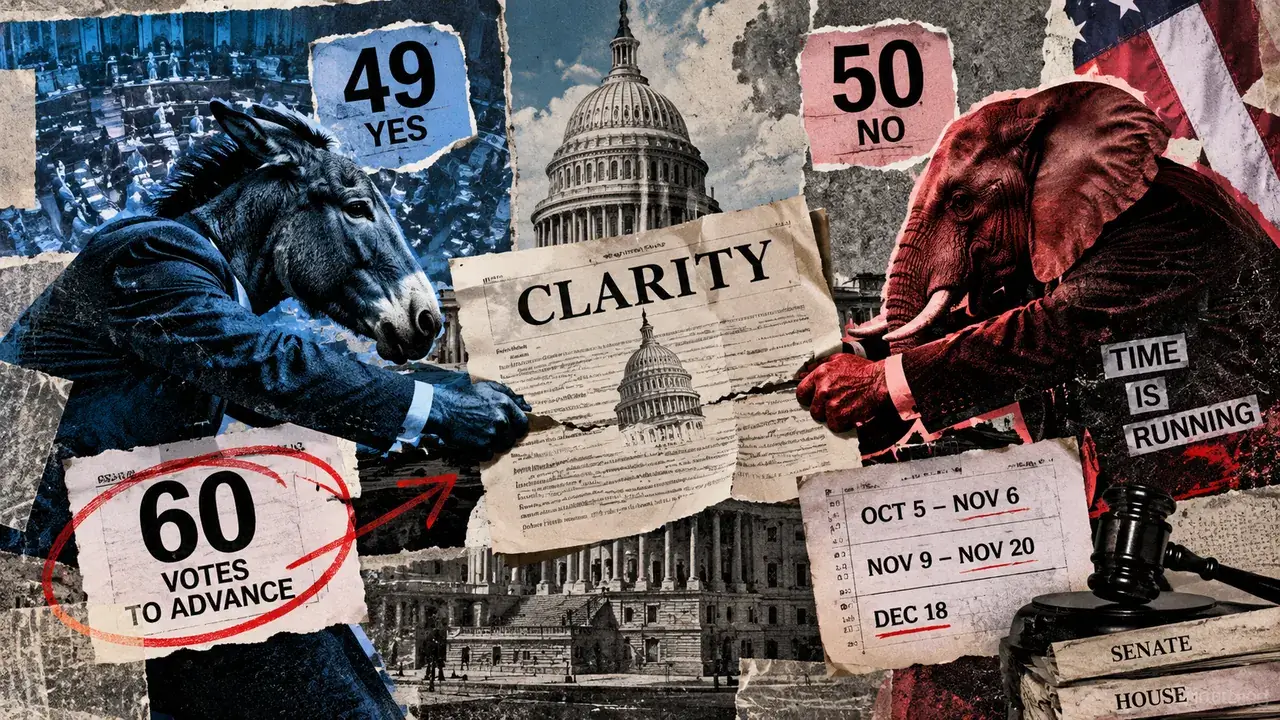
Seven Democratic senators said on September 16 that the failure of the CLARITY Act in a Senate vote the previous day would not be the end of the effort. The crypto market-structure bill fell short 49-50 on a procedural motion that required 60 votes to advance.
Even if all seven Democratic signatories switched their votes from "No" to "Yes," the count would move from 49 to 56, four votes short of the 60 needed. Adding North Carolina Republican Thom Tillis, whose "no" vote was procedurally motivated to preserve his ability to bring the measure back for reconsideration, would bring the total to 57—still three votes shy of passage.
Supporters must navigate multiple procedural hurdles. Senate leadership would first need 60 votes to formally proceed to the bill. Once on the floor, leaders must decide whether the negotiated text remains locked or opens to floor amendments, since ethics, stablecoin, and consumer-protection language could all be rewritten. Opponents can then mount a second filibuster against the bill itself, potentially requiring 60 votes twice before a simple majority can pass it.
Compressed Legislative Calendar
A state work period runs from October 5 through November 6, leaving limited time for an immediate attempt to pass CLARITY before that recess. The Senate returns November 9 through approximately November 20, competing directly against nominations, appropriations, defense authorization, and tax legislation for floor time. A final push toward the Senate's December 18 target for adjournment follows Thanksgiving.
Any Senate action must still reach the House with enough time remaining for identical language to clear both chambers before the session winds down.
Unresolved Policy Disputes
Republican sponsors say their latest draft incorporates 126 changes Democrats requested, including new ethics restrictions tied to presidential crypto holdings and a Treasury mechanism meant to respond to stablecoin-related deposit flight.
Democratic negotiators, including Mark Warner and Ruben Gallego, have flagged unresolved objections specifically about President Donald Trump's crypto interests. The ethics language exists but has not yet satisfied the senators whose votes matter most.
Banking associations separately argue the Treasury backstop responds only after harmful deposit flight has already occurred, and are pushing for tighter limits on the underlying stablecoin rewards themselves. A July statement from Democratic negotiators also flagged consumer protection, illicit finance, and market-integrity provisions as insufficient.
Path Forward
A workable agreement would require revisions to ethics and stablecoin language before the October 5 recess, coupled with a broader coalition of supporting senators and a scheduled reconsideration vote. Senate passage would still leave the House needing to accept that text or negotiate a reconciled version, since both chambers must approve identical language.
If Congress cannot complete action in 2026, federal regulators can fill parts of the gap through existing rulemaking authority, though such agency action is less permanent than legislation. The European Union's framework for crypto-asset service providers became effective July 1, while the American process remains open-ended.