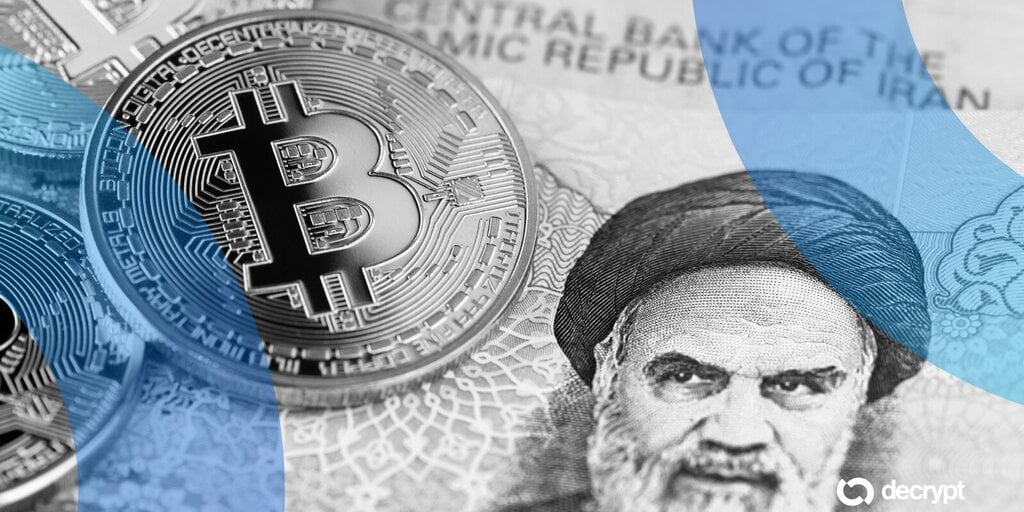
The U.S. Treasury's Office of Foreign Assets Control (OFAC) has designated BitBank, an Iranian cryptocurrency exchange, along with four related entities and individuals for their roles in moving Bitcoin payments collected from shipping companies transiting the Strait of Hormuz.
According to Treasury, since June the Hormuz Safe Marine Services Authority has used BitBank to route payments it collects from vessels to the Iranian regime. Between June and July, Treasury says BitBank moved hundreds of millions of dollars worth of Bitcoin to the Islamic Revolutionary Guard Corps.
BitBank is controlled by Babak Zanjani, an Iranian financier whom OFAC previously designated in January. Zanjani was sentenced to death in Iran in 2016 for embezzling from the National Iranian Oil Company, but had his sentence commuted in 2024. Treasury says he has been advertising BitBank on social media accounts since at least 2024.
The action also targeted Pishtaz Simorgh Electronic Trade Company, which built BitBank's software and is a subsidiary of the already-designated Dot One Value Creation Group. Three Dot One executives were also designated: Hossein Ali Zaker Hossein, Mohammad Mahdi Zaker Hossein, and Seyed Adel Heidari. Treasury describes the first executive as involved in most of Zanjani's sanctions evasion activities, including oil exports and digital asset transactions ending up with the IRGC.
All five targets were designated under Executive Order 13902, which the administration extended in August to cover anyone operating in Iran's digital asset sector. U.S. assets belonging to the designees are blocked, and non-U.S. firms dealing with them face secondary sanctions.
Treasury Secretary Scott Bessent stated: "Efforts to finance the Iranian regime using cryptocurrencies are not beyond OFAC's reach. If you support the Iranian regime, the Department of the Treasury will sanction you."
The designations fall under Operation Economic Outcast, a campaign announced in August aimed at severing Iran's remaining economic lifelines with assistance from the European Union, the United Kingdom, and Gulf partners.