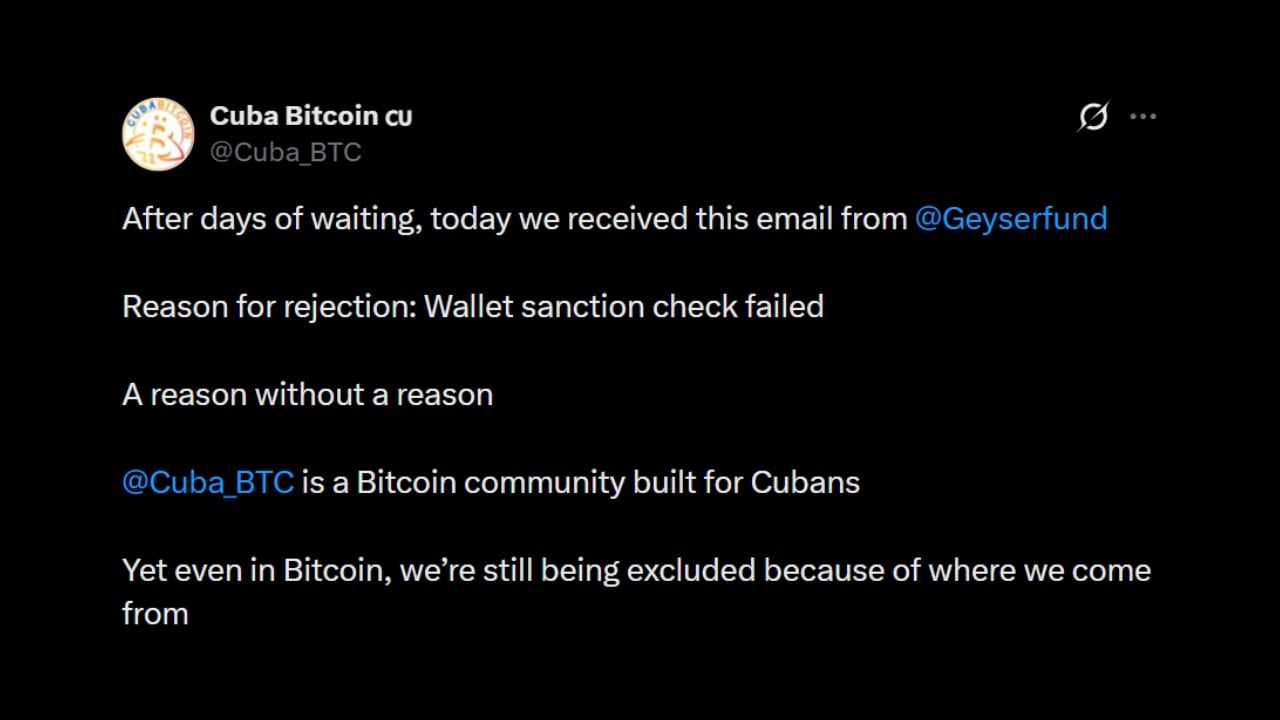
Geyser, a crowdfunding platform for Bitcoin initiatives, rejected an application from Cuba Bitcoin, a community fostering cryptocurrency adoption in Cuba, citing failed wallet sanction checks.
The rejection prompted Cuba Bitcoin to call for a new crowdfunding platform aligned with Bitcoin values. "If we're serious about building infrastructure for Bitcoin communities, it must be permissionless, censorship-resistant and resilient," the group posted on social media.
Compliance Versus Bitcoin Ethos
Michele Morucci, CEO and co-founder of Geyser, acknowledged the tension between the company's founding principles and regulatory requirements. While Geyser was "founded on the Bitcoin ethos and the principle of bringing access to capital worldwide," Morucci stated the platform could not escape regulatory compliance obligations.
Geyser operates as a non-custodial crowdfunding platform, allowing beneficiaries and donors to maintain control of their funds. The platform restricts service in countries including Cuba, Syria, North Korea, Iran, Russia, and East Ukraine, and designates Palestine, Israel, and Yemen as high-risk regions where service is unavailable.
Dispute Over Application of Sanctions
Forte11, representing the Bitcoin Cuba collective, argued that sanctions restrictions should not apply to their initiative, noting that the project infrastructure, wallet, and operations were registered outside Cuba. Forte11 characterized Geyser's approach as taking an easy route and accused the platform of reproducing traditional financial gatekeeping.
"If the real reason is that the project serves Cubans, just say so. Don't hide it behind a vague wallet-sanctions explanation. Bitcoin is supposed to make financial access more resilient, not reproduce every financial gatekeeper of the traditional system," Forte11 stated.